Camping Overnight Next to a Berkshire OHV Trail
A Berkshire riding weekend can unravel when the campsite you booked turns out to be miles from the trailhead—or when the forest is open to camping but not to OHV riding. This guide explains how to pair an overnight stay with a legal ride, check access before towing, and plan for the practical realities of camping in the hills.
Choose a campsite that actually works with your ride
Start with the trail, then look for overnight options
“Camping next to a Berkshire OHV trail” usually means staying at a designated campground within a reasonable drive of a permitted riding area—not pitching a tent beside the trail or parking overnight at a trailhead. The distinction matters: camping permission, vehicle access, and permission to ride are separate things, and one does not automatically include the others.
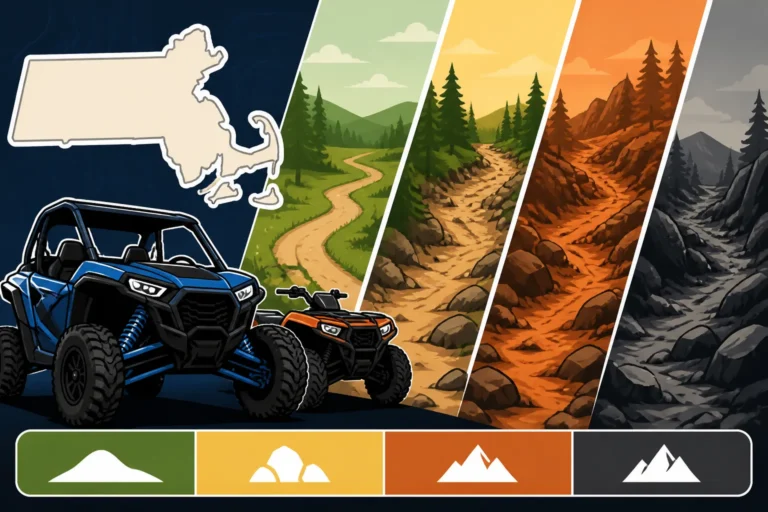
The main state-forest riding areas riders often consider are Beartown, October Mountain, and Pittsfield State Forest. Each has its own trail layout and access conditions, and a nearby campground may be in a different forest or town. Before booking, identify the trail system you intend to ride, find its authorized entrance and parking area, and then compare that location with available campgrounds. [Massachusetts ATV Trails: Three Berkshire Forests] gives a useful starting point for comparing the riding areas.
A map can make the distance look deceptively simple. A campsite that appears close “as the crow flies” may require a longer drive because of winding hill roads, restricted gates, or roads unsuitable for a trailer. Check the actual route from campground to trailhead, including where you can park and unload. onX Offroad can help you visualize a planned route and nearby access points, but confirm trail permissions and closures with the relevant land manager before you rely on a map for a ride.
Confirm what the campground allows
Before you reserve, ask whether the campground permits the kind of stay you have in mind: tent camping, a trailer or RV, or a cabin. Confirm whether your rig will fit the site, whether you can leave a tow vehicle and trailer there, and whether the campground has rules about unloading or moving an ATV or UTV within its grounds. A campsite close to a forest does not necessarily allow you to ride from the site to the trail.
State-forest campgrounds and private campgrounds can have different reservation systems, opening periods, quiet hours, and rules for vehicles. Do not assume a state forest that allows OHV riding also has an operating campground, or that camping is available on the same dates as riding. For options and planning considerations, see [Massachusetts Camping Near Riding Areas] and [Massachusetts Cabins Near a Forest].
If you are considering October Mountain, Beartown, or Pittsfield, check both the riding information and the campground information separately. [October Mountain State Forest Riding in Massachusetts] and [Beartown State Forest Riding in Massachusetts] can help you research the riding side of a trip, but they are not a substitute for confirming current campground availability and rules.
| Planning question | Why it matters | What to confirm |
|---|---|---|
| Is the OHV route authorized and open? | A nearby trail may be closed or not designated for your machine | Current access, permitted vehicle type, and seasonal restrictions |
| Is the campground operating? | Forest access and campground operations may follow different schedules | Opening dates, reservation requirements, and site availability |
| Can your trailer fit? | Narrow or steep access roads can complicate arrival | Site dimensions, road conditions, and parking arrangements |
| Can you ride directly from camp? | Most campgrounds do not automatically provide trail access | Whether machines may be operated on campground roads or connecting routes |
| What does the stay include? | Parking and campsite charges may be separate | Site fees, vehicle fees, facilities, and cancellation terms |
Check access, season, and rules before you tow
Verify both trail and campground conditions
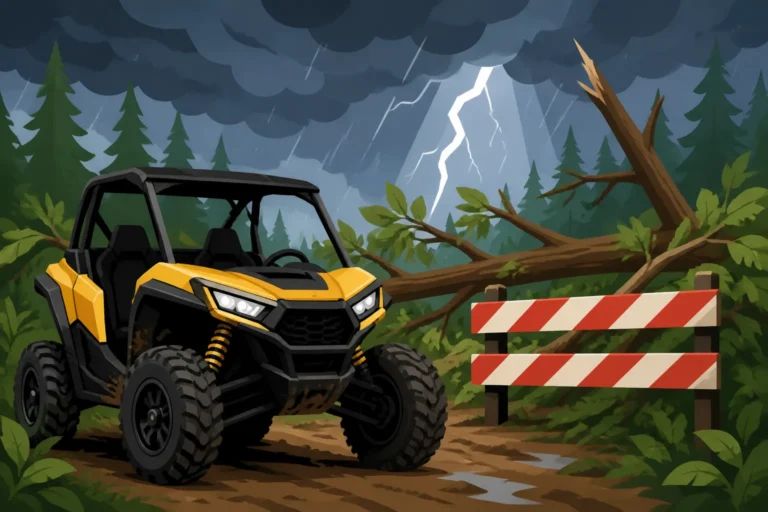
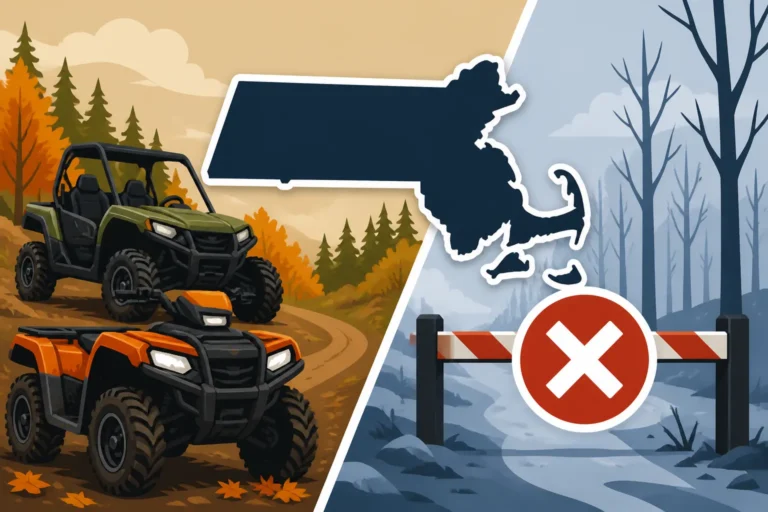
A successful trip depends on two different green lights: the campground must be open to your reservation, and the riding area must permit your planned ride. Heavy rain, storm damage, maintenance, seasonal limits, or other management decisions can affect trail access even when the campground remains open. Conversely, a trail system may be open while a nearby campsite is closed or fully booked.
Check conditions shortly before departure, not just when you make plans. If you are heading to Beartown, [Calling Beartown State Forest Before You Tow] is a practical reminder to verify details before you commit to the drive. More broadly, [Massachusetts Trail Conditions Before You Tow] can help you build a last-minute check into your routine. If staff cannot confirm an answer by phone, look for the land manager’s official notices and posted information at the entrance.
The Berkshire riding season is seasonal, and access can change as the year progresses. Do not assume a warm afternoon means all routes are open, or that a trail you rode earlier in the season remains available after weather or maintenance. Check the applicable forest guidance and [Why the DCR Riding Season Ends in November] before planning a late-season overnight. Treat a map as a planning aid, not proof that a route is open or legal.
Understand what your registration does—and does not—cover
An overnight reservation does not replace the registration or other requirements for riding. Massachusetts has its own OHV registration rules, and visitors should not assume a registration sticker from another state is enough. Check what registration applies to your machine and carry the required registration card while riding. [Massachusetts Requires Its Own Registration] and [The Registration Card You Must Carry in Massachusetts] cover those separate responsibilities.
Registration also does not create permission to ride anywhere you can reach. Stay on trails authorized for your vehicle and follow the applicable forest rules. Do not ride on a public road to connect a campground to a trail unless that movement is specifically permitted. Do not treat a gate, woods road, or informal track as an invitation to explore. A route that seems like a convenient shortcut may cross closed land or an unauthorized trail.
Likewise, a campsite is not a staging area unless its operator says it is. Ask before unloading, warming up an engine, or moving a machine around camp. If the campground is not connected to the authorized trail system, plan to trailer to the official parking area. That small extra step can prevent a frustrating dispute with campground staff or a land manager.
Plan the overnight logistics around your machine
Make arrival and departure manageable
Berkshire roads can be narrow, winding, and hilly. If you are towing a trailer or hauling a side-by-side, check the route before you set out. Look for steep grades, tight turns, low-clearance obstacles, and places where you can safely pull over. An address entered into a standard navigation app may route you along a road that is awkward for a long truck-and-trailer combination.
Call the campground about arrival procedures, gate hours, and where to park the tow vehicle. Ask whether your site has room for the trailer and whether you can leave it there while you ride. If the site cannot accommodate it, find out where the campground expects guests to park rather than assuming a nearby lot is available. Keep the machine secured when you are away from camp, and bring any covers or locks you normally use.
Plan your trailhead arrival with the same care. Identify the authorized parking location and confirm that it can accommodate your trailer. A long rig may need more room to turn around than a passenger vehicle, especially at a small forest lot. onX Offroad can be useful for reviewing your planned area before leaving home; download or save the information you need if you expect weak cell service. Still, posted signs and official access information take priority over a digital route.
Pack for a night in the hills, not just a ride
A Berkshire afternoon can feel very different from a cool evening at camp. Pack layers, rain protection, drinking water, food, a flashlight or headlamp, and the supplies you need to keep your riding gear dry. Bring a paper map or a saved offline map as a backup if cell service drops out. A full phone battery is not a substitute for knowing where you are, especially if your campsite and trailhead are in different valleys.
Give your machine a quick check before leaving camp: tires, brakes, lights, fuel, and any equipment required for your ride. Carry basic tools and a first-aid kit appropriate for your group. If you ride with others, agree on a meeting point and what you will do if someone gets separated. On a remote loop, the group that has decided what to do before trouble starts is in a much better position than the group trying to make a plan in the moment.
Keep camp tidy and quiet. Store food and trash as the campground directs, respect quiet hours, and avoid revving or test-riding in the campground. These courtesies matter in shared outdoor spaces, especially when campers nearby came for a quiet night rather than the sound of engines after dark. Follow fire rules and any restrictions in effect; do not assume a fire ring means a fire is permitted under every condition.
Put together a low-stress Berkshire riding weekend
Use a simple planning sequence
A little preparation can spare you a long drive to a closed trailhead or a campsite that cannot handle your trailer. Work through the decisions in this order:
- Pick the riding area. Decide whether Beartown, October Mountain, Pittsfield, or another authorized location suits your group and machine.
- Confirm access. Check that the trail system is open, that your vehicle is permitted, and that the intended parking area can accommodate your tow setup.
- Find a legal place to stay. Choose a designated campground, cabin, or other lodging option and confirm its rules directly with the operator.
- Compare the real drive. Route the trip from the campsite to the authorized trailhead, not just to the forest’s general location.
- Check required paperwork. Confirm registration and any other requirements that apply to the rider and machine.
- Recheck before departure. Look for updated trail, weather, campground, and road information shortly before you leave.
For a group staying around Pittsfield or Lee, for example, the best campsite may not be the one closest on a map. It may be the one with a suitable trailer site, reliable arrival arrangements, and an easy legal drive to the selected trailhead. A family with children may prioritize a cabin or campground facilities, while a group towing a wide UTV may need to prioritize access roads and turning space. There is no single “best” overnight option without knowing the machine, group, and ride plan.
Keep a backup plan for changing conditions
Have an alternative in case the trail closes, weather turns rough, or the campground cannot accommodate your setup. That could mean switching to a different authorized riding area, shortening the ride, or making the overnight stay a non-riding trip. Avoid trying to salvage the day by using an unsigned connector, riding through a campground, or crossing a road where riding is not allowed.
If the forecast calls for heavy rain, think about more than your own comfort. Wet, soft trails can be vulnerable to damage, and conditions can make hill routes harder for less experienced riders. Reassess the outing instead of assuming every planned mile is worth riding. If you do go, ride within your group’s ability and turn back when conditions become unsafe.
The most reliable Berkshire overnight plan is the one that treats camping, trail access, and machine use as separate permissions to verify. Choose a designated place to stay, confirm the actual route to a legal trailhead, check conditions again before towing, and leave enough flexibility to change plans. That approach makes it much easier to enjoy the ride without turning a weekend in the Berkshires into a search for an open gate or a place to park.
Disclaimer
This article is for general informational purposes only and does not constitute professional advice. Laws, prices and regulations vary by location and change over time. Consult a qualified professional for guidance on your specific situation.