State Forest OHV Trails Open in May
Massachusetts riders often spend winter planning a spring outing, only to find that a trail is muddy, a gate is still closed, or a route they saw on a map is not open to OHVs. This guide explains what May riding can look like, which Berkshire state forests to check, and how to confirm access before loading your ATV or UTV.
What to expect from Massachusetts OHV trails in May
The season may begin in May, but access is not automatic
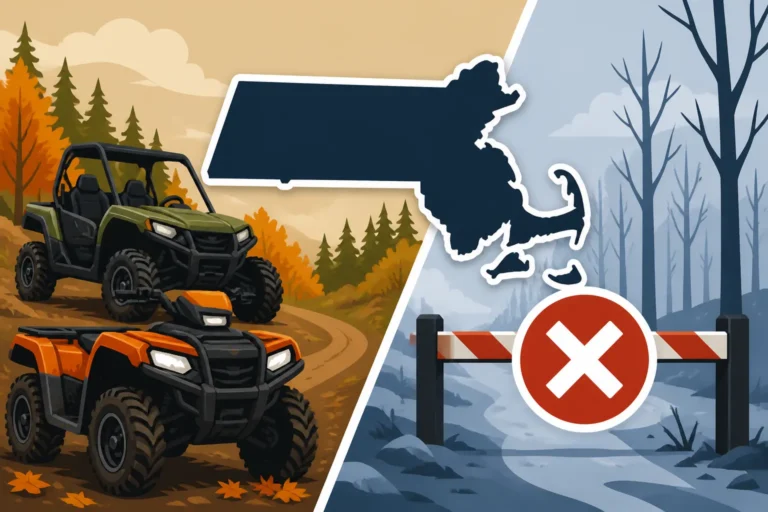
May is generally the start of the riding season on designated Massachusetts state forest OHV trails. That does not mean every trail is open on the first day of the month, or that every road or path within a forest allows ATV and UTV use. Access depends on the specific trail, seasonal rules, conditions, and any temporary closures.
Spring brings its own practical complications. Trails can remain soft after snowmelt and rain, while shaded sections may dry more slowly than open ground. A route that looks rideable at the trailhead can turn muddy farther in, especially in low spots or near streams. Riding through saturated ground can deepen ruts and damage trail surfaces, which may lead to closures or restrictions.
It helps to think of May as a window when riding may resume, rather than a guarantee that a particular route is ready. Before heading out, check the current rules and trail status for the forest you plan to visit. The seasonal overview in [Massachusetts DCR Riding Season] can help you understand the broad riding calendar, but confirm access for your chosen area before you leave home.
Only designated routes are for OHV riding
A state forest can contain hiking paths, roads, snowmobile routes, and other recreation areas that are not open to ATVs or UTVs. A forest’s name on a map does not mean you can ride anywhere inside its boundary. Stay on routes specifically authorized for OHV use, and follow posted signs, gates, and instructions from forest staff.
This distinction matters when you are using a phone map or an older paper map. A line may show a road or trail without telling you whether OHVs are allowed there, whether the route is seasonally closed, or whether its status has changed. Treat navigation tools as aids for finding your way, not as proof of legal access.
For broader trip planning, [Massachusetts ATV Trail Map Downloads] is a useful related topic. If you use onX Offroad to look at terrain or organize a route, compare what you see with official forest information and signs on the ground. A mapped line should never override a closure notice or a route-use restriction.
Berkshire state forests to check for May riding
Beartown State Forest
Beartown State Forest is one of the Berkshire-area forests riders commonly consider when planning a spring outing. Before going, check whether its designated OHV routes are open and whether recent weather has affected access. A route may be listed as part of a riding area yet still be temporarily unavailable because of a closure, maintenance work, or poor trail conditions.
It is also worth planning your arrival rather than assuming the trailhead will be ready for you. Confirm where you may park and unload, and make sure your machine fits the permitted route type. Details about this riding area are covered in [Beartown State Forest Riding in Massachusetts]. If you are making a longer drive with a trailer, [Calling Beartown State Forest Before You Tow] is a sensible step to take before setting out.
May weather in the Berkshires can change quickly. A clear, sunny morning in one town does not necessarily tell you whether a forest trail has dried out after rain. If conditions are questionable, postpone the trip rather than trying to force a machine through soft sections. Turning around early is frustrating, but it is better than damaging a trail or getting stuck far from the trailhead.
October Mountain and Pittsfield State Forest
October Mountain State Forest is another area riders may consider as the season begins. Check its current OHV access rules, route availability, parking information, and any notices before traveling. The forest’s general recreation access should not be mistaken for permission to ride every road or trail within it. For an area-specific starting point, see [October Mountain State Forest Riding in Massachusetts].
Pittsfield State Forest is also on riders’ spring planning lists. As with any forest, conditions and access can vary from one route to another. Do not assume that a trail is open just because another nearby route is accessible, or because you rode there during a previous season. Review [Pittsfield State Forest Riding in Massachusetts] and confirm the latest conditions for the routes you intend to use.
| Riding area | What to check before a May trip | Why it matters |
|---|---|---|
| Beartown State Forest | Route status, parking, and current notices | A long tow is disappointing if access has changed or conditions are poor |
| October Mountain State Forest | Designated OHV routes and seasonal access | Not every road or trail in the forest is open to OHVs |
| Pittsfield State Forest | Current route availability and posted restrictions | Access can vary by route and may be affected by conditions |
These forests are useful places to begin your research, not a promise that every route will be open on your preferred date. A forest office or official update can help resolve questions that a map cannot answer. If your first-choice area is closed, avoid improvising by riding on an unapproved road; choose another area that has confirmed legal access instead.
How to check trail status before you load up
Confirm both official access and current conditions
A reliable May trip plan has two separate checks: whether OHV use is allowed on the route, and whether the route is currently open and suitable to ride. The first is about authorization. The second is about conditions, closures, and practical access. You need both.
Start with the state forest’s official information and any available notices. Look for seasonal dates, route restrictions, closure announcements, and guidance about parking or permits. Then check for recent rain, storm damage, or other conditions that could make a trail unsafe or vulnerable to damage. [Massachusetts Trail Conditions Before You Tow] is a useful reminder to make this check part of the trip plan, not an afterthought.
onX Offroad can help you review terrain and keep your planned route organized, especially when you are comparing possible riding areas. But map information is not the same as an official opening notice. A route shown in onX Offroad may still be closed, restricted, or unsuitable for your machine. Confirm the legal status independently, then use your navigation app to help you stay on the route you have verified.
Make a backup plan and be willing to turn around
Spring access can be uncertain, so choose a backup plan before you leave. That might mean identifying another confirmed riding area, selecting a shorter route, or deciding to reschedule if conditions are too wet. It is easier to make that call while you are at home than after you have unloaded your machines and discovered a closure sign.
Check the forecast for the riding area itself, not just your starting point. Conditions can differ across the Berkshires, and recent rainfall may matter more than the day’s forecast. If you see standing water, deep mud, fresh washouts, or signs that a route is closed, do not try to ride around the problem. Going off the designated route can damage land and may put you in violation of trail rules.
For storm-related concerns, review [Massachusetts Trail Closures After a Storm]. If an official closure is in place, respect it even when a route looks passable. Closures may protect riders from hazards that are not obvious from the trailhead, as well as prevent damage while crews assess or repair the area.
Prepare your ATV or UTV and ride responsibly
Set up for a cool, changeable spring day
May can feel warm in direct sun and chilly in shaded or elevated areas. Wear layers that let you adjust during the ride, and pack rain protection even when the morning looks clear. A small first-aid kit, water, and a charged phone are useful basics. Cell service may be unreliable in forested or hilly areas, so do not make a phone connection your only safety plan.
Before leaving, check your machine for working brakes, secure tires, steering problems, and any leaks or unusual noises. Spring mud and water can make a mechanical issue more complicated to handle away from the trailhead. If you are riding a UTV, check that its width is appropriate for the routes you plan to use. A machine that fits on a wide access road may be unsuitable for a narrower trail.
Carry required documents and follow the forest’s instructions for riding and parking. Do not assume your registration or another state’s sticker automatically replaces Massachusetts requirements. If you are visiting from out of state, check [Massachusetts Stickers for a Visiting Machine] before the trip, along with the rules that apply to your machine and riding area.
Keep trails usable for the rest of the season
A good May ride is not just about getting through the route. It is also about leaving it in a condition other riders can use. Avoid spinning tires in soft ground, cutting corners around puddles, or widening a path to avoid mud. Those shortcuts can turn a small wet spot into a larger damaged section.
Give hikers and other trail users room, slow down when visibility is limited, and keep noise under control near homes and campsites. If you meet another user on a narrow route, stop where it is safe and communicate clearly before proceeding. These small choices make shared recreation areas more welcoming and reduce the likelihood of conflicts or complaints. [Massachusetts Trail Etiquette Locals Expect] offers more guidance on considerate riding.
If a route is muddy enough that you are leaving deep ruts, turn around. If you find a posted closure, do not ride past it or look for a way around. And if conditions are not right on your planned day, waiting a few days can be the difference between a frustrating, damaging outing and a much more enjoyable ride later in the season.
Disclaimer
This article is for general informational purposes only and does not constitute professional advice. Laws, prices and regulations vary by location and change over time. Consult a qualified professional for guidance on your specific situation.