Who Actually Maintains the Three Berkshire OHV Trails
A trail can look rideable on a map and still be closed, washed out, or awaiting attention. In the Berkshires, that leaves riders wondering who is responsible for the OHV routes in Beartown, October Mountain, and Pittsfield State Forest. This guide explains how the work is shared, what volunteers do, and where to check before loading your machine.
Who is responsible for the Berkshire OHV trails
The short answer is that trail upkeep is shared, but authority is not. The Massachusetts Department of Conservation and Recreation manages the state forests and has the final say over access, closures, and work on its land. Volunteer groups can help care for trails, but they do not independently decide which routes are open or change the rules.
The three Berkshire riding areas are Beartown State Forest, October Mountain State Forest, and Pittsfield State Forest. They are often discussed together because they offer OHV riding in the region, but conditions and maintenance needs can differ from one forest to another. For an overview of the areas, see [Massachusetts ATV Trails: Three Berkshire Forests].
DCR manages the land and makes access decisions
DCR is the state agency responsible for managing these state forests. That role includes overseeing public use, setting or communicating access rules, and deciding whether a route needs to close or receive attention. Trail maintenance takes place within that larger responsibility: a route may need inspection or repair, but that does not automatically mean it is open to riding.
This distinction matters when you encounter a damaged trail. A fallen tree, deep rut, or washout may look like a straightforward repair, but the right response is not necessarily to clear it yourself. The route could be closed, the damage could need an assessment, or work could require direction from forest staff. DCR’s role is to manage the land and determine what work is appropriate.
For riders, that means treating posted signs, official notices, and directions from forest staff as more authoritative than an old map, a social media post, or a trail that happens to be passable. If you are planning a trip, check the forest’s current information rather than assuming that a familiar route is open. [Massachusetts Trail Planning and Closures] offers more context on why access can change.
Volunteers contribute, but they do not replace the land manager
Volunteer organizations and local riders can make a meaningful contribution through stewardship, observation, and approved trail work. In the Berkshires, the Berkshire Trails Council is associated with trail stewardship and coordination with land managers. The practical value of that relationship is that volunteers may help identify problems and support maintenance efforts, while forest staff retain authority over what is permitted on state land.
The difference can be easy to overlook. A volunteer may help report a blocked route, join an organized work day, or assist with an approved project. That does not mean volunteers can open a closed trail, reroute it, or authorize motorized access. The land manager’s approval is essential before work happens. The Council’s role is best understood as support and collaboration, not independent control of the forests. For more on that relationship, see [Massachusetts Berkshire Trails Council Work] and [How the Berkshire Trails Council Works With Rangers].
A rider who spots a new erosion channel, damaged sign, or downed tree can be useful without taking tools to the trail. Note which forest you are in, the nearest recognizable location, and what you observed. Share that information through the appropriate forest or volunteer channel, and let the people responsible for the land decide what happens next.
| Trail area | Who manages the land | What riders should remember |
|---|---|---|
| Beartown State Forest | DCR | Check forest information and posted notices before riding |
| October Mountain State Forest | DCR | Conditions and access can differ from other Berkshire forests |
| Pittsfield State Forest | DCR | Report hazards rather than assuming a route is open |
| Volunteer trail projects | Coordinated with the land manager | Do not clear, reroute, or mark trails without approval |
What trail maintenance involves and why it is shared
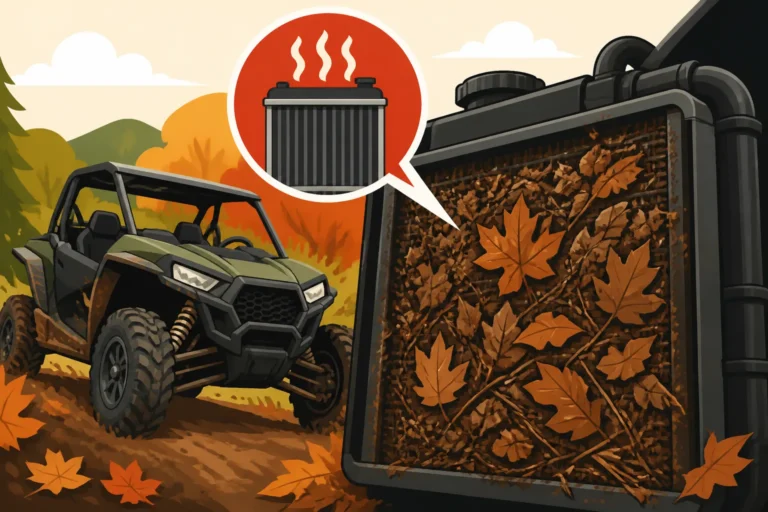
Trail maintenance is more than removing a branch from the path. In a forest, a small intervention can affect drainage, soil stability, vegetation, nearby habitat, and the way riders use the route. A trail that appears damaged after heavy rain may need time to dry or a planned repair rather than repeated vehicle traffic.
That is one reason maintenance is shared across several groups and roles. DCR oversees the land and authorizes work; volunteers may contribute through approved stewardship efforts; and riders can help by following restrictions and reporting problems. Each part matters. Even well-intended work can make a problem worse if it redirects water or encourages riders onto an unauthorized path.
Inspections and repair need to fit the site
Common trail concerns include erosion, exposed roots, washed-out sections, fallen limbs, damaged signs, and drainage problems. In the Berkshire hills, steep ground and seasonal weather can make water management especially important. A rut may seem like a surface issue, for example, but it can also be a channel that carries runoff farther downhill. Simply filling it or driving around it may shift the damage rather than solve it.
A responsible repair begins with understanding the cause. Is water flowing across the trail? Is the route being used during a wet period? Has a tree fallen across an authorized route, or has it blocked a closed one? Is the damage small enough for an approved volunteer crew, or does it need staff attention? Those questions explain why maintenance may take longer than riders expect.
Maintenance also competes with other priorities, including safety, available staff time, weather, and the need to protect the surrounding forest. A route that has not been repaired immediately is not an invitation to bypass the damaged spot. Riding around an obstacle can widen the trail or create an unauthorized spur. Stay on the marked route, follow any closure, and report what you see.
Volunteers are most helpful when work is organized
Volunteer work days can help with tasks that have been approved and coordinated, such as clearing selected obstructions or supporting a planned stewardship project. Organized work allows the land manager and volunteers to agree on the location, tools, safety expectations, and the limits of the job. It also reduces the chance that separate groups unknowingly work on the same area or alter a route in conflicting ways.
If you want to help, look for an organized opportunity rather than starting a project on your own. Ask which forest the work concerns, whether the work is authorized, what tasks volunteers will perform, and whether tools or safety equipment are provided. [Massachusetts Trail Volunteer Days] can help you explore the role volunteer events play in trail care.
Even small choices by riders add up. Avoid riding around a muddy section, keep to the established route, and do not move signs or barriers. A rider who leaves a trail intact is helping prevent extra repair work. That kind of restraint may not feel like maintenance, but it supports the people doing the hands-on work.
How riders can check conditions and support trail care
Before heading to a Berkshire forest, check for access information and plan for conditions to change. A route that was open on your previous visit may have a temporary closure, new damage, or a seasonal restriction. Do not rely on a single map or an old trip report as proof that a trail is open.
A digital mapping app such as onX Offroad can be useful for preparing a route and understanding the area, but it should be treated as a planning aid, not permission to ride. Compare what you see on the screen with official forest information and posted signs. If the sources disagree, follow the forest’s instructions and stay off the uncertain route until you can confirm access.
Check before you tow and again at the trailhead
Before leaving home, confirm which forest you plan to visit and look for any available notices about closures, seasonal access, or conditions. If information is unclear, contact the relevant forest office rather than assuming all three Berkshire areas have the same status. [Massachusetts Trail Conditions Before You Tow] and [Calling Beartown State Forest Before You Tow] are useful starting points for trip planning.
When you arrive, read the signs at the entrance and trailhead. A sign on the ground can reflect a change that an app or printed map has not yet captured. Pay attention to barriers and closure notices, even if the route beyond them looks passable. Avoid moving a barrier or following tracks around it; those tracks may be unauthorized or may lead into a sensitive area.
Carry a map you can consult without relying entirely on cell service. Some Berkshire locations have limited reception, and a phone with a route loaded is not a substitute for knowing where you are. onX Offroad may help you orient yourself, but save the information before you lose coverage and keep official notices in mind. If your group is unfamiliar with the area, agree in advance to stop and regroup at trail intersections rather than continuing when someone is unsure of the route.
Report problems clearly and ride in a way that prevents damage
A useful report is specific. Identify the forest, describe the issue, and give a nearby landmark or trail junction if you can do so safely. A photo may help explain a blocked route or damaged sign, but do not put yourself or your machine in danger to get one. Avoid posting a precise location as an invitation for others to explore a closed or unofficial route.
Then let the land manager or appropriate volunteer group decide how to respond. Do not attempt to remove a fallen tree, repair a drainage feature, replace a marker, or create a detour unless you have been authorized to do so. Those actions can affect safety and land protection, even when the intention is simply to help other riders.
On the trail, use the established route and avoid riding when conditions are likely to cause damage. Muddy ground can be particularly vulnerable: repeated tire traffic may deepen ruts and send water into places it would not otherwise flow. Slow down near damaged sections, do not widen the route to get around an obstacle, and follow local trail etiquette. [Massachusetts Trail Etiquette Locals Expect] covers ways riders can share these areas responsibly.
If you encounter a closure, turn around instead of searching for another way through. The detour you create can become a new maintenance problem and may put you on land where motorized riding is not allowed. Respecting that boundary is one of the clearest ways riders can support both DCR staff and volunteer trail stewards.
Ultimately, DCR manages the Berkshire state forests and controls access, while volunteer groups and responsible riders can support stewardship in approved ways. When in doubt, check official information, ask before doing trail work, and report problems rather than trying to fix them yourself.
Disclaimer
This article is for general informational purposes only and does not constitute professional advice. Laws, prices and regulations vary by location and change over time. Consult a qualified professional for guidance on your specific situation.