What to Expect on Pittsfield State Forest Trails
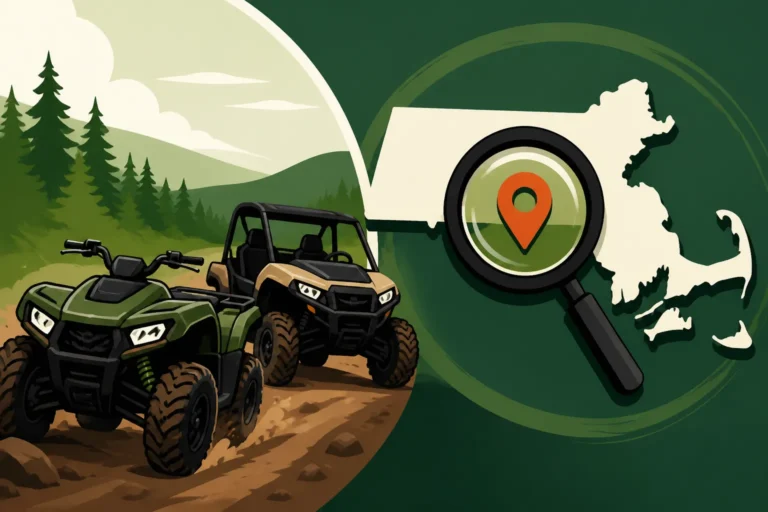
Pittsfield State Forest can look like an easy Berkshire day ride on a map, but its steep, rocky terrain and designated-route rules can surprise riders who arrive expecting smooth roads or open access. This guide explains what the trails are like, how to prepare your ATV or UTV, what to check before towing, and how to ride with care in this popular state forest.
What the Trails at Pittsfield State Forest Are Like
Expect a compact network with a mountain feel
Pittsfield State Forest offers roughly 14 miles of designated OHV trails, a relatively modest amount of riding compared with large trail systems elsewhere. The mileage can still make for a full outing: elevation changes, rocks, roots, uneven surfaces, and tight turns may slow your pace. A short route on a map does not necessarily mean a quick ride.
The forest sits in the Berkshire hills near Pittsfield and Hancock. Instead of wide, level paths, expect a wooded setting where the surface and slope can change as you go. Conditions may differ from one section to the next, and a trail that feels manageable in dry weather can become much more demanding after rain.
For a broader look at the region’s riding options, see [Massachusetts ATV Trails: Three Berkshire Forests]. If you want a forest-specific overview before planning, [Pittsfield State Forest Riding in Massachusetts] and [Pittsfield State Forest's 14 Miles in Massachusetts] are useful related reads.
Plan for intermediate terrain, not a casual cruise
Riders should approach the trails as a more challenging outing rather than a beginner practice loop. The Berkshire terrain can call for careful throttle control, a steady line over ledges, and enough clearance to avoid striking the underside of a machine. If you are still building confidence, consider riding with an experienced companion and choosing conservative lines rather than trying to keep up with faster riders.
A UTV’s size can also affect how comfortable a route feels. A machine that fits comfortably on open ground may feel wide on a narrow trail, especially where branches, rocks, or trail edges limit room to maneuver. Check machine-width restrictions and route suitability before setting out; do not assume every route in the forest is appropriate for every ATV or side-by-side.
The description [Massachusetts Trails Rated Intermediate and Up] can help set expectations, but your own experience, your machine, and the day’s conditions matter just as much. If anyone in your group is uneasy on steep or rocky ground, choose a different outing rather than pressuring them to continue once the ride is underway.
How to Prepare Before You Tow
Confirm access, closures, and the riding season
Do not treat an old map, a saved route, or a previous visit as proof that a trail is open today. Seasonal access, maintenance, storm damage, and land-management decisions can affect where riding is permitted. Check current DCR information before leaving home, and contact the forest office if anything is unclear. [Massachusetts DCR Riding Season] offers more context on the seasonal riding window.
This check is especially worthwhile when you are coming from outside the immediate Pittsfield area. A closure discovered after you have hauled a machine to the trailhead can turn a planned riding day into a frustrating search for another place to go. Look for current access notices, parking instructions, and any temporary restrictions that apply to your intended route.
Weather matters, too. Heavy rain can leave ruts, loosen rocks, and make climbs harder to manage. If conditions are questionable, check [Massachusetts Trail Closures After a Storm] and [Massachusetts Trail Conditions Before You Tow]. When you call, ask a specific question: “Are the designated OHV routes open, and are there any conditions or restrictions I should know about today?” That is more useful than asking only whether the forest is open.
Check registration, equipment, and navigation
Before riding, make sure the machine has the Massachusetts registration and required decals for the person and use involved. An out-of-state sticker should not be assumed to replace Massachusetts registration. The guide [Massachusetts Registration Before Your First Ride] can help you work through the basic preparation.
Pack required documents and safety equipment, and inspect the machine before loading it. Check tires, brakes, throttle operation, steering, lights, and fuel. On rocky ground, a loose strap, soft tire, or weak brake can quickly become more than a minor inconvenience. Carry basic tools, a first-aid kit, water, and a way to contact your group if someone becomes separated.
A mapping app such as onX Offroad can be useful for orientation and for saving a planned route, but do not treat an app’s line as permission to ride. Compare digital maps with current official guidance and posted signs at the forest. Download maps for offline use before you arrive, since cell coverage can be unreliable in wooded, hilly areas. [Cell Dead Zones in the Berkshire Hills] explains why a backup plan matters.
| Before you leave | What to confirm | Why it matters |
|---|---|---|
| Trail access | Designated routes are open and appropriate for your machine | Closures or restrictions can change your plan |
| Registration | Required Massachusetts registration and decals are in place | A machine’s home-state registration may not be enough |
| Machine condition | Brakes, tires, steering, lights, and fuel are ready | Rocky, uneven terrain puts extra demands on equipment |
| Navigation | Route information is saved offline and checked against official notices | Cell service and map accuracy can vary |
| Group plan | Everyone knows the route, regrouping points, and turnaround plan | A clear plan reduces confusion if riders get separated |
| Parking | Current location, access rules, and any fees are confirmed | Avoids a wasted tow and helps prevent improper parking |
What a Day on the Trails May Feel Like
Ride at the pace the terrain allows
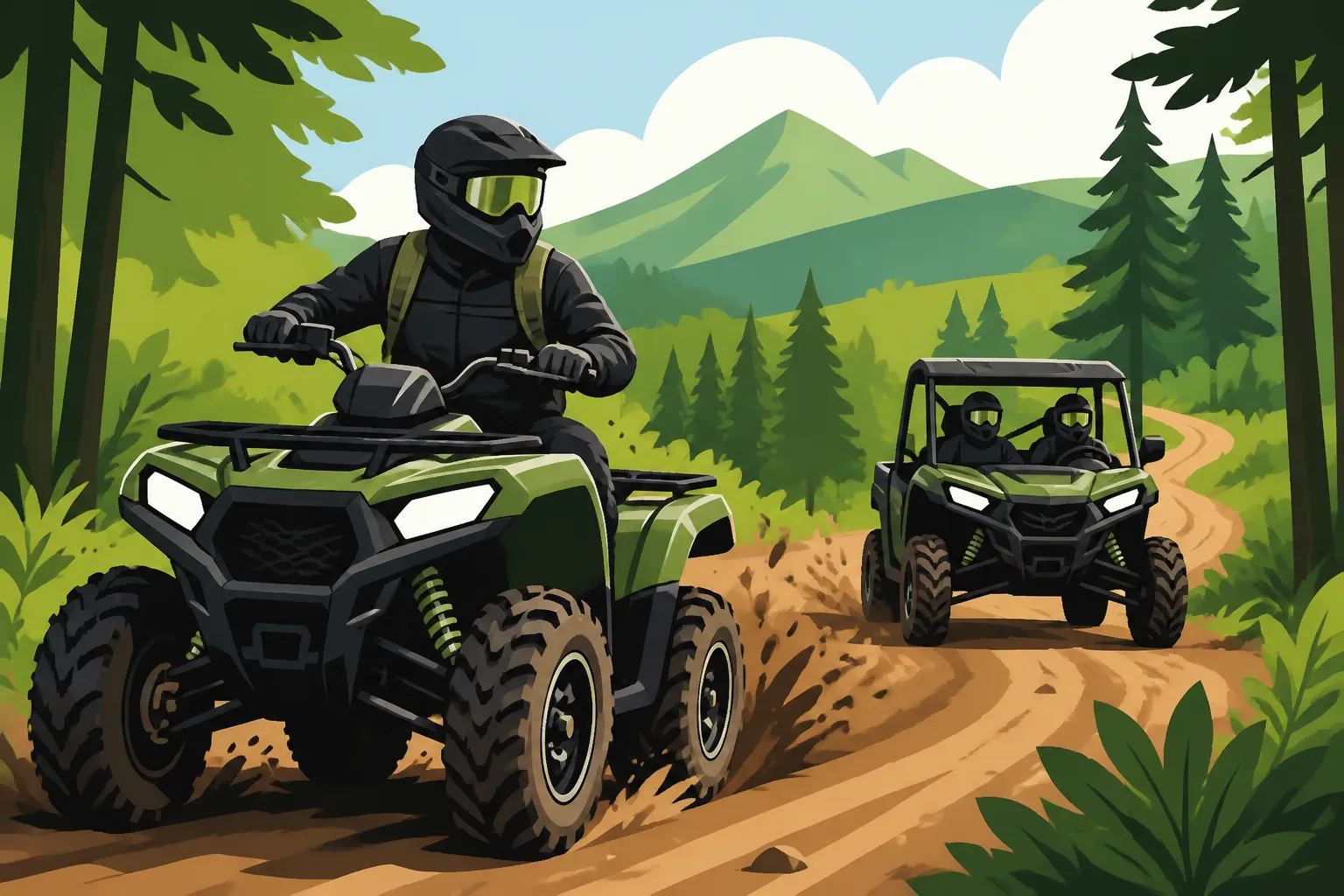
A good day at Pittsfield State Forest is not necessarily the one with the most miles covered. The footing can be uneven, visibility around bends may be limited, and the trail may narrow where vegetation grows close to the route. Leave space between machines so the rider ahead has room to stop or choose a line without being pressured from behind.
On an uphill section, avoid rushing into a climb just because another machine made it look easy. Stop somewhere safe, assess the surface, and make sure the group is ready before proceeding. If a section feels beyond your ability or your vehicle’s capability, turning around is a sound decision, not a failure. Riders can also benefit from agreeing in advance that anyone may call for a pause without being teased or hurried.
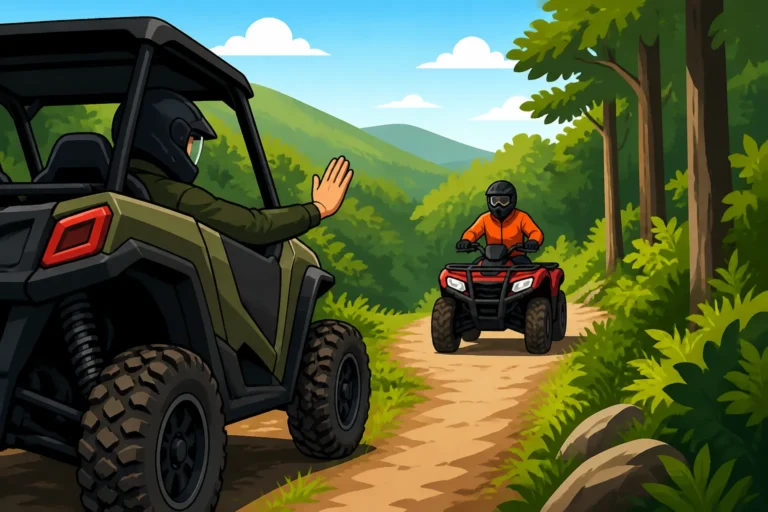
Keep the group together without riding too close. Choose clear regrouping points where everyone can stop without blocking the trail, and make sure the last rider is accounted for before the group moves on. The advice in [Massachusetts Group Ride Planning] and [Massachusetts Trail Etiquette Locals Expect] is especially relevant when narrow routes bring riders close together.
Share the forest and protect the trail
Pittsfield State Forest is not an isolated private riding park. Other visitors may be hiking, camping, or using nearby forest roads and facilities. Slow down when approaching people, give them room, and follow posted signs. Keep noise down near campsites and residential areas, and do not create a new route around an obstacle or a closed section.
Mud can be tempting, especially when a group is eager to keep moving, but spinning tires can deepen ruts and damage the trail. If a section is too wet to cross without tearing it up, stop and reassess. A small delay is better than leaving damage that affects future access. Stay on authorized routes and obtain permission before riding anywhere that is not clearly open to OHVs.
Carry out everything you bring in, including food wrappers, broken straps, and small repair parts. If you stop for a repair, move out of the way as safely as possible and leave the trail as you found it. Thoughtful behavior helps protect the forest experience for other visitors and supports continued access for responsible riders.
Practical Planning for a Safer, Smoother Ride
Match the outing to your group
Before choosing a route, be honest about the least experienced rider in the group. A confident rider on a capable ATV may be comfortable with rocks and steep grades, while a newer rider may need a slower pace and more frequent stops. Agree on a turnaround time and a simple regrouping plan before unloading. That avoids the awkward moment when some riders want to continue and others are already tired or uncomfortable.
For a first visit, keep the day flexible. Avoid packing the schedule with a long drive, a full day of riding, and a tight return deadline. Give yourself time to check signs, adjust gear, and stop if weather or trail conditions change. If you are traveling with children, review age, supervision, and safety-certificate requirements before the trip; do not assume that riding on public forest land follows the same rules as riding on private property.
A small group can be easier to manage on narrow trails than a large convoy. If you are bringing several machines, assign a lead and a sweep rider, and agree that no one passes the lead without checking in. Make sure every rider knows the meeting point if the group becomes separated.
Make a backup plan before leaving home
Have a second option in mind in case access changes, the trails are too wet, or your machine is not a good fit for the terrain. That backup could mean postponing the ride, choosing a different permitted riding area, or using the day for a non-riding visit to the Berkshires. The key is avoiding the temptation to improvise by entering an unsigned route or crossing land that is not open to OHVs.
If you are relying on onX Offroad, save the relevant map area before you lose service and treat it as a navigation aid rather than a final authority on access. Keep your phone charged, bring a paper map if you have one, and tell someone at home where you plan to ride and when you expect to return. A basic check-in plan is particularly helpful when the group has little cell coverage.
Finally, give yourself enough time to secure the machines and check your trailer before heading home. Walk around the parking area, collect straps and gear, and make sure nothing has been left behind. For a trip that goes smoothly, the small decisions made before the first mile often matter as much as the ride itself.
Disclaimer
This article is for general informational purposes only and does not constitute professional advice. Laws, prices and regulations vary by location and change over time. Consult a qualified professional for guidance on your specific situation.