Massachusetts Riding Areas With Group Space
Finding a place for a group ATV or UTV ride in Massachusetts takes more than picking a scenic forest. Parking can be tight, not every route allows every machine, and a meet-up that spills into a road or blocks other visitors can create problems before the ride begins. This guide explains where to start looking and how to plan a considerate group outing.
Where to look for group riding in Massachusetts
Start with the Berkshire state forests
The main public OHV riding options in Massachusetts are concentrated in the Berkshires, including Beartown State Forest, October Mountain State Forest, and Pittsfield State Forest. They are natural starting points when a group wants to ride designated trails and meet in the same general area. But a forest being open to OHV riding does not mean every road or trail inside it is an authorized route.
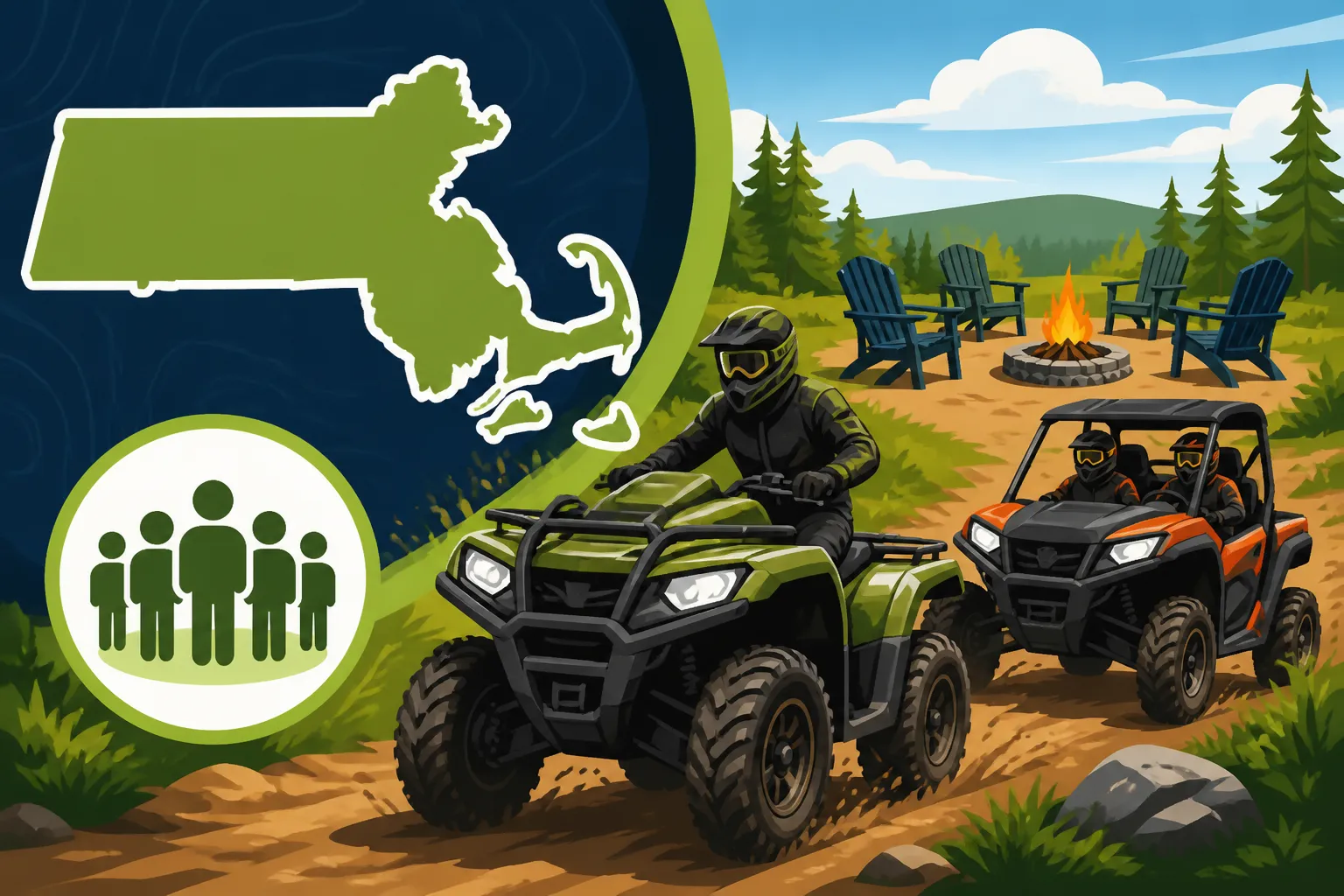
Group space is a separate question from trail access. A forest may have a trailhead or parking area that works for a few vehicles, while offering no dedicated place for a large group to gather, unload, and organize. Before inviting riders, check the current forest information and ask whether the location can accommodate your group’s vehicles and trailers. For an overview of these public riding options, see [Massachusetts ATV Trails: Three Berkshire Forests].
Be realistic about what “group space” means for your outing. Ten riders arriving in passenger vehicles take up less room than ten riders bringing separate trucks and trailers. A group of UTVs may also need more maneuvering room than a group of smaller quads. If your party includes several tow vehicles, ask specifically about trailer parking rather than assuming a general day-use lot will have enough space.
Treat each forest as a distinct planning choice
The three Berkshire forests are not interchangeable. Their trail networks, access points, surroundings, and operating details differ, and trail conditions or closures can affect the best choice for a particular day. Before settling on a meeting point, compare the official maps and notices for the forest you’re considering. [Massachusetts Trail Planning and Closures] is a useful next read for thinking through access and changes that could affect a ride.
Beartown, October Mountain, and Pittsfield are all worth considering, but the right fit depends on the size and experience of your group and the kind of machines you plan to bring. Don’t assume that a route suitable for one ATV is automatically suitable for a wide side-by-side. Confirm permitted trails and any machine restrictions before the group travels. For a closer look at what a specific forest ride may involve, read [What to Expect on Pittsfield State Forest Trails].
| Planning question | What to check before choosing a meeting spot |
|---|---|
| Is OHV riding allowed there? | Confirm that the forest and specific routes are open and authorized for your machine type |
| Can the group park? | Ask about the size of the lot, trailer space, and whether parking is shared with other visitors |
| Is there room to unload? | Confirm that vehicles can maneuver without blocking traffic or other parked vehicles |
| Will the whole group fit on the route? | Check trail suitability, restrictions, and current closures |
| Are there access or parking rules? | Verify current forest requirements and any applicable fees or permits |
| Can everyone find the meeting point? | Share a clear location, route instructions, and a backup plan |
How to confirm that a spot can handle your group
Call before you tow
A map can show where a parking area is, but it usually cannot tell you whether the lot is suitable for a particular group on a particular day. Contact the relevant forest office before making the drive, especially if you are organizing a club ride, bringing multiple trailers, or visiting on a busy weekend. Explain how many machines and tow vehicles are expected, whether riders will unload on site, and what time the group plans to arrive.
Ask practical questions rather than simply asking whether group rides are allowed. For example: Is there room for several trailers? Are there separate parking arrangements for out-of-state visitors? Are there temporary closures or restrictions? Is there a designated meeting area, or should the group arrange to meet somewhere else? A direct call can prevent the frustrating scenario of a dozen riders arriving to find that the only available space is already full. [Calling Beartown State Forest Before You Tow] offers a useful example of why it pays to confirm details before heading out.
If the forest cannot accommodate your group at the preferred trailhead, don’t improvise by parking along a narrow road, blocking a gate, or using an unsigned pull-off. Ask whether another access point is appropriate, or choose a different date or location. A fallback plan should be agreed on before people leave home, not while a line of trucks is waiting behind the group.
Separate the meeting place from the riding route
The best location for everyone to meet may not be the best place to unload. Some groups meet at a larger, clearly identifiable location and then travel to the riding area in smaller, coordinated units. This can reduce congestion, but only if the travel plan follows routes where the vehicles are legally allowed. Don’t assume a public road is an acceptable connector for an off-road machine.
When choosing a meeting point, consider access for trailers, restrooms if available, cell coverage, and how safely riders can pull in and out. Avoid relying on a convenience store or roadside business as an informal staging area without permission. A group that occupies customer parking or blocks an entrance can create conflict with the business and its neighbors.
Digital maps can help participants understand the approach and avoid confusion, particularly when riders are coming from different directions. Some groups use onX Offroad to review route context and share a general meeting location, but map apps should not replace official forest maps, posted notices, or permission from the land manager. Use onX Offroad as a planning aid, then confirm that your access and riding route are allowed.
Plan the ride around parking, machines, and people
Collect the details that affect space
Before confirming attendance, ask each rider what they are bringing: machine type, number of tow vehicles, trailer length, and whether passengers or family members are joining. This gives the organizer a more useful headcount than simply asking how many people are coming. Six riders could mean two trucks and one trailer—or six trucks and six trailers.
Set a realistic arrival window and designate one person to coordinate parking. Ask early arrivals to park in a way that leaves room for later vehicles to turn around and unload. If the area is shared with hikers, campers, or other trail users, preserve their access rather than treating the entire lot as reserved for your ride. [Massachusetts Group Ride Planning] can help you build a more complete plan for coordinating riders.
Also think through the group’s machine mix. A narrow trail suitable for smaller ATVs may not be appropriate for a wide side-by-side, and a rider’s confidence level can affect the pace and route choice. Verify the specific route rules and plan a ride that does not pressure less experienced riders to keep up on terrain beyond their comfort level.
Set expectations for arrival and trail behavior
Send participants the meeting location, the expected arrival time, parking instructions, and a backup plan in one message. Include a reminder to arrive with machines ready for the outing and to follow any posted rules at the trailhead. If the group splits into smaller riding units, agree on leaders and regrouping points before starting. A shared map may be useful for orientation; onX Offroad can help riders discuss where they expect to meet, but everyone should still follow authorized routes and local signs.
Keep the staging area orderly. Don’t rev engines unnecessarily, leave litter, block trail entrances, or spread across the lot while people unload. A large group is more noticeable than a few riders, so considerate behavior helps avoid friction with other visitors and nearby residents. These habits matter as much at the parking area as they do on the trail. For more on sharing public riding areas respectfully, see [Massachusetts Trail Etiquette Locals Expect].
Do not assume that a group can reserve public parking simply by arriving early or posting an event notice. If you are organizing a formal club event, charity ride, or gathering that could bring a significant number of vehicles, ask the land manager whether additional approval is needed. Keep the group small enough to use the available space safely if no formal staging area has been confirmed.
A practical checklist for choosing group space
Before you announce the ride
Use this checklist before setting a date or asking people to commit:
- Choose a forest and confirm authorized OHV routes. Start with the Berkshire riding areas, then verify the particular trails and machine rules.
- Estimate the parking footprint. Count tow vehicles and trailers, not only riders.
- Contact the appropriate office. Describe the group size and ask about parking, unloading, closures, and any event requirements.
- Check access details. Confirm current operating information, permits, and parking arrangements rather than relying on old posts or assumptions.
- Pick a backup plan. Decide what the group will do if the lot is full or the route is closed.
- Share clear instructions. Send the meeting location, arrival window, route expectations, and organizer contact to participants.
- Review the plan again before departure. Check for updated notices and remind riders to obey signs at the site.
For current forest information, use the relevant official notices and maps as the final reference. A route-planning app such as onX Offroad can help riders compare notes and orient themselves, but it cannot establish permission to ride or override a closure. Keep a paper or official map available if cell service is limited; coverage can be unreliable in wooded and hilly areas. [Massachusetts Riding Areas With Cell Service] can help you think about communication limitations when selecting a location.
On the day of the ride
Have the organizer arrive early enough to assess the parking situation before the rest of the group pulls in. If the lot is crowded, don’t direct drivers to unsafe roadside parking or unauthorized land. Contact the forest office if appropriate, use the preselected alternative, or postpone the ride. That may feel disappointing after everyone has made the drive, but it is safer and more respectful than creating a traffic problem.
Once the group is staged, keep unloading efficient and leave room for other visitors. Confirm that everyone understands the intended route and knows what to do if separated. Carry the required registration and safety documents, follow posted restrictions, and stay on authorized trails. If you are unsure whether a route or gathering arrangement is allowed, stop and verify rather than relying on what another rider remembers from a previous visit.
Massachusetts group rides are easier when the organizer treats parking and access as part of the ride plan—not as details to work out after arrival. Start with the Berkshire forests, confirm the specific space and rules with the land manager, and scale the group to the parking and trail conditions available. That small amount of preparation can save everyone a long, frustrating trip and help keep public riding areas welcoming to all visitors.
Disclaimer
This article is for general informational purposes only and does not constitute professional advice. Laws, prices and regulations vary by location and change over time. Consult a qualified professional for guidance on your specific situation.