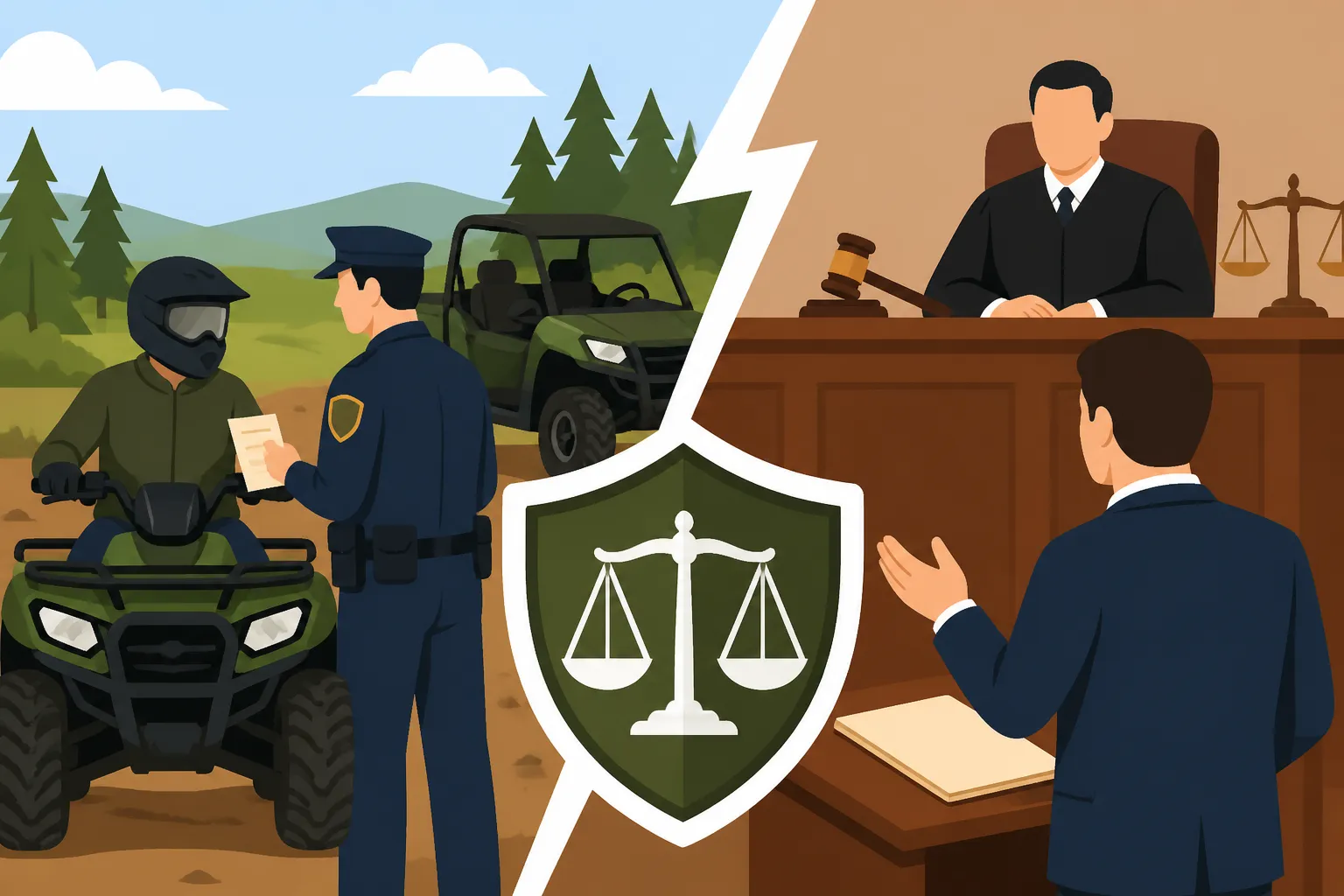
Disputing an OHV Citation in District Court
Getting an OHV citation in Massachusetts can be incredibly frustrating, especially if you feel you weren't in the wrong or that the circumstances were misinterpreted. Nobody wants to deal with fines, court appearances, or the stress of navigating the legal system just for enjoying the trails. This comprehensive guide is here to walk you through the process of disputing an OHV citation in a Massachusetts District Court, from understanding the initial paperwork to presenting your case and knowing what to expect afterward.
Understanding Your OHV Citation in Massachusetts
When you receive an Off-Highway Vehicle (OHV) citation in Massachusetts, it's not just a simple ticket. It's a formal accusation of violating specific state laws or regulations governing ATVs, UTVs, and dirt bikes. The initial shock or annoyance can quickly turn into confusion about what to do next. Taking a moment to understand the citation itself is the crucial first step before you decide to dispute it.
Common Reasons for Citations
Massachusetts has some very specific rules for OHV operation, and violations can lead to a citation. One of the most common reasons riders get pulled over is for [riding unregistered]. Every ATV, UTV, and dirt bike operating on public lands or crossing public ways must have a current registration sticker issued by the state. Another frequent issue is related to age and engine size restrictions, especially under [Massachusetts ATV Age Requirements], which can be quite strict. We've heard countless stories of riders, often parents, being caught off guard by these detailed regulations. For instance, a 15-year-old on a 125cc quad might seem fine to some, but it could lead to a citation if the engine size exceeds the allowed limit for their age.
You might also be cited for not wearing a helmet, even though [Massachusetts ATV Helmet Law] applies to all riders, regardless of age. Riding on private land without explicit written permission, violating [Massachusetts's 150-Foot Dwelling Rule] by riding too close to a residence, or riding on prohibited areas like public roads or sensitive environmental zones are other common infractions. Sometimes, riders forget to carry their [Massachusetts Registration Cards Carried on Board] or don't have their decals properly displayed according to [Massachusetts Decal Placement Rules], leading to a stop and potential citation. The specific violation should be clearly listed on your citation paperwork.
The Environmental Police and OHV Enforcement
In Massachusetts, the primary enforcement agency for OHV laws is the Massachusetts Environmental Police (MEP). Unlike general municipal police, the MEP are specialists in natural resource laws, including those pertaining to off-highway vehicles. This means they are often very knowledgeable about Chapter 90B, the specific section of Massachusetts General Laws that governs OHVs. They patrol state forests, parks, and other public lands where OHVs are permitted, as well as investigate complaints about illegal riding on private or restricted property.
It’s important to understand that the Environmental Police have the authority to issue citations, not just warnings. While they may sometimes offer educational advice, their primary role in an enforcement stop is to ensure compliance with the law. They are often the officers you'll encounter at trailheads like those in [Beartown State Forest Riding in Massachusetts] or [October Mountain State Forest Riding in Massachusetts]. If you receive a citation from an MEP officer, it means they believe a violation occurred, and the process for disputing it will go through the District Court system. They don't handle things like vehicle titles, which is why [Why the Environmental Police Issue a Card, Not a Title] is a common question, but they are definitely the authority on riding conduct and registration.
Deciding Whether to Dispute Your Citation
Receiving an OHV citation can stir up a lot of emotions – frustration, anger, confusion. Your first instinct might be to fight it, no matter what. However, before you commit to the time and effort of a court dispute, it's really important to take a deep breath and objectively assess your situation. Disputing a citation isn't always the best course of action, and understanding the potential upsides and downsides can help you make an informed decision.
Weighing the Costs and Benefits
Disputing a citation in District Court isn't like simply mailing in a payment. It requires a commitment of your time, and potentially your money. First, there's the administrative fee for requesting a court hearing, which you'll typically have to pay upfront. Then, consider the time you'll need to prepare your case, gather evidence, and attend court. This often means taking time off work or other obligations, which has its own financial implications. You might also consider hiring legal counsel, which can add significantly to your costs, though for minor OHV citations, many people choose to represent themselves.
On the benefit side, a successful dispute means you avoid the fine, and importantly, you don't have a finding of responsibility on your record for that particular incident. This can be significant if the citation carries other implications, such as increased insurance rates, though [Does Massachusetts Require Insurance on a Registered ATV?] clarifies that ATV insurance is optional. However, if you genuinely believe you were unjustly cited, or if there's a significant misunderstanding of the law or facts, fighting it can be incredibly worthwhile. For example, if you had [Massachusetts Landowner Permission in Writing] but the officer didn't see it, disputing the trespass citation could be essential.
Self-Assessment: Is Your Case Strong?
Before you decide to head to court, really evaluate the strength of your case. Do you have tangible evidence to support your claim? This could include:
- Photos or videos: Did you take pictures of the trail, your machine, or the area at the time of the incident that could prove your innocence or demonstrate mitigating circumstances?
- Witness statements: Was anyone else with you who can corroborate your story? Getting their contact information and a written statement is crucial.
- Documentation: Did you have the necessary permits, registration, or written landowner permission that the officer might have overlooked or misinterpreted? For example, if you were cited for an age violation but had a valid [Massachusetts Safety Certificate for a 15-Year-Old], that's key evidence.
- Knowledge of the law: Do you genuinely believe the officer misapplied the law, or that you were in compliance with the specific statute you're accused of violating? Reviewing [Massachusetts ATV Laws Under Chapter 90B] can be very helpful here.
Consider the officer's perspective as well. What might they have observed that led to the citation? If your defense relies solely on "I didn't know," it might be a weaker case, as ignorance of the law is rarely a successful defense. However, if you have solid evidence that contradicts the citation, your chances of success improve greatly. For instance, if you were riding a youth quad that technically fits the [Massachusetts Engine Size Limits by Age] for your child, but the officer thought it was too large, that's a factual dispute you can present.
The District Court Process for OHV Citations
So, you've decided to dispute your OHV citation. It's a big step, but it's your right, and understanding the process can make it far less intimidating. The Massachusetts District Court system handles these types of violations, and while it might seem formal, it's designed to give you a fair opportunity to present your side.
Notifying the Court of Your Intent to Dispute
The first and most critical step is to formally notify the court that you intend to dispute the citation. Your citation paperwork will typically have instructions on how to do this, usually by checking a box indicating you want a hearing and mailing it back within a specific timeframe – often 20 days. Do NOT miss this deadline, as failing to respond usually results in a default judgment against you, meaning you're found responsible and owe the fine.
You'll usually send the completed form and the required administrative fee (check your citation for the exact amount and where to send it) to the District Court that has jurisdiction over the area where you received the citation. This is usually the District Court closest to where the incident occurred. Once the court receives your request, they will schedule a hearing date and mail you a summons or notice with the date, time, and courtroom number. Keep this document safe!
Preparing Your Case for Court
Once you have your court date, it's time to get serious about preparing your defense. This isn't just about showing up; it's about presenting a clear, concise, and evidence-backed argument.
-
Gather All Evidence:
- Citation: Have the original citation with you.
- Documents: Any permits, your [Massachusetts Registration Cards Carried on Board], [Massachusetts Written Permission From a Bay State Owner] if applicable, or safety course certificates like the [Massachusetts Safety Certificate for a 17-Year-Old].
- Photos/Videos: If you have pictures or video that support your case (e.g., showing proper decal placement, the condition of a trail, or signage), print them out clearly and consider bringing multiple copies. For videos, ensure you have a device that can play them reliably, and consider editing them down to the most relevant clips.
- Witness Statements: If you have witnesses, ask them to write down what they saw, sign it, and provide their contact information. Ideally, they should be willing to appear in court with you, as live testimony is often more impactful.
- Maps/GPS Data: If your defense involves specific locations or demonstrating you were not in a restricted area, maps or GPS logs from a device like a SuperATV navigation system can be powerful tools.
-
Understand the Law: Reread the specific statute you're accused of violating. Sometimes, the language of the law itself might support your defense. Knowing the exact wording can help you articulate why you believe you did not violate it. Resources like [The ATV Law Lives in Chapter 90B] can be invaluable.
-
Organize Your Thoughts: Write down a brief outline of your argument. What are the key points you want to make? What evidence will you use to support each point? Practice explaining your side clearly and calmly.
-
Dress Appropriately: While not a criminal trial, court is a formal setting. Dress neatly and respectfully. This shows respect for the court and can help create a positive impression.
-
Consider Legal Counsel: For more complex cases, or if you feel overwhelmed, consulting an attorney specializing in traffic or administrative law can be beneficial. While they can be an added cost, their expertise might significantly improve your chances of success.
What to Expect During Your Hearing
When your court date arrives, plan to get there early. Find parking, locate your courtroom, and take a moment to compose yourself.
- Check-in: You'll usually check in with the clerk or bailiff when you arrive.
- The Officer's Testimony: The Environmental Police officer who issued your citation will present their side of the story first. They will describe the incident, what they observed, and why they issued the citation. You will have an opportunity to ask them questions (cross-examine them) afterward. This is your chance to clarify facts or point out inconsistencies, but always be respectful and calm.
- Your Defense: After the officer, it's your turn. You'll present your side to the magistrate or judge.
- State Your Case Clearly: Explain what happened from your perspective, referring to your notes if needed.
- Present Your Evidence: Offer your documents, photos, or witness statements as you make your points. Make sure to verbally explain what each piece of evidence shows.
- Witness Testimony: If you have witnesses, they will speak after you.
- Answer Questions: The magistrate or judge will likely ask you questions to get a full understanding of the situation. Answer truthfully and directly.
Remember, the goal is not to argue with the officer or get emotional. It's to present facts and evidence that demonstrate you were not responsible for the violation, or that there were mitigating circumstances. Stay calm, be polite, and stick to the facts. The Environmental Police officer will have their notes and may have photos as well, so be prepared for their perspective.
Potential Outcomes and What Comes Next
After you've presented your case and the officer has presented theirs, the magistrate or judge will make a decision. This decision can have several outcomes, and it's important to understand what each means for you.
Possible Judgments from the Court
Once both sides have been heard, the magistrate or judge will consider all the evidence and testimony. They have a few options for their judgment:
- Found Not Responsible: This is the best possible outcome. It means the court agrees with your defense or finds that the prosecution (the Environmental Police) did not prove their case beyond a reasonable doubt. The citation is dismissed, and you typically won't owe any fine or have a violation on your record. This is what every rider hopes for when [Appealing a Citation Written in a State Forest].
- Found Responsible: This means the court finds that you did, in fact, commit the violation. You will be ordered to pay the fine associated with the citation, and a record of the violation will stand. There might also be additional court costs.
- Found Responsible with a Reduced Fine: In some cases, the court might find you responsible but choose to reduce the fine, especially if there were some mitigating circumstances you presented that didn't fully negate the violation but showed good faith or an honest mistake.
- Dismissed (often with a warning or condition): Sometimes, especially for first-time offenders or minor infractions, the court might choose to dismiss the citation, perhaps with a warning or a condition, such as attending a safety course if you haven't already.
The magistrate will usually explain their decision right there in the courtroom. It’s important to listen carefully to understand the ruling and any instructions that follow.
What If You Lose?
If the court finds you responsible, it can be disappointing, especially after putting in the effort to dispute the citation. Your primary obligation at this point will be to pay the fine and any associated court costs. The court clerk will provide you with information on how and when to make this payment. Failure to pay could lead to further penalties, including additional fees or even a suspension of your OHV registration in some cases.
While it's rare for minor OHV citations, you generally have the right to appeal a District Court decision to a higher court. However, an appeal is a much more complex and expensive legal process, usually involving significant legal fees and a more formal trial. For most standard OHV citations, the time, expense, and low probability of a successful appeal make it an impractical option. Most riders, even those who feel the decision was unjust, choose to simply pay the fine and move forward, perhaps focusing on learning more about [Massachusetts Rules Riders Get Wrong] to avoid future citations.
Ultimately, the decision to dispute an OHV citation is a personal one. While it requires time and effort, successfully defending yourself can provide peace of mind and save you from unnecessary fines. Even if you're found responsible, going through the process can be an educational experience, helping you understand the laws and the legal system better.
| Outcome | Description | Common Implications |
|---|---|---|
| Found Not Responsible | Court agrees with your defense or prosecutor's case is not proven. | Citation dismissed, no fine, no violation on record. |
| Found Responsible | Court determines you committed the violation as cited. | Fine owed (plus court costs), violation noted on record. |
| Reduced Fine | Found responsible, but court lessens the financial penalty. | Lower fine owed (plus court costs), violation noted on record. |
| Dismissed (with condition) | Citation dismissed, often with a requirement (e.g., attend safety course). | No fine (unless condition unmet), violation record may be cleared after condition fulfilled. |
Disclaimer
This article is for general informational purposes only and does not constitute professional advice. Laws, prices and regulations vary by location and change over time. Consult a qualified professional for guidance on your specific situation.