Massachusetts Rules for a Visiting Vermont Rider
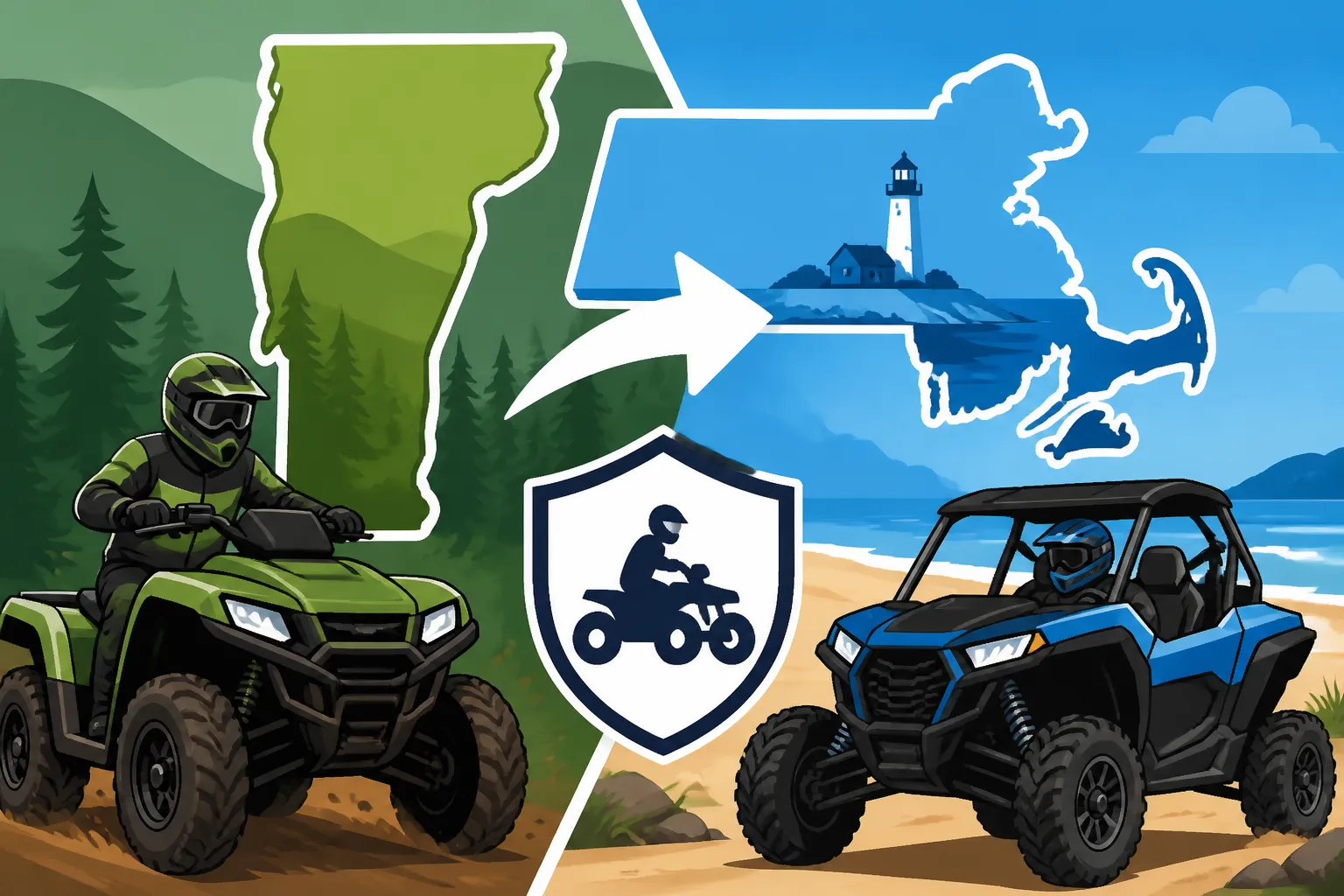
You've packed up your ATV or UTV in Vermont, dreaming of exploring some new trails in the Bay State. You're probably thinking, "My machine's registered in Vermont, so I'm good to go, right?" Unfortunately, that's one of the biggest misconceptions many visiting riders have, and it can quickly turn a fun day into a frustrating encounter with a Massachusetts Environmental Police Officer. This guide is here to help you understand the specific requirements and regulations Massachusetts has for out-of-state OHV riders, ensuring your visit is smooth, legal, and truly enjoyable.
Understanding Massachusetts' Stance on Out-of-State Registrations
It's a common story: riders from neighboring states like Vermont, New Hampshire, or New York arrive in Massachusetts, eager to hit the trails, only to discover their home-state registration doesn't cut it. Massachusetts has its own unique system for off-highway vehicle (OHV) registration, and it's pretty strict about it.
Why Your Vermont Registration Isn't Enough
Unlike some states that have reciprocity agreements for OHV registrations, Massachusetts operates under a different philosophy. The Commonwealth requires all off-highway vehicles, including ATVs and UTVs, to be registered within its system if they are going to be operated on public lands or trails. This means that even if your machine is perfectly legal and registered in Vermont, with all your decals prominently displayed, you'll still need a separate Massachusetts registration sticker to ride legally here.
This policy can feel a bit like a double whammy for visitors, as it means an extra step and an extra fee. However, the intent behind it is to ensure all machines using Massachusetts' limited public OHV resources contribute to their upkeep and management, regardless of their origin. It's not personal; it's simply how the Bay State manages its trail system and funds like the [Massachusetts Trail Fund Share of Fees]. So, while your Vermont plate or sticker is great for riding at home, don't expect it to serve you here.
The Massachusetts One-Year Sticker for Visitors
For our friends from Vermont and other states, Massachusetts offers a specific visitor registration. This isn't just a courtesy; it's a mandatory requirement. This special registration grants you a sticker that is valid for one year. It's different from the two-year registration that Massachusetts residents typically get for their machines. The process is designed to be straightforward for out-of-state operators who aren't looking for a long-term commitment but simply want to enjoy the trails during a visit.
The fee for this visitor sticker is also different. While Massachusetts residents pay one amount for a two-year period, [Massachusetts Charges $33 for Visitors] for their one-year decal. This fee directly supports the state's efforts in maintaining and expanding the OHV trail system, so in a way, you're directly contributing to the trails you're about to enjoy. It’s important to budget for this if you’re planning a trip to ride in the Bay State.
Navigating the Massachusetts Registration Process as a Visitor
So, you know you need a Massachusetts sticker. Now, how do you actually get one for your Vermont-registered ATV or UTV? The process is surprisingly user-friendly, thanks to modern technology, but it does require attention to detail and having the right paperwork ready.
Required Documentation for Your Out-of-State Machine
When you're ready to register your Vermont machine in Massachusetts, you'll need to gather a few essential documents. Think of it like a checklist you'd normally use, but with an out-of-state twist. First and foremost, you'll need proof of ownership for your ATV or UTV. This could be your current Vermont registration, a bill of sale if you recently acquired the machine, or a Manufacturer's Certificate of Origin (MCO) if it's brand new. The key is to clearly demonstrate that the machine belongs to you.
Next, the Vehicle Identification Number (VIN) is critical. [Massachusetts Requires a VIN on the Application], so make sure you have it readily accessible. It's usually stamped on the frame of your machine. You'll also need some form of identification that verifies your residency in Vermont, like your valid Vermont driver's license. While you're not getting a Massachusetts driver's license, the state needs to confirm you are indeed a visitor to issue the correct one-year registration. Having these documents organized before you start the process will save you a lot of time and potential headaches.
Where to Get Your Massachusetts Visitor Sticker
The most convenient way for many visiting riders to register their OHV is through the state's online portal. The [Massachusetts Online Registration System] is designed to walk you through the steps, allowing you to submit your information and pay the fee from the comfort of your home in Vermont. This is often the preferred method for out-of-state riders, as it means the decals and registration card can be mailed directly to you, arriving before you even hitch up your trailer.
If you prefer a more personal touch, or if you're already in Massachusetts and realize you need to register, you can also [Registering an ATV With the Environmental Police] directly at one of their offices. However, check their hours and availability first, as these can vary. Some riders also find success with [Massachusetts Registration by Phone], though this might be best for clarifying specific questions rather than initiating the full registration process. Once your application is processed, the state will typically mail you your [Massachusetts Issues Decals and a Card], which are your official proof of Massachusetts registration.
Displaying Your Massachusetts Decals and Card
Getting your Massachusetts registration sticker is only half the battle; knowing where to put it and what to carry is equally important. The state has specific rules for decal placement to ensure visibility and easy identification by Environmental Police. Your Massachusetts decals must be affixed to both sides of the forward half of your ATV or UTV. [Massachusetts Decal Placement Rules] dictate that they should be applied in a way that is clearly visible, usually on the cowling or fenders. [Massachusetts Decals on Both Sides] ensures that no matter which way an officer approaches, they can quickly verify your registration status.
In addition to the physical decals on your machine, you must always carry your Massachusetts OHV registration card with you while riding. This card serves as your official proof of registration and contains vital information about your machine and its registration term. It’s best to keep it in a waterproof bag or a secure pocket, not taped to the machine where it could get damaged or lost. Environmental Police Officers frequently perform checks at trailheads and on the trails, and being able to quickly produce your [Massachusetts Registration Cards Carried on Board] can prevent delays and potential fines.
Key Massachusetts Riding Laws for Vermont Visitors
Riding laws can vary significantly from state to state. While you might be accustomed to certain regulations in Vermont, it's crucial to understand and adhere to Massachusetts' specific rules. Ignorance of the law is never an excuse, and the Bay State has some of the strictest OHV laws, particularly regarding youth riders and public land access.
Age and Safety Certificate Requirements
Massachusetts takes youth rider safety very seriously, and its laws are among the most stringent in the country. For example, [Massachusetts Bans Riders Under 14] from operating any OHV on public or private land, regardless of supervision. This is a crucial point for families traveling from states with more lenient age restrictions. For riders aged 14 to 16, there are engine size restrictions – generally capped at 90cc – and they must also complete an approved OHV safety course. [Massachusetts Safety Certificates Under 18] are required for young riders on public lands, and they must carry this certificate with them.
Furthermore, Massachusetts has a universal helmet law for OHVs. This means [Massachusetts ATV Helmet Law] requires every rider, regardless of age, to wear a helmet that meets federal safety standards (like DOT approval) at all times while operating or being a passenger on an ATV or UTV. Even if your Vermont helmet law is different, you must comply with Massachusetts law when you're in the Bay State. Failing to meet these age, certificate, or helmet requirements can result in significant fines and potentially even having your machine impounded.
Landowner Permission and Public Land Rules
One of the most frequently misunderstood rules for both residents and visitors alike is that of landowner permission. In Massachusetts, you cannot simply ride on someone's private land without explicit consent. [Massachusetts Requires Written Permission] from the landowner to operate an OHV on their property. This isn't just a suggestion; it's a legal requirement that can lead to trespass charges if ignored. So, if you're considering a shortcut across a field or exploring an enticing-looking track, always verify ownership and obtain permission first.
Beyond private land, there's also the "150-foot dwelling rule." [Why 150 Feet From a Dwelling Matters] is a key safety and noise regulation: you cannot operate an OHV within 150 feet of a dwelling or any other structure (like a barn or shed) without specific written permission from the owner and occupant of that dwelling. This rule aims to reduce noise complaints and protect privacy, and it’s strictly enforced. When riding on designated public trails, you generally don't need individual permission for the trail itself, but you must still be mindful of any private properties bordering the trail and adhere to posted signs. Remember, Massachusetts has very specific areas where OHVs are allowed, primarily in a few state forests.
Road Crossings and Public Ways
Let's be absolutely clear on this point: Massachusetts does not allow ATVs or UTVs to be "street legal." There is [Massachusetts Has No Street Legal Path] for these machines, meaning you cannot register them for road use, even if your machine has turn signals, a horn, and mirrors. This is a fundamental difference from some other states where certain OHVs might be allowed on secondary roads. In Massachusetts, [Massachusetts Bans Riding on Public Ways] including paved roads, dirt roads maintained by municipalities, and even shoulders or ditches alongside them.
The only exception to this strict rule is when you need to cross a public way to get from one section of a trail to another. Even then, there are very specific protocols you must follow. [Massachusetts Rules for Crossing a Road] mandate that you must come to a complete stop, yield to all traffic, and cross at approximately a 90-degree angle to the road. You cannot ride along the road for any distance, even a short one. Attempting to ride on public roads in Massachusetts will almost certainly lead to a ticket, and potentially more serious consequences, so always plan your routes carefully to stay on designated OHV trails.
Planning Your Massachusetts Riding Adventure
With the registration and legalities sorted, you can now focus on the fun part: planning your actual riding trip! Knowing where you can go and what to bring will make your Massachusetts adventure memorable for all the right reasons.
Where Vermont Riders Can Legally Ride
Massachusetts has a comparatively limited number of designated OHV trails compared to some other states, but the trails it does have are well-maintained and offer a fantastic riding experience. For our Vermont visitors, the primary destinations will be the three DCR (Department of Conservation and Recreation) State Forests located in the western part of the state: Beartown State Forest, October Mountain State Forest, and Pittsfield State Forest. Together, these locations offer miles of diverse terrain suitable for ATVs and UTVs. You can find more details about these specific locations in resources like [Massachusetts ATV Trails: Three Berkshire Forests].
It's important to note the [Massachusetts DCR Riding Season]. Typically, OHV trails in state forests are open from May 1st to November 30th. Riding outside of this season is prohibited due to trail preservation efforts and winter conditions. Always check the DCR website or call the specific state forest office before you head out, as trail conditions and opening/closing dates can sometimes shift due to weather or maintenance. While there might be a few private riding parks in Massachusetts, focusing on the state forests is the safest and most reliable bet for a legal and enjoyable ride.
Essential Gear and Trail Preparedness
When preparing for your Massachusetts ride, think beyond just your machine. The trails in the state forests can be rocky, muddy, and sometimes steep, so having the right gear can make a huge difference in safety and enjoyment. Of course, your mandatory DOT-approved helmet is number one. Beyond that, consider sturdy riding boots, gloves, and durable clothing that can withstand snags and scrapes.
For your machine, make sure it's in good working order. A pre-ride inspection is always a good idea. If you're tackling more challenging terrain, consider aftermarket accessories. Many riders find that a winch can be a lifesaver for getting unstuck, and heavy-duty skid plates, perhaps from a brand like SuperATV, are excellent for protecting the underside of your machine from rocks and roots. Having a well-stocked tool kit, a tire repair kit, and a small air compressor can prevent minor issues from becoming major headaches. Don't forget essentials like water, snacks, a first-aid kit, and a map or GPS, as cell service can be spotty in some remote areas of the state forests. SuperATV also offers various storage solutions, like cargo boxes, which can be incredibly useful for carrying all these necessities securely.
Common Misconceptions and Avoiding Penalties
To reiterate, the biggest misconception for visiting riders is often that their out-of-state registration is valid in Massachusetts. It is not. The Environmental Police are very active on the trails, and they will check for current Massachusetts registration decals and cards. Riding an unregistered machine in Massachusetts is a serious offense that will almost certainly lead to fines and may even result in your machine being towed or impounded. [Massachusetts Penalties for Riding Unregistered] can be costly, so it's simply not worth the risk.
Another common mistake is operating too close to dwellings or attempting to take shortcuts on roads. Always be mindful of the [Massachusetts's 150-Foot Dwelling Rule] and stick to designated trails. Environmental Police Officers are well-versed in [Massachusetts Ticket Costs for Riders] for various infractions, including improper registration, lack of a helmet, riding underage, or trespassing. By taking the time to understand and adhere to these Massachusetts-specific laws, you can ensure your Vermont machine offers you a fantastic, legal, and stress-free adventure on the Bay State's trails.
Here's a quick summary of what a Vermont rider needs to remember for a Massachusetts OHV trip:
| Requirement | Massachusetts Rule for Vermont Riders |
|---|---|
| Registration | Mandatory Massachusetts one-year visitor sticker |
| Cost | Approximately $33 for the one-year sticker |
| Proof of Ownership | Vermont registration, bill of sale, or MCO required for application |
| Display | Decals on both sides of the forward half; card carried on person |
| Age | Riders under 14 are banned; 14-16 have engine limits and need safety course |
| Helmets | Mandatory for ALL riders and passengers |
| Permission | Written permission needed for private land; 150 ft from dwellings rule |
| Road Use | NO street legal path; crossings only, with strict rules |
| Where to Ride | Designated trails in DCR State Forests (e.g., Beartown, October Mountain) |
| Season | Generally May 1st to November 30th |
Disclaimer
This article is for general informational purposes only and does not constitute professional advice. Laws, prices and regulations vary by location and change over time. Consult a qualified professional for guidance on your specific situation.