Why Under-14 Riders Are Banned on Private Land Too
It's incredibly frustrating when you're just trying to enjoy some family time on the trails or even in your own backyard, only to run up against a wall of confusing and often counter-intuitive regulations. Many folks in Massachusetts assume that if they own the land, they can ride their ATVs and UTVs however they please, especially with their kids. But when it comes to young riders, Massachusetts has some of the strictest laws in the country, and the idea that private property offers a loophole for kids under 14 simply isn't true. This guide is here to untangle the complexities of Massachusetts' youth OHV laws, explaining precisely why the ban for riders under 14 extends even to private land, and what that means for you and your family.
Understanding Massachusetts' Strict Youth OHV Laws
Navigating the world of off-highway vehicle (OHV) riding in Massachusetts can feel like walking through a minefield, especially when you have younger enthusiasts eager to hit the throttle. The Bay State has a reputation for being tough on ATV and UTV regulations, and nowhere is this more apparent than with its youth riding laws. It's not just a suggestion; it's a deeply rooted legal framework designed with very specific intentions.
Sean's Law: The Catalyst for Change
The bedrock of Massachusetts' strict youth OHV laws is often referred to as Sean's Law, enacted in 2010. This legislation wasn't born out of a desire to simply make things difficult for riders; it emerged from a tragic incident involving a young boy, Sean Nims, who was fatally injured while riding an ATV. His death galvanized lawmakers and safety advocates, leading to a comprehensive overhaul of the state's OHV statutes. Before Sean's Law, regulations were far more permissive, often allowing children to ride with fewer restrictions, particularly on private land. The law's primary goal was to drastically reduce serious injuries and fatalities among young riders by implementing stringent age and supervision requirements across the board. It marked a fundamental shift, moving Massachusetts from a state with relatively lax youth ATV rules to one of the most restrictive in the nation. This meant that the relaxed approach many families had taken, assuming "my land, my rules," was effectively brought to an end by state mandate.
The Core Rule: Under-14 Ban Everywhere
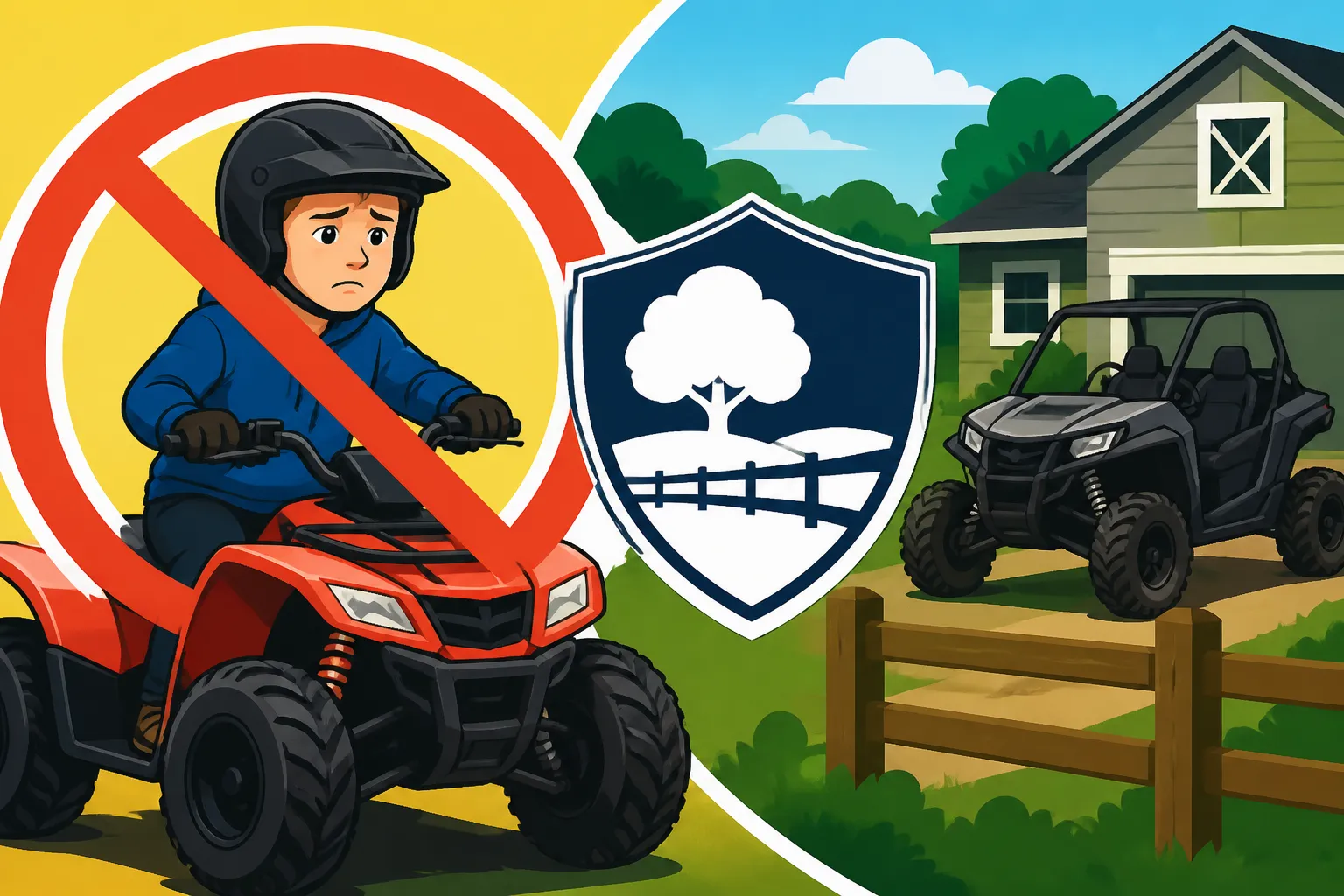
At the heart of Sean's Law is a non-negotiable directive: riders under the age of 14 are absolutely prohibited from operating an ATV, UTV, or dirt bike in Massachusetts. And here's the kicker that often catches people off guard: this ban applies universally. It doesn't matter if you're on a designated state trail, a remote dirt road, or your very own sprawling private property in the Berkshires. The law specifies that the restriction holds true "on any land within the commonwealth." This means if your child is 13 years old and you have a 10-acre plot behind your house, they still cannot legally ride an ATV there.
This "everywhere" clause is a point of significant confusion and frustration for many families. They might reasonably think, "It's my private land; surely I can decide what happens here." However, Massachusetts law, in this specific instance, takes precedence, viewing the protection of minors from potential injury as a compelling state interest that supersedes private property discretion. So, whether it's a small youth quad or a side-by-side, if the rider hasn't celebrated their 14th birthday, the answer is a resounding "no" across Massachusetts. For a deeper dive into this, you might want to read [Massachusetts Bans Riders Under 14].
Why Private Land Isn't an Exemption in Massachusetts
The concept that private land offers a sanctuary from state regulations is deeply ingrained for many landowners. It's a natural assumption: "If I own it, I control it." However, Massachusetts' OHV laws for young riders deliberately and explicitly pierce this veil of private ownership, extending their reach to every corner of the Commonwealth. This isn't an oversight or a vague interpretation; it's a cornerstone of the legislation.
The Legislative Intent Behind the Broad Ban
When Massachusetts lawmakers crafted Sean's Law, they weren't just thinking about the visibility of ATVs on public trails or the potential for accidents in state forests. Their focus was much broader: to protect children from the inherent dangers associated with operating off-highway vehicles, regardless of the location. The tragic statistics surrounding youth ATV accidents, which often occur on private land and involve children riding machines too large or powerful for their age and skill level, heavily influenced this decision.
The legislative intent was clear: to prevent severe injuries and fatalities by establishing a uniform minimum age that acknowledged the cognitive and physical developmental stages of young children. Lawmakers recognized that even under direct parental supervision on private property, the risks of rollovers, collisions, and other accidents remain significant. They believed that the state had a compelling interest in safeguarding minors, viewing ATVs as machines requiring a certain level of maturity and physical capability that children under 14 generally do not possess. Thus, the law prioritizes child welfare and public safety above the traditional rights of private property owners in this specific context, ensuring that no child under the specified age can legally operate these machines anywhere in the state.
Enforcement and Consequences on Private Property
The fact that the ban extends to private land means that the Massachusetts Environmental Police, who are responsible for enforcing OHV laws, have the authority to issue citations for violations that occur on your own property. Imagine this scenario: you live in a rural part of Western Massachusetts, and your 12-year-old is happily riding a small quad around your fields. A concerned neighbor, perhaps unaware it's your land or simply aware of the law, observes this and makes a call to the authorities. An Environmental Police officer could respond, investigate, and if they confirm an underage rider, they absolutely can issue a citation.
The consequences for parents or legal guardians who allow riders under 14 to operate an OHV on private land are not insignificant. They can face fines, and in some cases, repeated offenses could lead to more severe penalties. Beyond the immediate legal repercussions, there's also the profound implication of liability. If a child under 14 is injured while riding on private land, even if it's their own family's property, the parents could face civil lawsuits, not just from the child's own medical costs, but potentially from others involved in an incident. This is why understanding [Massachusetts Penalties Under Sean's Law] is crucial, as is recognizing the scope of [Massachusetts Parent Liability for a Young Rider]. The law is designed to make parents the gatekeepers of this crucial safety measure, holding them accountable for ensuring compliance, no matter where the riding takes place.
Exceptions and Alternatives for Young Riders
While Massachusetts' youth OHV laws are undeniably strict, they aren't entirely without nuance. There are very specific, narrow exceptions and a clear age-engine size ladder that applies to older youth riders. It's important to understand these distinctions to ensure that any riding your child does is fully compliant with state law.
Sanctioned Events: A Narrow Path
For children under 10 years old, the opportunities to ride an ATV or UTV in Massachusetts are virtually non-existent, with one highly specialized exception: sanctioned, organized competitive events. This isn't just a casual club ride or a race you set up in your backyard. A "sanctioned event" refers to formally recognized competitions held by legitimate organizations that have obtained all necessary permits and approvals from state and local authorities. These events typically have strict safety protocols, medical personnel on standby, and specialized supervision, creating an environment that is deemed sufficiently controlled to mitigate the inherent risks.
The intent here is not to encourage young children to race but to acknowledge that in highly regulated, professional settings, certain activities might be permissible under controlled conditions. For a child to participate, their parents or guardians would need to be in close contact with the event organizers, ensuring all state requirements are met, including specific age and machine regulations for the competition. This very narrow exception, as detailed in [Massachusetts Riders Under 10 and Sanctioned Events], is the only legal avenue for very young children to operate an OHV. It's a far cry from casual riding on private property and should not be mistaken for a general allowance. To understand the specifics, check out [Massachusetts Rules for a 10-Year-Old Rider].
Age-Engine Size Ladder for Older Youth
Once a young person turns 14, the absolute ban lifts, but a new set of graduated restrictions comes into play, creating an age-engine size ladder designed to match a rider's development with appropriate machine power.
-
Ages 14 to 16: Riders in this age bracket are permitted to operate an OHV, but with a critical limitation: the engine size cannot exceed 90cc. This rule applies to both ATVs and dirt bikes. The thinking behind this is to ensure that teenagers are not operating machines with excessive power that could overwhelm their developing skills and judgment. A 90cc machine is typically smaller, lighter, and less powerful, providing a safer learning platform. This is a crucial point many parents miss, often assuming that once a child turns 14, they can ride any machine. Not so! You can learn more about this specific requirement in [The 90cc Engine Cap for Riders 14 to 16].
-
Ages 16 to 18: At 16, the 90cc engine size restriction is lifted. However, riders under 18 years of age are still required to possess a valid OHV safety certificate. This certificate demonstrates that they have completed an approved safety course, which covers safe operation, risk awareness, and proper riding techniques. While the engine size limit is removed, the emphasis remains on safety education and responsible riding. It's also worth noting that on public land, even riders over 16 might still be subject to certain supervision requirements or other rules, depending on the specific location and circumstances. For a comprehensive overview of the age-related rules, see [Massachusetts Age and Engine Size Ladder]. This tiered approach reflects a commitment to gradually introducing young people to the responsibilities of OHV operation, with safety education at its core.
Practical Implications and Rider Safety
Beyond the legal technicalities, the spirit of Massachusetts' youth OHV laws is deeply rooted in practical safety. For parents and guardians, understanding these implications isn't just about avoiding a fine; it's about fostering a culture of responsibility and ensuring the well-being of young riders.
The Importance of a Safety Certificate
Once your child reaches the age where they can legally ride – 14 or older, with the appropriate engine size considerations – the next crucial step is ensuring they receive proper safety training. While a safety certificate becomes legally mandatory for riders under 18 on public lands, its value extends far beyond mere compliance. These courses, often provided in two parts, including both classroom instruction and a hands-on skills test, are invaluable. They cover everything from basic machine operation, pre-ride inspections, and proper riding posture to understanding trail etiquette, environmental considerations, and emergency procedures. These are not just theoretical lessons; the in-person skills test ensures practical application.
Think of it this way: knowing how to drive a car is one thing, but understanding defensive driving and how to react to unexpected situations is another. An OHV safety course instills that critical knowledge, making riders more aware of their surroundings, their machine's capabilities, and their own limitations. For parents, enrolling their child in one of these courses, like those detailed in [Massachusetts Two-Part Safety Course] and [Massachusetts In-Person Skills Test], offers peace of mind that their young rider is equipped with the best possible foundation for safe riding. Furthermore, considering aftermarket safety enhancements can make a significant difference. Companies like SuperATV offer a range of products designed to improve rider protection, from sturdy full enclosures and safety nets for UTVs that keep occupants secure, to robust skid plates for ATVs that protect vital components from trail hazards. These additions, combined with proper training, create a much safer riding experience.
Preparing for Legal Riding Ages and Equipment
For parents of children currently under 14, the waiting period can be tough, but it's an excellent opportunity for preparation. This time can be used to focus on developing fundamental skills that will transfer directly to OHV riding later on. This includes improving balance, coordination, and physical strength through other activities like bicycling or sports. More importantly, it's a chance to instill a strong sense of responsibility and respect for machinery. Teach them about rules, boundaries, and the importance of protective gear even before they sit on an OHV.
Once they approach the legal riding age, careful consideration of the first machine is paramount. Resist the temptation to buy a machine that's "just a little big, so they can grow into it." This is a common and dangerous mistake. Start with a machine that is perfectly sized and powered for their age and skill level. For instance, a 14-year-old should be on a machine no larger than 90cc, ensuring it's manageable and doesn't overpower them. As they gain experience and age, then you can consider larger machines. Even then, remember that proper maintenance and appropriate upgrades are key. Companies like SuperATV provide various components that can enhance a youth machine's safety and control, such as speed limiters that can be adjusted as a rider progresses, or improved suspension systems for better handling on varied terrain. Investing in quality protective gear – helmets, goggles, gloves, boots, and body armor – is non-negotiable from day one. Good equipment, reliable parts, and a focus on safety, whether it's through training or upgrades from a reputable brand like SuperATV, contribute immensely to a positive and safe riding experience.
Navigating the Broader Massachusetts OHV Landscape
Understanding Massachusetts' youth riding laws is just one piece of the puzzle. To truly ride legally and safely in the Bay State, you need to grasp the broader context of OHV regulations, including registration requirements and where you can actually take your machine.
Registration and Proof of Ownership
A common misconception among OHV owners in Massachusetts is that if they only ride on private land, they don't need to register their machine. This is absolutely false. Massachusetts law mandates that all off-highway vehicles, including ATVs, UTVs, dirt bikes, and snowmobiles, must be registered with the Massachusetts Environmental Police, regardless of whether they are operated on public or private land. This is a critical distinction that often surprises new owners. The registration process provides proof of ownership and ensures that the state has a record of the machine, which can be important for various reasons, including theft recovery or enforcement.
The registration is not a "title" in the way a car has one; rather, it’s a registration card and decals that must be displayed on the machine. Failing to register your OHV, even if you only use it on your own property, can lead to fines and other penalties. It’s an essential step in legal OHV ownership. For more detailed information on this process, you can explore resources like [Do You Need to Register an ATV in Massachusetts?] and [Registering an ATV With the Environmental Police]. Make sure you have all your paperwork in order before you even think about hitting the throttle.
Finding Legal Riding Opportunities for All Ages
Once your young rider meets the age and engine size requirements and has obtained their safety certificate (if applicable), the next challenge is finding legal places to ride. Massachusetts is not known for its expansive network of OHV trails. In fact, public riding opportunities are quite limited. The primary designated OHV trails are concentrated in three state forests in the western part of the state: Beartown State Forest, October Mountain State Forest, and Pittsfield State Forest. These trails offer a combined total of around 69 miles of riding, and they are typically only open during a specific season, usually from May through November.
This means that even if you have a properly registered machine and a fully compliant rider, access is restricted to these few designated areas. You cannot simply ride on power line cuts, utility corridors, or most municipal lands without explicit permission and legal designation, which is rare. Many riders, both youth and adult, find themselves traveling to neighboring states like New Hampshire, Vermont, or Maine, which often have more extensive trail systems and different, sometimes less restrictive, OHV laws. If you plan to ride out of state, always research and adhere to that state's specific regulations, as Massachusetts registration does not grant reciprocity. Understanding these limitations, and where to find the limited legal trails, is key to responsible OHV enjoyment in Massachusetts. You can find more information about these specific trails by looking up [Massachusetts ATV Trails: Three Berkshire Forests].
Here's a quick comparison of Massachusetts' age requirements for OHV operation:
| Age Group | Operation Rules in Massachusetts | Notes |
|---|---|---|
| Under 10 | Absolutely Banned from operating an OHV anywhere, public or private land. | Sole exception: Participation in sanctioned, organized competitive events that meet specific state approvals. This is a very narrow and specialized exception. |
| 10 to 13 | Absolutely Banned from operating an OHV anywhere, public or private land. | No exceptions for casual riding, even on private family land or with direct adult supervision. |
| 14 to 15 | Can operate an OHV with an engine size not exceeding 90cc. | No safety certificate is explicitly mandated at this age for public land, but it is highly recommended. Still subject to all other OHV laws, including registration and helmet use. This engine size limit is critical. |
| 16 to 17 | Can operate an OHV of any engine size. | Required: Must possess a valid OHV safety certificate to ride on public land. Supervision may still be required in some contexts (e.g., if a driver's license is not yet held for public way crossings). Subject to all other OHV laws. |
| 18 and Older | Can operate an OHV of any engine size. | No safety certificate required by law (though always recommended). Still subject to all other OHV laws, including registration, helmet use, and adherence to designated trail systems. |
Disclaimer
This article is for general informational purposes only and does not constitute professional advice. Laws, prices and regulations vary by location and change over time. Consult a qualified professional for guidance on your specific situation.