Crossing a Public Way in Massachusetts
Navigating the rules for off-highway vehicles (OHVs) in Massachusetts can feel like trying to solve a complicated puzzle, especially when it comes to riding anywhere near a paved road. It's a common frustration for riders across the state, and the concern about accidentally breaking the law while trying to get from one trail segment to another is completely valid. This guide is here to untangle the complexities surrounding crossing public ways with your ATV or UTV in Massachusetts, offering clear, empathetic, and realistic advice to keep you riding legally and safely.
The Strict Reality of Massachusetts ATV Laws on Public Ways
Let's face it: Massachusetts has a reputation for being quite particular about its OHV laws, and for good reason. The safety of all road users, including pedestrians, cyclists, and motorists, is paramount. This means that unlike some other states where you might find dirt bikes or ATVs sharing certain rural roads, the Bay State takes a much stricter stance.
Why Massachusetts Stands Apart from Other States
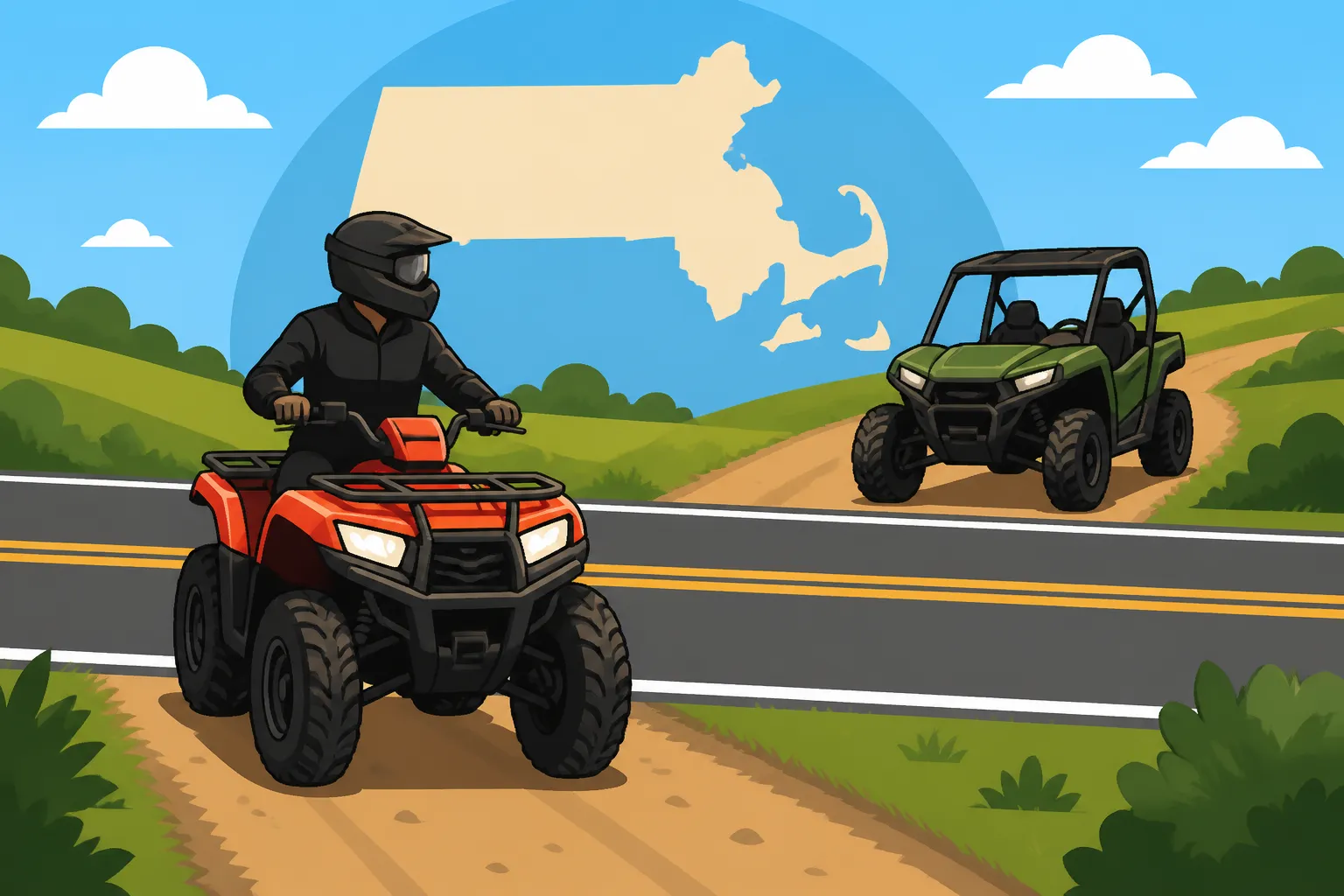
When you talk to riders who have experience in neighboring states like New Hampshire or Vermont, you'll often hear about the more relaxed approach to OHVs on public roads. They might have designated sections where ATVs are allowed, or even specific roads that are part of a larger trail network. Massachusetts, however, operates under a different philosophy. The default position here is a firm "no" to riding ATVs or UTVs on any public way. This isn't meant to be punitive; it's a reflection of the state's focus on safety and the separation of different types of traffic.
The Environmental Police, who enforce these regulations, are well-versed in the nuances of Chapter 90B of the Massachusetts General Laws, which governs OHVs. They understand that riders need to move their machines from one place to another, but they also have a duty to ensure that these movements are done in a way that doesn't endanger anyone. This strictness means you can't just hop on a paved road for a quick connection, even if it's just a few hundred feet. [Massachusetts Bans Riding on Public Ways] is a critical piece of legislation that all riders must understand. Ignoring this core principle can lead to significant fines and penalties, not to mention putting yourself and others at risk.
Understanding "Public Way" in the Bay State
So, what exactly counts as a "public way" in Massachusetts when you're on an ATV or UTV? This isn't just about bustling multi-lane highways or busy city streets. The definition is much broader and encompasses a surprising number of surfaces you might encounter in rural areas. Generally, a public way is any road or street that is open to the public for vehicular travel, regardless of whether it's paved, gravel, or dirt. This includes state highways, town roads, and even unpaved access roads that are maintained by a municipality.
Imagine you're out riding in a state forest, enjoying the trails. You come to a point where the authorized trail ends, and across a small, unpaved section, another section of trail begins. If that unpaved section is recognized by the town as a public road, even if it's rarely used by cars, it's considered a public way. This can be a real head-scratcher, as many dirt roads look like they're simply part of the natural landscape. However, the legal distinction is what matters. A good rule of thumb is to assume any road that isn't explicitly marked as an OHV trail or private land is a public way. [Which Dirt Roads Count as a Public Way] can be particularly tricky, as what looks like a woods road to you might be a recognized public thoroughfare to the local town. Always err on the side of caution, and if you're unsure, treat it as a public way requiring a legal crossing.
The Core Rule: You Must Stop Before Crossing
Given Massachusetts' stringent approach to OHVs on public ways, the most fundamental rule for any crossing is unambiguous: you must come to a complete and utter stop. This isn't a suggestion; it's a mandatory requirement that forms the bedrock of safe and legal crossings.
The Absolute Requirement to Stop
Before your wheels even touch the edge of a public way, you need to bring your ATV or UTV to a full, controlled stop. This means zero forward momentum, brakes fully engaged. Think of it exactly like stopping at a red light or a stop sign in your car. This isn't just about being polite; it's a critical safety measure. By stopping, you give yourself precious moments to assess the traffic situation, look in both directions, and listen for approaching vehicles or pedestrians. Trying to roll through, even at a snail's pace, is not only illegal but incredibly dangerous.
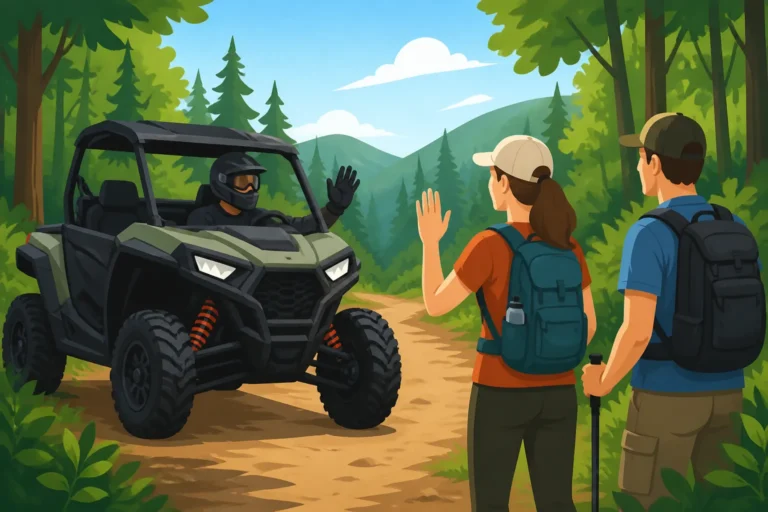
Picture this scenario: you're riding with a friend in October Mountain State Forest, and you need to get from one section of trail to another that's just across a quiet, paved rural road. Instead of rolling slowly onto the pavement, you bring your SuperATV-equipped machine to a complete halt on the trail's edge. You shift your weight, plant your feet, and take a deep breath. This pause allows you to fully scan the road for any cars, bicycles, or even people walking. It’s this deliberate, full stop that demonstrates your adherence to the law and your commitment to safety. [You Must Stop Before Crossing Any Public Way] is not just a phrase; it's an action that could prevent a serious accident.
Yielding to All Traffic and Pedestrians
Once you've come to that full stop, your next crucial step is to yield to absolutely everyone else. Your ATV or UTV has no right of way when attempting to cross a public way in Massachusetts. This means that if there's any approaching traffic—whether it's a car, a truck, a motorcycle, a bicycle, or even someone walking their dog—you must wait. You need to ensure the way is completely clear, in both directions, and that you have ample time to cross safely without interfering with their path.
Consider a busy Saturday afternoon. You're trying to cross a small town road that connects two parts of Pittsfield State Forest. You've come to a full stop. Suddenly, a car appears in the distance, followed by a cyclist. Even if they seem far away, you must wait for them to pass. Do not try to rush. A safe crossing means you don't make anyone else slow down, swerve, or feel uncomfortable because of your presence. This yielding principle applies equally to pedestrians. If a family is walking along the shoulder, you wait until they are well past your intended crossing point. It's about demonstrating extreme caution and respect for other road users. [Yielding Before You Cross] isn't just about legal compliance; it's about being a responsible member of the community and ensuring everyone's safety.
Age and Supervision Rules for Crossing Public Ways
Massachusetts has specific regulations concerning who can operate an OHV and under what conditions, and these rules become particularly strict when it comes to interacting with public ways. The age of the rider and the presence of adult supervision are key factors that determine legality.
Young Riders and Road Crossings: A Key Distinction
This is where Massachusetts laws truly stand out, especially concerning young riders. If you have a rider in your group who is under the age of 16 and a half, the rules for crossing a public way are even more stringent. Such a rider is not allowed to cross a public way alone, ever. They must be under the direct supervision of an adult who is at least 18 years old. This isn't just about having an adult somewhere nearby; it means the supervising adult must be in continuous visual contact and capable of immediate intervention if needed.
Imagine a parent and their 15-year-old child on separate ATVs, enjoying the trails. They approach a road crossing. The 15-year-old cannot cross until the parent has crossed first or is positioned to directly observe and guide the younger rider across. The parent is legally responsible for the actions of the child during this maneuver. This rule is in place to ensure that young riders, who may not have the same level of judgment or experience as an adult, have immediate guidance during what is arguably the most dangerous part of any OHV ride. [Massachusetts Crossings Under 16 and a Half] are a very specific area of law, and misunderstanding them can lead to serious legal consequences for both the young rider and the supervising adult.
How a Driver's License Changes the Crossing Game
For riders who are 16 and a half years old or older, and who possess a valid motor vehicle driver's license, the supervision requirement for crossing a public way is lifted. This means that if you're 17 years old and have your driver's license, you can legally perform a supervised public way crossing without an adult physically present with you. It's an acknowledgement that possessing a driver's license implies a certain level of understanding of road rules and traffic safety.
However, and this is a crucial distinction, having a driver's license does not magically make your ATV or UTV street legal. It simply removes the need for direct adult supervision during the act of crossing. You still must perform a complete stop, yield to all traffic, and cross as perpendicularly and directly as possible. You cannot ride along the shoulder, travel any distance on the public way, or otherwise use it for anything other than a direct crossing to an adjacent trail or private property. A driver's license is a testament to your understanding of road safety, but it doesn't change the fundamental nature of an OHV in Massachusetts. [How a Driver's License Replaces Adult Supervision] is a significant point for older riders to remember, offering a bit more independence while maintaining strict adherence to OHV regulations.
The Art of a Safe and Legal Crossing
Successfully and legally crossing a public way with your ATV or UTV isn't just about stopping and yielding; it's about strategy and preparation. It's a quick maneuver, but one that requires careful thought and execution to minimize risk and ensure compliance.
Choosing the Safest Crossing Point
Not all crossing points are created equal. When planning your ride, or even when you encounter an unexpected road, take a moment to evaluate the best place to cross. Look for areas with maximum visibility in both directions along the public way. This means avoiding blind curves, crests of hills, or heavily wooded sections where an approaching vehicle might not see you until it's too late. Similarly, you want a clear approach and exit from the crossing point on the trail side. You shouldn't be trying to climb a steep embankment or navigate deep ruts just as you're entering or exiting the public way.
Ideal crossing points often involve straight stretches of road where you can see for a considerable distance, and where there are clear, stable surfaces on either side of the public way to get your machine across smoothly. If you're exploring new areas, consulting maps beforehand or even using satellite imagery can help identify these safer spots. Remember, safety always trumps convenience. Taking an extra minute to find a better crossing point is always worth it.
Preparing Your Machine for the Moment
Before you even approach a crossing, you should have your machine in prime condition. This means ensuring your brakes are in excellent working order, your engine is running smoothly, and your visibility is as good as it can be. For example, if you've added SuperATV mirrors, make sure they're adjusted correctly to give you the best possible rear view. While not legally required for a brief crossing, having your headlights on, even during the day, can significantly increase your visibility to approaching traffic.
It's also crucial to have all required safety gear on and properly secured. A helmet is not just a recommendation; it's the law for all OHV riders in Massachusetts, regardless of age, and especially so when you're interacting with public ways. Make sure your [Massachusetts Helmet Law for Every Rider] is fully observed. Additionally, consider wearing bright clothing or adding reflective elements to your gear, particularly if you're riding in low light conditions or if visibility is generally poor due to weather. The goal is to make yourself as conspicuous as possible during those few critical seconds you are crossing.
What to Carry and What to Avoid
When you're out on the trails, especially when you anticipate crossing public ways, it's not just about your machine and your riding skills. It's also about having the right documentation and using smart equipment choices to ensure both legality and safety.
Essential Documents for Every Crossing
This is a non-negotiable aspect of legal OHV operation in Massachusetts. Every time you ride, and especially when you might encounter a public way, you must carry your current OHV registration card. This isn't just a suggestion; it's a legal requirement that the Environmental Police will expect to see if they stop you. Think of it like your car's registration – you wouldn't drive without it, and you shouldn't ride your OHV without its equivalent. The card proves that your machine is legally registered in the Bay State, or as a non-resident.
Furthermore, if you are a rider under the age of 18, you are also required to carry your Massachusetts OHV safety certificate. This certificate demonstrates that you've completed the mandatory safety course, which includes vital information on safe operation, trail etiquette, and, crucially, how to interact with public roads. Without these documents, even if your machine is properly registered and you're riding safely, you could face fines and delays. Always make a habit of checking that your [Massachusetts Registration Cards Carried on Board] and any necessary safety certificates are tucked securely in a waterproof pouch or a pocket before you head out.
Equipment That Enhances Visibility (and Is Smart to Have)
While Massachusetts law doesn't mandate specific equipment beyond basic functioning lights and brakes for crossing, choosing to equip your machine with additional visibility-enhancing gear is a smart move. Aftermarket lighting, for example, can make a huge difference, especially if you find yourself needing to cross near dusk or in foggy conditions. A bright LED light bar from a brand like SuperATV can significantly increase your forward illumination, making it easier for you to see what's coming, and crucially, making it easier for drivers on the public way to see you.
Beyond lighting, consider reflective tape on your helmet or machine. Even a small amount can make you much more noticeable to headlights. Wearing a brightly colored helmet or jacket, such as neon green or orange, also dramatically improves your profile. Remember, a quick crossing often puts you in a vulnerable position, and anything you can do to stand out against the background, even for a moment, contributes to your safety. These aren't always legal mandates, but they are common-sense measures that every responsible rider should consider for themselves and their group.
Penalties for Improper Crossings and Violations
The rules surrounding OHVs and public ways in Massachusetts are clear for a reason: safety. Ignoring these rules, even inadvertently, can lead to significant legal and financial consequences. It's crucial for every rider to understand the potential repercussions of non-compliance.
Understanding the Risks of Non-Compliance
Operating an unregistered OHV, riding illegally on a public way, or improperly crossing a public way can result in fines that quickly add up. These aren't just minor citations; they can range from hundreds to thousands of dollars depending on the severity and frequency of the offense. For instance, being caught riding your ATV down a public road, even for a short distance, is a serious violation. Similarly, failing to stop, yield, or having a young, unsupervised rider cross can all lead to tickets.
Beyond the monetary penalties, there can be other consequences. Repeated violations could potentially lead to your machine being impounded, requiring you to go through a lengthy and often costly process to retrieve it. There's also the risk of having your OHV registration suspended or revoked, meaning you wouldn't be able to legally ride anywhere in the state. Furthermore, if an accident occurs while you're operating illegally, your liability could be significantly increased, potentially leading to costly legal battles and personal injury claims. Ignorance of the law is never an excuse, and the Environmental Police are dedicated to enforcing these rules to protect everyone. [Massachusetts Penalties for Illegal Riding] are designed to deter unsafe behavior and protect public safety.
What an Environmental Police Officer Can Ask
If you're stopped by an Environmental Police Officer while riding your OHV, especially near or on a public way, it's important to know what to expect. They will typically ask to see your OHV registration card and, if applicable, your OHV safety certificate. They may also ask for your identification. They'll want to verify that you are the registered owner (or have permission to operate the machine), that the machine is legally registered, and that you meet any age or certification requirements.
Beyond documentation, an officer might inquire about your route, where you've been riding, and where you intend to go. They may also visually inspect your machine for proper decal placement, and ensure it meets basic equipment requirements like functional brakes and a spark arrester. It's important to be polite, cooperative, and provide the requested information. Remember, they are doing their job to ensure everyone's safety and uphold the law. Being prepared with your documents and understanding the rules can make any interaction smooth and straightforward. [What an Environmental Police Officer Can Ask] often centers around these key areas to ensure compliance and promote responsible riding.
Planning Your Ride to Minimize Public Way Crossings
Given the strict regulations in Massachusetts, one of the best strategies for enjoying your ATV or UTV is to plan your rides meticulously, with a keen eye toward minimizing or even eliminating the need to cross public ways. This proactive approach can save you a lot of stress and potential legal headaches.
Leveraging Massachusetts' Permitted Riding Areas
Massachusetts does offer dedicated OHV trail systems that are managed by the Department of Conservation and Recreation (DCR). These areas, primarily located in the Berkshire region, are your best bet for extensive riding with managed crossings or contiguous trails that keep you off public roads. Places like Beartown State Forest, October Mountain State Forest, and Pittsfield State Forest offer miles of trails designed for OHV use. By focusing your riding activities within these authorized zones, you can significantly reduce your interaction with public ways.
These state forests often have designated parking areas for trailers, and the trail networks are designed to provide a continuous riding experience. While even within these forests you might encounter the occasional need to cross a short access road, these crossings are often clearer, better marked, or less trafficked than general public ways. Planning your trip around these known, legal riding areas is the safest and most enjoyable way to ride in Massachusetts. [Massachusetts ATV Trails: Three Berkshire Forests] are invaluable resources for Bay State riders, and understanding their layouts can help you ride for hours without needing to touch a public road.
Connecting Trails Without Breaking the Law
Sometimes, however, you might find yourself needing to connect two distinct sections of trail, or perhaps access a new riding area that requires a short transition. The challenge in Massachusetts is doing this legally. Unfortunately, the idea of [Connecting Two Berkshire Forests Without Touching a Road] is often a pipe dream for riders, as the state's geography and land use patterns often mean some form of public way separates trail systems or private riding areas.
If a direct crossing is unavoidable, use all the knowledge you've gained about stopping, yielding, and observing age/license rules. Beyond that, consider alternative methods for connecting areas. This might involve trailering your machine for short distances between non-contiguous trailheads. While it's more work, it eliminates the legal risk entirely. You might also explore private lands with permission, where a landowner has granted you passage across their property, which may in turn connect to a trail system without requiring public road use. Always remember that even if a map shows a seemingly unbroken path, local regulations or private ownership can create barriers that necessitate a legal crossing or an alternative transport method. Researching local ordinances and trail maps, and even calling the DCR or local Environmental Police office for clarification on specific routes, can save you a lot of trouble.
Summary of Key Crossing Rules
To help clarify the various rules and considerations for crossing public ways with your ATV or UTV in Massachusetts, here's a quick reference table:
| Rule Category | Requirement | Key Considerations |
|---|---|---|
| General Prohibition | OHVs are generally prohibited from riding on public ways. Crossings are the only exception. | This is the foundational rule. Do not ride on any part of a public way beyond the immediate act of crossing. Includes paved, gravel, and unpaved town roads. |
| Stopping | Must come to a complete and full stop before entering or crossing any public way. | No rolling stops or slow approaches. Zero forward momentum is required to assess traffic and ensure safety. |
| Yielding | Must yield to all vehicular and pedestrian traffic on the public way. | OHVs have no right-of-way. Wait for the public way to be completely clear in both directions, ensuring you won't interfere with anyone. |
| Crossing Path | Cross as directly and perpendicularly as possible. | Minimize the time and distance spent on the public way. Do not ride along the shoulder or travel any distance. |
| Rider Age < 16.5 | Requires direct adult supervision (18+ years old) for crossing. The supervising adult is liable. | The adult must maintain continuous visual contact and be able to intervene immediately. The younger rider cannot cross alone. This also applies to a youth machine with SuperATV accessories. |
| Rider Age > 16.5 | If possessing a valid motor vehicle driver's license, direct adult supervision is not required for crossing. | A driver's license does NOT make the OHV street legal. It only lifts the supervision requirement for the crossing itself. All other crossing rules (stop, yield, direct path) still apply. |
| Required Documents | Must carry current OHV registration card and, if under 18, a Massachusetts OHV safety certificate. | Environmental Police will request these. Ensure they are readily accessible and valid. Failure to carry them can result in fines. |
| Visibility | While not always mandated for crossings, enhanced visibility (bright clothing, working lights, reflective gear) is highly recommended. | Make yourself as visible as possible to approaching traffic and pedestrians. |
Disclaimer
This article is for general informational purposes only and does not constitute professional advice. Laws, prices and regulations vary by location and change over time. Consult a qualified professional for guidance on your specific situation.