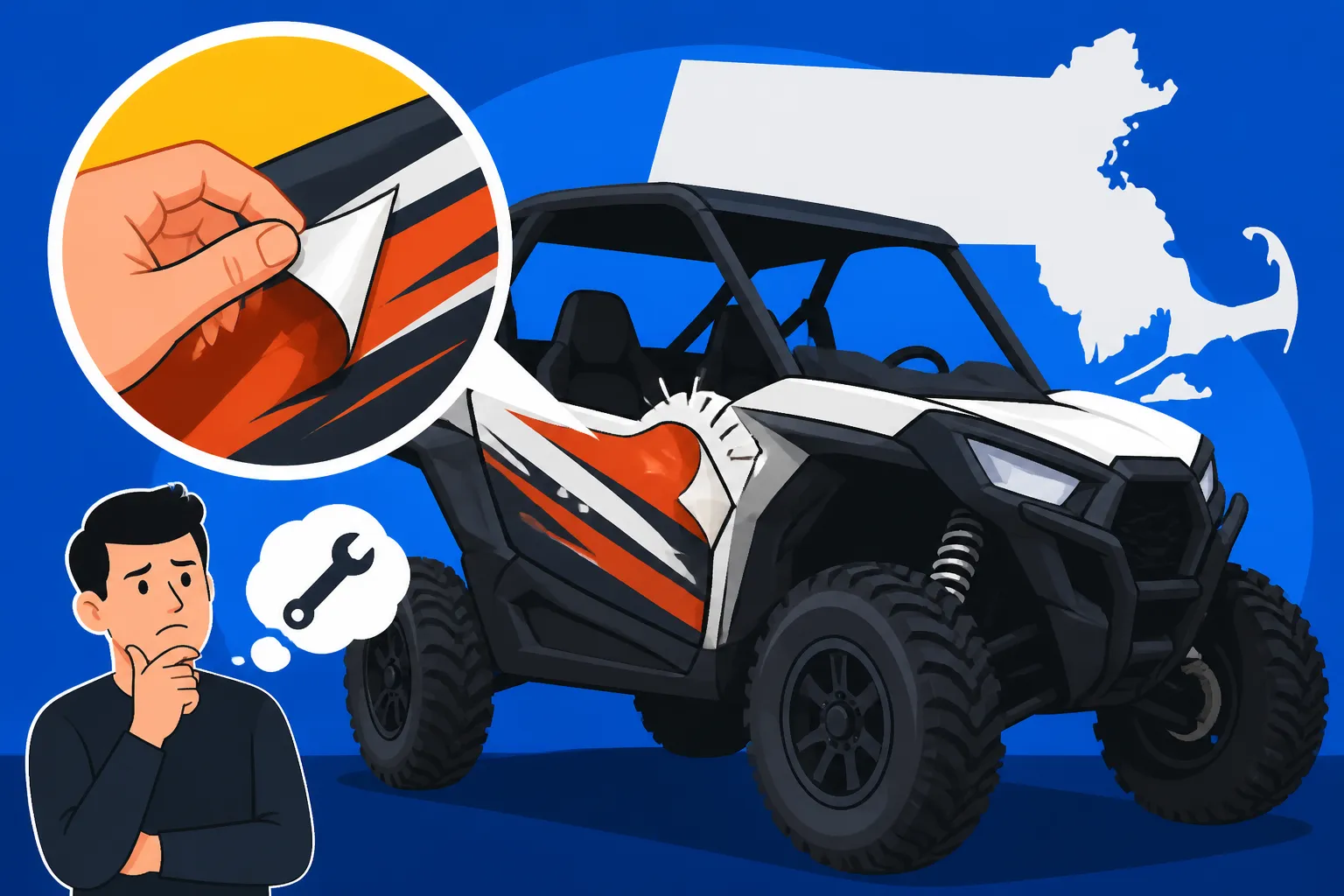
What to Do When a Decal Peels Off
There's nothing quite as frustrating as noticing your shiny, new (or recently renewed!) Massachusetts ATV or UTV registration decal starting to peel, fade, or get mangled after just a few rides. You invest in your machine, you register it properly, and then this little but crucial piece of proof starts to fail you. This guide is here to walk you through exactly what causes those decals to peel, what you should do the moment you spot the problem, and how to get a replacement so you can get back to enjoying the trails without worry.
Why Your Massachusetts Decal Might Be Peeling
When you register your off-highway vehicle (OHV) in Massachusetts, you receive a decal that signifies your compliance. This isn't just a pretty sticker; it's a critical piece of identification that Environmental Police officers look for. So, when it starts to peel, it's more than just an aesthetic issue – it's a potential legal headache. Understanding why it might be peeling can help you prevent it from happening again.
The Rigors of Massachusetts Riding
Massachusetts trails, particularly in the Berkshires, offer incredible riding experiences, but they can be tough on your machine and, by extension, your decals. Think about it:
- Weather Exposure: From the scorching summer sun baking the adhesive to freezing winter temperatures making the vinyl brittle, the elements are constantly working against your decal. Rain and snow can seep under tiny lifted edges, further compromising the adhesive. If you ride frequently through all four seasons, your decal is constantly battling the changing climate.
- Mud, Dirt, and Debris: When you're kicking up mud, splashing through puddles, or navigating dusty trails, your decals are taking a beating. Grit and grime can wedge themselves under lifting edges, preventing the decal from re-adhering and accelerating its demise. A stray branch or a rock flung up by another rider could also nick an edge, creating a weak point for peeling to begin.
- Washing Techniques and Chemicals: We all want our machines clean after a fun, messy ride. However, aggressive pressure washing, especially directing a strong stream directly at the decal's edges, can lift the adhesive right off the surface. Some harsh cleaning chemicals or degreasers, while effective on grease and oil, can also degrade the decal material or its adhesive over time, leading to fading or premature peeling. Always use ATV-specific cleaners and gentle methods around your decals.
Application Errors and Their Consequences
Sometimes, the problem isn't the environment or your cleaning habits, but how the decal was applied in the first place. Even the most robust decal will fail if not put on correctly.
- Improper Surface Preparation: Before applying any sticker, the surface needs to be immaculately clean, dry, and free of any wax, grease, or dirt. If the surface wasn't properly degreased or wiped down before the decal went on, the adhesive won't bond effectively. Think about the slight residue from a polishing compound or even just trail dust – these tiny barriers prevent a full, strong adhesion.
- Temperature Troubles: Applying a decal in extremely cold or hot conditions can impact the adhesive's ability to cure properly. Too cold, and the adhesive might not stick well; too hot, and it could stretch or bubble. The ideal temperature range for most decals is typically room temperature, allowing the adhesive to bond firmly without undue stress.
- Hurried or Sloppy Application: Bubbles, creases, or trapped air pockets when the decal is first applied create weak spots. These areas are prone to lifting, allowing water, dirt, and air to get underneath, eventually leading to widespread peeling. It’s like a tiny, invisible tear that slowly expands over time. Taking your time, using a squeegee, and ensuring a smooth, bubble-free application from the start can make a huge difference in the decal's longevity. Remember, a decal is a long-term commitment, not a quick stick-on.
The Immediate Steps When You Notice a Peeling Decal
Discovering a peeling decal can be alarming, especially if you're about to head out for a ride. Your first instinct might be to just rip it off and hope for the best, but that could land you in hot water. There are specific steps you should take to protect yourself and ensure you remain compliant with Massachusetts regulations.
Don't Just Rip It Off
It's tempting, right? To just pull off the offending, partially peeled sticker and deal with it later. However, resisting this urge is crucial. Your registration decal, along with your [Massachusetts Registration Card Carried on Board], serves as your official proof that your OHV is legally registered to operate in Massachusetts.
- Proof of Registration: Even a partially peeled decal is still some evidence that your machine was registered. If you remove it completely and don't have a replacement, you're essentially operating an unregistered vehicle in the eyes of the law, which can lead to significant penalties. Massachusetts Environmental Police officers are trained to spot unregistered machines, and a missing decal is a dead giveaway.
- Risk of Being Stopped: Riding on public land, like Beartown State Forest or October Mountain State Forest, with a missing or severely damaged decal is an invitation for an officer to pull you over. They'll want to verify your registration, and if you can't produce a valid decal and card, you could face fines for operating an unregistered vehicle. Understanding [Massachusetts Penalties for Riding Unregistered] can help underscore the importance of keeping your decals in good order. It’s better to have a partially peeling decal than no decal at all while you await a replacement.
Document the Damage
Before you do anything else, grab your phone or a camera and document the state of your decal. This simple step can save you a lot of hassle down the road.
- Photos and Videos as Proof: Take clear, well-lit photos and even a short video of the peeling decal. Make sure the pictures capture the extent of the damage, the registration number clearly, and the overall context of its placement on your machine. This visual evidence can be incredibly helpful if you need to explain the situation to an Environmental Police officer or when you apply for a replacement decal. It demonstrates that the decal was there and was valid, even if it's now compromised.
- Details to Capture: In your documentation, include the date and time you noticed the peeling. Note down how much of the decal is peeling, if any numbers are obscured, or if it's tearing. This detailed record serves as a personal log and can support your claim that the decal simply failed due to normal wear or application issues, rather than being intentionally tampered with or removed. It’s like having an alibi for your decal – proof it was legitimately there.
How to Get a Replacement Massachusetts Decal
Once you’ve identified the problem and documented it, your next step is to secure a replacement. Thankfully, the Massachusetts Environmental Police (MEP) has a process for this, acknowledging that decals can and do wear out. Getting a replacement is a straightforward process, but it does require a bit of attention to detail.
The Replacement Process
The first thing to understand is that the Massachusetts Environmental Police are the authority for OHV registration, not the RMV. So, when you need a replacement decal, you'll be dealing directly with them.
- Contacting the Massachusetts Environmental Police: Your primary point of contact will be the MEP's Boat and Recreation Vehicle Safety Bureau. You can usually find information on their website or by calling their main office. They will guide you through the process for obtaining a new decal. They have specific procedures for handling situations like this to ensure that only legitimate replacement requests are fulfilled.
- Applying for a Duplicate: The state charges a small fee for a replacement decal. Currently, the fee for a [Massachusetts Duplicate Sticker at $5.50] is designed to cover the administrative costs of printing and mailing. You'll typically need to complete a duplicate registration request form. This form will ask for your current registration number, your personal details, and possibly a brief explanation of why you need a replacement. Be honest and concise in your explanation, perhaps referencing your documentation of the damage. You'll also need to submit the required fee, often payable by check or money order, or through their online system if available for duplicates.
What You'll Need to Provide
To make the process as smooth as possible, gather all the necessary information before you contact the MEP or fill out the form.
- Required Information: You'll definitely need your existing Massachusetts OHV registration number. This number identifies your specific machine and links it to your ownership records. Be prepared to provide your full name, current address, and contact information as they appear on your current registration card. They may also ask for the make, model, and VIN of your ATV or UTV to cross-reference with their records, ensuring everything matches up.
- Proof of Ownership and Current Registration: While usually not required for a simple decal replacement, it’s always a good idea to have your [Massachusetts Registration Card Carried on Board] handy. This card serves as your primary proof of current registration and ownership. Although the Environmental Police generally issue a card and not a title (see [Why the Environmental Police Issue a Card, Not a Title] for more on that), this card is your key document. Having it readily available will help expedite the verification process if any questions arise. If you have the original bill of sale or other purchase records, keep those safe with your other important documents.
- Any Supporting Documentation: While perhaps not strictly required, including the photos or videos you took of the peeling decal could potentially speed up the process or provide clarity. It shows you've been proactive and are genuinely seeking a replacement due to wear and tear.
Waiting for Your New Decal
After you submit your application and fee, there will be a waiting period while the MEP processes your request.
- Processing Time: The [Massachusetts Registration Processing Time] can vary, but generally, it takes a little while for the state to print and mail out new decals. It's not an instant process, so plan accordingly. If you have a trip planned soon after submitting your request, factor in this waiting period.
- Riding with a Compromised Decal: While waiting, it's generally advisable to avoid riding on public trails or designated OHV areas if your decal is so badly peeled that it's unreadable or mostly missing. If you must ride, carry all your documentation, including your registration card, the old peeling decal (if you can carefully remove it in one piece), and perhaps even a copy of your replacement application or a confirmation email if you applied online. However, the safest bet is to wait until your new decal arrives. It’s a small inconvenience now to avoid a potential fine or lengthy discussion with an officer later.
Preventing Future Decal Mishaps
Nobody wants to go through the hassle of replacing a peeling decal more than once. With a little care and attention, you can significantly extend the life of your new Massachusetts OHV registration sticker. It's all about how you apply it initially and how you treat it afterwards.
Proper Initial Application Techniques
A strong start is the best defense against future peeling. When you receive your new decal (or if you’re applying your initial one), take your time and follow these steps for maximum adhesion.
- Clean Surface Thoroughly: This is perhaps the most critical step. Before applying the decal, thoroughly clean the area where it will be placed. Use soap and water to remove dirt and grime, then follow up with rubbing alcohol to degrease the surface. This removes any invisible oils, waxes, or residues that could prevent the adhesive from bonding properly. Allow the surface to dry completely before proceeding.
- Apply in Appropriate Temperatures: Avoid applying the decal in direct sunlight on a scorching day, or in freezing temperatures. Extreme temperatures can affect the adhesive's initial stick. A moderate, consistent temperature (usually between 60-80°F, or 15-27°C) is ideal. If your garage is cold, consider bringing the machine into a warmer space for a few hours before application.
- Smooth Out Bubbles: Apply the decal slowly, peeling off the backing paper gradually as you go. Use a squeegee, credit card, or even a clean rag to firmly press the decal onto the surface, working from the center outwards. This pushes out any air bubbles and ensures full contact between the decal and the machine. Trapped air is the enemy of decal longevity.
- Let It Cure: Once applied, give the decal time to "cure" or fully bond to the surface. This means avoiding washing the machine, exposing it to extreme weather, or putting any stress on the decal for at least 24 to 48 hours. This allows the adhesive to fully set and create a strong, lasting bond.
Protecting Your Decals on the Trail and During Storage
Even with a perfect application, your decal will face challenges. Implementing a few protective measures can make a big difference.
- Avoid High-Pressure Washing: While pressure washers are great for blasting off caked-on mud, they can also be brutal on decals. When cleaning your machine, try to avoid directing a high-pressure stream directly at the edges of your decal. Use a wider fan setting or simply switch to a garden hose and a soft brush around the decal areas. This gentler approach helps preserve the integrity of the adhesive and the decal material itself.
- Gentle Cleaning Products: Stick to mild, pH-neutral cleaners specifically designed for ATVs and UTVs. Harsh automotive degreasers or strong solvents can degrade the vinyl and adhesive over time, causing fading and peeling. A little elbow grease with the right mild product is far better than relying on aggressive chemicals.
- Store Machine Out of Harsh Elements: Whenever possible, store your ATV or UTV in a garage, shed, or under a protective cover. Constant exposure to UV rays, extreme temperatures, and precipitation accelerates the breakdown of decal materials and adhesives. Protecting your machine from the elements isn't just good for the decal; it's good for the entire machine's lifespan.
- Consider Clear Protective Overlays: For extra peace of mind, some riders apply clear protective film or vinyl overlays over their registration decals. These transparent layers act as a sacrificial shield, taking the brunt of trail abuse, sun exposure, and washing, while keeping your actual registration decal safe underneath. You can find these at many powersports shops or online. This extra layer can be particularly beneficial for decals placed in high-impact areas, such as those mandated by [Massachusetts Decal Placement Rules] or [Massachusetts Decals on Both Sides].
Decal Peeling: Risks vs. Replacement
Here's a quick look at why it's always better to replace a peeling decal rather than riding with a compromised one.
| Scenario | Immediate Action Recommended | Potential Risks of Riding Compromised | Benefits of Replacing | Cost / Effort |
|---|---|---|---|---|
| Peeling Decal (Minor) | Document with photos/video | Increased peeling, potential fine | Full compliance, peace of mind | Low (cost of duplicate sticker) |
| Peeling Decal (Severe) | Document, apply for replacement ASAP | High risk of fine for unregistered OHV | No legal issues, clear identification | Low (cost of duplicate sticker) |
| Decal Completely Missing | Apply for replacement immediately | Almost certain fine if caught riding | Full compliance | Low (cost of duplicate sticker) |
| Riding with Compromised Decal | Carry all registration documents | Questioning by MEP, potential citation | Avoids legal trouble, promotes safety | None (if you've applied for new) |
| Waiting for Replacement | Store machine, use other transport | Missed riding opportunities | Legal riding once new decal arrives | Time (for processing and mailing) |
Dealing with a peeling registration decal for your Massachusetts ATV or UTV might seem like a minor annoyance, but it's a critical issue that demands your attention. By understanding why decals peel, taking the right steps to document the problem, and diligently following the process to get a replacement from the Environmental Police, you can quickly resolve the issue and keep your machine legally ready for the trails. Remember, proper application and mindful care go a long way in ensuring your decal stays put for its full two-year term, covering you under [What the $44 Two-Year OHV Sticker Covers] for residents, or the one-year non-resident term.
Disclaimer
This article is for general informational purposes only and does not constitute professional advice. Laws, prices and regulations vary by location and change over time. Consult a qualified professional for guidance on your specific situation.