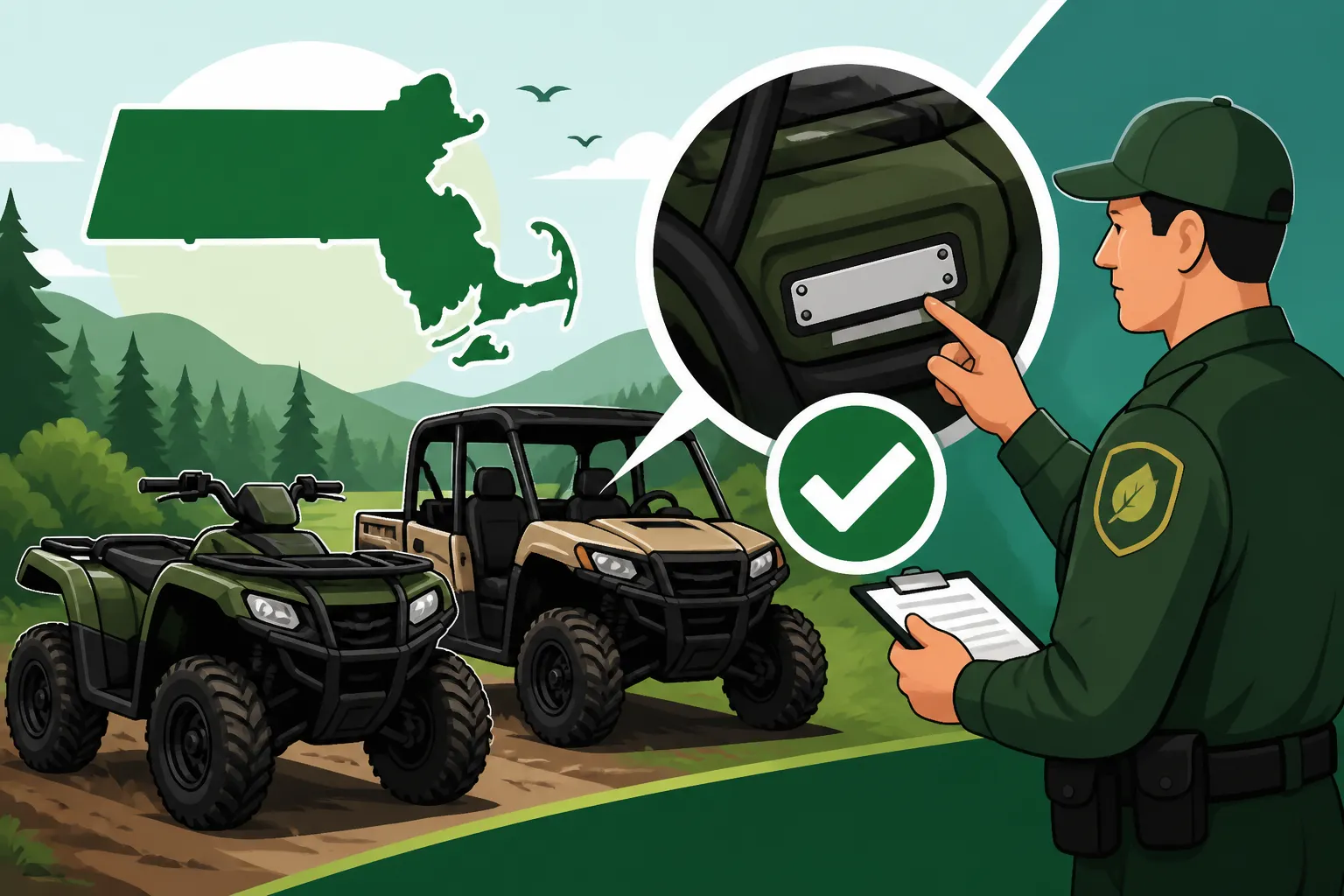
Serial Numbers the Environmental Police Will Accept
One of the most common headaches when you're trying to get your ATV or UTV registered here in Massachusetts is figuring out exactly what "serial number" the Environmental Police are looking for. It can feel like a bureaucratic maze, especially if you've got an older machine, a private sale with less-than-perfect paperwork, or you're just not sure where to even find these numbers. This guide is here to untangle that confusion, walking you through the types of serial numbers the Environmental Police accept, why they're so important, and what to do if yours seems to be missing or unreadable.
Why Serial Numbers Matter for Massachusetts ATV/UTV Registration
Let's be honest, nobody enjoys dealing with paperwork, especially when it comes to fun things like registering your off-road machine. But when you apply for an ATV or UTV registration in Massachusetts, the serial number isn't just a formality; it's a critical piece of the puzzle. It's the unique identifier for your specific machine, and the Environmental Police rely on it for several important reasons. Without a clear, verifiable serial number, you simply won't be able to get your sticker, and that means your machine stays parked.
The Environmental Police and Ownership Verification
Think of the serial number as your machine's fingerprint. Just like you have unique fingerprints, your ATV or UTV has a unique serial number that distinguishes it from every other machine ever made. When you register with the Massachusetts Environmental Police (MEP), they're not just giving you permission to ride; they're recording your ownership of a specific piece of equipment. This record is vital for legal purposes, accident investigations, and ensuring that the machine you're registering actually belongs to you.
The MEP acts as the registration authority for off-highway vehicles (OHVs) because they are responsible for enforcing Chapter 90B, the law governing ATVs and snowmobiles in the Commonwealth. Unlike cars, which are registered by the RMV, ATVs fall under their purview, and they need this specific number to maintain accurate records. This is why you'll often see them asking for specific details about the serial number on the application. They need to make sure that the number on your paperwork matches the number etched into the frame of your machine. It's a fundamental step in proving legitimate ownership.
Preventing Theft and Fraud
Beyond just verifying who owns what, serial numbers are a powerful tool in the fight against theft and fraud. Imagine buying a used ATV from a private seller only to find out later it was stolen. Without a clear serial number on the bill of sale and on the machine itself, it would be nearly impossible to trace its origins or prove your rightful ownership. The Environmental Police use these numbers to cross-reference with stolen vehicle databases. When you register, that number goes into their system, linking your name to that specific machine.
If your ATV or UTV were ever stolen, having it properly registered with its serial number on file significantly increases the chances of it being recovered and returned to you. Conversely, if you're buying a used machine, checking the serial number against police databases before you hand over any cash is a critical step. There are services that allow you to do this, and it’s always wise to take that precaution. A missing, altered, or unreadable serial number is a massive red flag and should make any potential buyer extremely wary. The MEP's strict requirements for these numbers are ultimately there to protect legitimate owners and deter criminals. You can also learn more about [Checking Whether a Used Quad Was Reported Stolen] to protect yourself.
Types of Serial Numbers the Environmental Police Look For
When it comes to registering your ATV or UTV in Massachusetts, the term "serial number" can sometimes be a bit broad. There are a few different types of numbers that the Environmental Police might refer to or accept, depending on the age and origin of your machine. Understanding these distinctions is key to a smooth registration process.
Vehicle Identification Numbers VINs
For most modern ATVs and UTVs, especially those manufactured in the last few decades, the primary serial number you'll be looking for is the Vehicle Identification Number, or VIN. This is a globally recognized, 17-character alphanumeric code that is unique to your vehicle. It’s a standard for automobiles, motorcycles, and most off-highway vehicles as well. The VIN encodes information about the manufacturer, model year, assembly plant, and a unique sequential production number.
You'll typically find the VIN stamped directly onto the frame of your ATV or UTV, often on the left-hand side near the footrest, on the steering neck, or on a sturdy part of the frame where it's less likely to be damaged. It should be clearly etched into the metal, not merely a sticker. When you're filling out your registration application, this 17-character VIN is almost always what the Environmental Police expect you to provide. They'll also require it if you're registering a machine that's been financed, as lenders often use the VIN to record their lien. Remember, [Massachusetts Requires a VIN on the Application] for a reason—it's the universal identifier.
Engine Serial Numbers
While the VIN is the primary identifier for the vehicle itself, sometimes the Environmental Police may also be interested in the engine serial number, particularly for older machines that might predate the widespread adoption of 17-character VINs or in cases where the frame VIN is compromised. The engine serial number is a separate, unique identifier stamped directly onto the engine block. Its format varies greatly by manufacturer and can be shorter or different in structure compared to a VIN.
It's important to understand that an engine serial number is generally considered a secondary identifier. The MEP primarily wants the frame VIN. However, if you have an antique ATV or UTV, or a homemade machine, and it doesn't have a recognizable VIN, the engine serial number might be used in conjunction with other documentation to establish ownership and uniqueness. This is less common, but it's good to know it exists. If you're in this situation, it's always best to contact the Environmental Police directly to confirm what they will accept.
Manufacturer's Certificate of Origin MCO Numbers
When you purchase a brand-new ATV or UTV from a dealership, one of the most crucial documents you'll receive is the Manufacturer's Certificate of Origin (MCO), sometimes also called a Manufacturer's Statement of Origin (MSO). This document is essentially the "birth certificate" for your machine. It proves that the vehicle is new, hasn't been titled or registered before, and details its specifications, including its VIN. The MCO itself will have a unique certificate number.
For a new machine, the MCO is absolutely required for your initial registration in Massachusetts. The Environmental Police will use the VIN listed on this MCO to register your machine. They need to see that you are the first owner listed on this official document directly from the manufacturer. Without an MCO for a new machine, you won't be able to register it. It’s part of the paper trail that proves a machine’s legal journey from the factory to your garage. This is why [Massachusetts Requires an MCO for a New Machine] before you can get your sticker.
Here’s a quick overview of these important numbers:
| Number Type | Purpose | Typical Location | When It's Needed |
|---|---|---|---|
| Vehicle ID Number (VIN) | Primary unique identifier for the entire vehicle | Stamped on frame (steering neck, footrest) | Most common for modern ATV/UTV registration |
| Engine Serial Number | Unique identifier for the engine | Stamped on engine block | Secondary, sometimes for older/homemade machines |
| MCO Number | Unique identifier for the Manufacturer's Certificate of Origin | On the MCO document itself | For registering a new machine |
What to Do If Your Serial Number is Missing or Unreadable
Finding out your ATV or UTV's serial number is missing, unreadable, or just plain weird can be a frustrating moment, especially when you're geared up and ready to hit the trails. This isn't an uncommon problem, particularly with older machines that might have seen a lot of use, or if you've purchased one where the previous owner wasn't as meticulous with maintenance or documentation. But don't despair—there are steps you can take, though they might require a bit more legwork.
Steps for Restoration and Verification
If your serial number is just faded, painted over, or partially obscured, your first step should be to try and make it legible. Gently clean the area with a wire brush or a non-abrasive cleaner. Sometimes, a little elbow grease is all it takes to reveal the numbers underneath layers of dirt, paint, or surface rust. Be extremely careful not to damage the numbers further or try to "re-stamp" them yourself, as this could be seen as tampering and lead to bigger problems.
If you can only make out part of the number, gather any other documentation you have – old registration cards, a bill of sale, or even photos of the machine from when the number might have been clearer. Any information you can provide will help the Environmental Police. They might have procedures for verifying a partial number, or they might instruct you on how to proceed. It's always best to be proactive and have as much supporting evidence as possible. Transparency is key here.
The Process for Special Cases
What happens if there's genuinely no legible serial number at all, or if it appears to be completely missing or ground off? This is a much more serious situation, and it raises immediate red flags about the machine's history. The Environmental Police are very strict on this point to prevent stolen machines from being registered.
In these extreme cases, you'll need to contact the Massachusetts Environmental Police directly. They are the only authority that can guide you on how to proceed. It's possible they might require an inspection of the machine by one of their officers. They might also ask for an affidavit of ownership, which is a sworn statement detailing how you acquired the machine and explaining the circumstances of the missing serial number. Services like LawDepot offer templates for legal documents such as affidavits, which can be useful if you're asked to provide a formal statement.
Understand that the MEP has the final say. If they suspect the number has been intentionally altered or removed to hide a criminal history, they may refuse registration or even seize the machine for further investigation. This is why it's incredibly important to exercise due diligence before you buy a used ATV or UTV, especially from a private seller, to ensure its serial number is intact and clear. [Massachusetts Registration Without a Bill of Sale] and without a clear VIN can be a very challenging path.
Ensuring Your Serial Number is Legitimate and Clear
Navigating the world of ATV and UTV serial numbers can feel like a minefield, but with a bit of vigilance, you can ensure a smooth registration process and protect yourself from potential headaches down the line. Whether you're buying a new machine or a used one, paying close attention to the serial number is non-negotiable.
Tips for Private Buyers and Sellers
If you're buying an ATV or UTV from a private seller, the serial number should be one of the very first things you inspect. Don't just take the seller's word for it; physically locate the VIN or serial number on the machine itself. Compare it meticulously against the number listed on the bill of sale, any previous registration documents, or the title (if one exists, though Massachusetts ATVs don't typically have titles). Look for any signs of tampering, such as grinding marks, re-stamping, or unusual welds around the area where the number is located. If anything looks suspicious, walk away. It's just not worth the risk.
For sellers, being transparent about your machine's serial number is paramount. Before you even list your ATV or UTV, make sure the VIN is clean, legible, and matches all your paperwork. Take clear photos of the serial number as part of your listing. When you create a bill of sale, be absolutely sure to include the full, correct serial number. Services like LawDepot provide customizable bill of sale templates that ensure all the necessary fields, including the serial number, are accounted for and clearly documented, which protects both you and the buyer. This level of detail makes a transaction legitimate and helps the buyer with their [Massachusetts Registration After a Private Sale]. You can also consider [Photographing the VIN Before a Massachusetts Private Sale] as a protective measure.
Using Legal Forms to Document Numbers
Beyond simply verifying the serial number, documenting it correctly on legal forms is a critical step in the ownership transfer and registration process. For any private sale, a comprehensive bill of sale is your best defense. This document should explicitly state the full serial number of the ATV or UTV, the names and addresses of both the buyer and seller, the purchase price, and the date of sale. Both parties should sign and date the document, and ideally, you should both keep a copy.
When you go to register your used machine, the Environmental Police will typically require a bill of sale as proof of ownership. If the serial number on that bill of sale doesn't match the machine, or if it's incomplete, you're going to hit a roadblock. By using a reputable legal form service, like LawDepot, you can ensure your bill of sale is robust and includes all the necessary information, which aligns with what the Environmental Police will be looking for. This careful documentation makes the registration process much smoother and helps establish an undeniable paper trail for your ownership.
Disclaimer
This article is for general informational purposes only and does not constitute professional advice. Laws, prices and regulations vary by location and change over time. Consult a qualified professional for guidance on your specific situation.