Registering When the Seller Left Out Their Address
It's incredibly frustrating, isn't it? You've finally found that perfect used ATV or side-by-side, shaken hands on the deal, and you're ready to hit the trails, only to find a crucial piece of information missing on your bill of sale: the seller's address. This common oversight can throw a wrench into your Massachusetts registration plans, leaving you wondering how to proceed. This guide will walk you through why that address matters to the Environmental Police and what steps you can take to get your machine legally registered and ready for the woods.
The Head-Scratching Problem of a Missing Seller Address
Imagine this scenario: you've driven out to a rural part of the state, perhaps even across state lines, to pick up a fantastic deal on a used quad. The seller seemed trustworthy, the machine runs great, and you exchanged cash for a handwritten bill of sale. You drive home, excited, only to sit down with your paperwork for registration and realize the seller only jotted down their name and a phone number, but completely forgot their street address. This isn't just a minor annoyance; for registering an off-highway vehicle (OHV) in Massachusetts, it can be a significant hurdle.
The Massachusetts Environmental Police, who handle all OHV registrations in the Commonwealth, need comprehensive information to process your application correctly. They're not just looking to ensure you own the machine; they're also verifying the chain of ownership and making sure all sales tax obligations are met. Without the seller's full address, it becomes difficult for them to confirm the legitimacy of the sale or even if the sales tax has been appropriately addressed. It's a small detail that can have big implications for getting that all-important [Two-Year OHV Sticker for Massachusetts Residents Explained] or [Non-Resident ATV Registration Costs $33 for One Year] on your machine.
Why the Environmental Police Need This Detail
The Environmental Police act as the gatekeepers for legal OHV use in Massachusetts. Their role isn't just about handing out decals; it's about ensuring public safety, proper land use, and adherence to state laws, including those concerning sales tax. When you present a bill of sale with a missing seller address, it raises questions for the registration office.
Think of it from their perspective: they need to confirm the identity of the seller and that the sale actually occurred as stated. An address provides a clear point of contact and helps to solidify the transaction's legitimacy. If there were ever any disputes about ownership, or if the machine had been reported stolen, having complete seller information is absolutely critical. It's part of the comprehensive process that ensures only legally owned and properly documented machines get registered for use on Massachusetts trails. They're trying to protect you, the buyer, as much as they are upholding the law.
Sales Tax Implications Without a Complete Address
Beyond simple verification, there's the matter of sales tax. Massachusetts has a 6.25% sales tax on most purchases, including off-road vehicles. When you buy from a private seller, you, the buyer, are generally responsible for filing and paying the [Massachusetts Use Tax on a Machine Brought Home] directly to the Department of Revenue (DOR) using Form ST-6. However, if the seller was a dealer, they would have collected the tax. Without a clear address for the seller, the Environmental Police might question whether the sale was private or from an unregistered dealer, which can complicate the tax assessment.
They need to know where the transaction took place, and the seller's address helps to establish jurisdiction for sales tax purposes. If the seller was an out-of-state resident, for instance, different rules might apply regarding your use tax obligations upon bringing the machine into Massachusetts. A missing address makes it harder for the registration clerk to advise you correctly on your tax responsibilities, potentially leading to delays or even incorrect filings down the line. It's a key part of the [Massachusetts Sales Tax Forms at Registration] process.
Steps to Take When the Seller's Address is Missing
So, you're in this pickle. The bill of sale is missing that crucial address. Don't panic! While it's a hiccup, it's often not insurmountable. There are several proactive steps you can take to rectify the situation and get your registration application back on track. The key is to be prepared with as much supplementary information as possible.
Attempting to Contact the Seller
Your first and best course of action is always to try and get the missing information directly from the seller. If you have their phone number, give them a call. Explain the situation politely. Most private sellers are honest folks who simply overlooked a detail. They probably want to ensure you have a smooth experience and might be happy to provide their full address over the phone or by text.
If you can reach them, ask them to send you an updated bill of sale with their full address included. A simple text message with the address could also suffice, especially if you can print it out and attach it to your existing bill of sale as supplementary proof. If they're willing, you could even meet them again for a quick signature on a revised document. Sometimes, a quick conversation can clear up the entire issue.
Supplementing With Other Proof of Address
What if you can't reach the seller? Or what if they're uncooperative (which, thankfully, is rare but happens)? You might have to get a little creative with other forms of proof. Did you have any other correspondence with the seller? Perhaps an email thread or a messenger conversation where they shared their address, or even a public listing where their address was mentioned? Print these out and bring them with you.
If you purchased the machine via an online marketplace, sometimes the listing itself will include general location information that can help. While not a direct address, it might offer enough context for the Environmental Police to work with. Remember, the goal is to provide the registration office with as much evidence as possible to demonstrate the legitimacy of the sale and the seller's identity and location. It's all about building a comprehensive picture when a key piece is missing.
The Affidavit Route: When All Else Fails
In more challenging cases, where you genuinely cannot obtain the seller's address and have no other corroborating information, you might need to consider an affidavit. An affidavit is a sworn statement of facts, made under oath or affirmation, before a notary public. In this document, you would detail the circumstances of the purchase, why the seller's address is missing, and affirm that you are the rightful owner of the OHV.
You can often find templates for a general affidavit online, for example, through services like LawDepot, which provides legal document templates. You'd fill it out with all the details you do have – your information, the machine's VIN, the seller's name, the date of sale, and the price – and then clearly state that the seller's address was inadvertently omitted and efforts to obtain it have been unsuccessful. This shows due diligence on your part and provides a formal declaration for the Environmental Police to consider. While not ideal, it can sometimes be accepted as a last resort, especially if paired with other strong proofs of ownership like the original bill of sale and the [Massachusetts Requires a VIN on the Application].
Essential Information for Your Bill of Sale
To prevent this entire headache in the future, it's vital to know what a complete and acceptable bill of sale for an OHV in Massachusetts looks like. Whether you're buying or selling, being meticulous with this document saves a lot of grief down the line. The Environmental Police are very clear about what they need to see.
What a Bill of Sale Must Contain
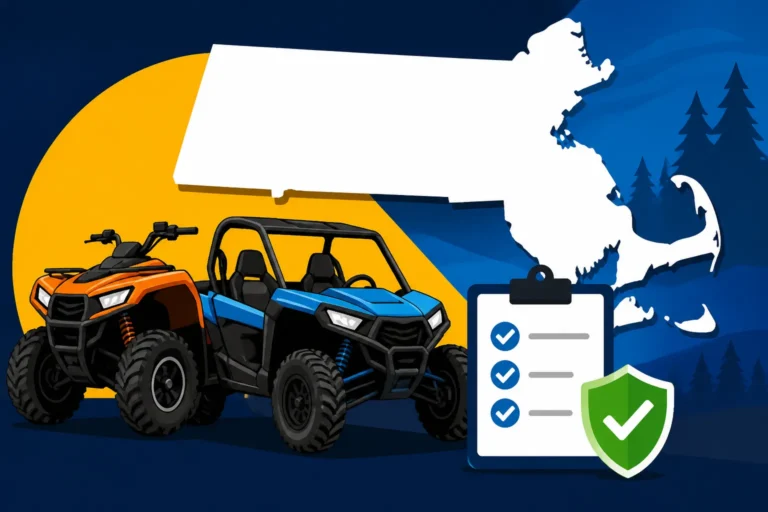
When registering a used off-highway vehicle, the Massachusetts Environmental Police will scrutinize your bill of sale carefully. It needs to be thorough to prove legitimate ownership. Here’s a quick checklist of the critical information your bill of sale should always include:
| Element | Description | Why It's Needed |
|---|---|---|
| Seller's Full Name | Legal name of the person or entity selling the OHV. | Identifies the previous owner for chain of ownership. |
| Seller's Full Address | Street, city, state, and zip code of the seller's primary residence or business. | Verifies seller's identity, aids in sales tax jurisdiction, and contact for disputes. |
| Buyer's Full Name | Legal name of the person or entity purchasing the OHV. | Identifies the new owner. |
| Buyer's Full Address | Street, city, state, and zip code of the buyer's primary residence. | Establishes where the machine will be registered and for future contact. |
| Date of Sale | The exact calendar date the transaction occurred. | Crucial for determining sales tax filing deadlines and ownership transfer. |
| Purchase Price | The agreed-upon amount of money exchanged for the OHV. | Basis for calculating Massachusetts sales tax. |
| Vehicle Information | Make, model, year, and most importantly, the full Vehicle Identification Number (VIN). | Uniquely identifies the specific OHV being sold. |
| Signatures | Both the seller's and buyer's original signatures. | Legal affirmation of the terms of the sale by both parties. |
This table outlines the bare minimum. A good bill of sale will also include a statement that the vehicle is being sold "as is," confirmation that the seller has the right to sell the machine, and a declaration that it is free of liens (if applicable). When preparing for [Registering an ATV With the Environmental Police], having all this explicitly laid out makes your life much easier. You can often find generic bill of sale templates online, and services like LawDepot can offer state-specific templates to ensure you don't miss any critical fields.
Why a Handwritten Note Might Not Be Enough
While a handwritten note can legally serve as a bill of sale, the problem often arises when those notes are sparse on details. It's easy for someone to scribble down just the price and a name, especially if they're doing the transaction quickly. However, as we've discussed, the Environmental Police need more.
A formal, typed bill of sale, or at least a printed template that you fill in by hand, encourages both parties to include all the necessary information. It acts as a clear reminder of what needs to be recorded. It's a small step that can save you a huge headache later. Always insist on a comprehensive bill of sale, even if it feels a little formal for a used quad. It’s part of your [Massachusetts Registration Paperwork Checklist].
Final Thoughts on Ensuring a Smooth Registration
Navigating the registration process for an ATV or UTV in Massachusetts, especially for a used machine, requires attention to detail. While a missing seller's address on a bill of sale can be a setback, it's often a solvable problem with persistence and proper documentation. Remember, the Environmental Police are there to help ensure legitimate ownership and safe riding, and providing them with as much complete information as possible will always lead to a smoother experience.
Always double-check all your paperwork before leaving a private sale. A quick glance at the bill of sale for crucial information like the seller's address, the VIN, and both signatures can prevent a frustrating trip to the registration office. It's a small investment of time at the point of sale that pays off immensely when you're ready to get your [Massachusetts Decals on Both Sides] and hit the trails. And when in doubt, never hesitate to reach out to the Environmental Police directly with your questions – they're the experts and can provide guidance tailored to your specific situation.
Disclaimer
This article is for general informational purposes only and does not constitute professional advice. Laws, prices and regulations vary by location and change over time. Consult a qualified professional for guidance on your specific situation.