Claiming a Gift Exemption With Form ST-6E
It's an exciting day when you receive an ATV or UTV as a gift, isn't it? The thought of hitting those Massachusetts trails or using a side-by-side on your property fills you with anticipation. But then, the practicalities kick in. While the machine itself might be free, you quickly realize the state still wants its share – usually in the form of sales tax. This guide is here to walk you through the often-confusing process of claiming a sales tax exemption for a gifted off-road vehicle in Massachusetts using Form ST-6E, ensuring your new-to-you machine gets registered smoothly without an unexpected tax bill.
Understanding Massachusetts Sales Tax on Off-Road Vehicles
Let's face it, nobody enjoys paying taxes, and the rules around sales and use tax can feel like a labyrinth, especially when you're dealing with something as specific as an ATV or UTV. Massachusetts has a robust system in place to ensure that most transactions involving goods result in some revenue for the state, and off-road vehicles are certainly not exempt from this general principle.
The General Rule: Why You Always Pay Sales or Use Tax
In Massachusetts, there's a standard sales tax rate of 6.25 percent that applies to most retail sales of tangible personal property. When you purchase a brand-new ATV or UTV from a dealership in the Bay State, that 6.25 percent is added right to the purchase price, and the dealership collects it on behalf of the state. It's pretty straightforward in that scenario – the tax is just part of the "out the door" cost. This tax is specifically outlined in [Massachusetts's 6.25 Percent Sales Tax] regulations.
However, the state also has what's called a "use tax." This comes into play when you buy an ATV or UTV from a private seller, either here in Massachusetts or out of state, or if you bring an off-road vehicle into Massachusetts that you purchased elsewhere and didn't pay the Massachusetts sales tax on. The idea behind use tax is to level the playing field, making sure that purchases from private parties or out-of-state vendors aren't exempt just because a retail store didn't collect the tax. You, the buyer, are responsible for reporting and paying this use tax directly to the Massachusetts Department of Revenue. The process for this is detailed in [Massachusetts Sales Tax on an ATV Purchase] and [Massachusetts Use Tax on a Machine Brought Home]. So, whether you buy new from a dealer or used from a neighbor, the state expects its 6.25% one way or another.
The money collected from these taxes isn't just a random grab; it helps fund various state services and infrastructure projects. While your OHV registration fees specifically contribute to the state's trail fund, the broader sales and use tax helps maintain everything from roads to schools. So, the state is very keen on making sure all taxable transactions are accounted for. This means that when you go to register your machine, the Environmental Police, who handle OHV registrations, will definitely be looking for proof that sales or use tax has either been paid or is explicitly exempted.
The Exception: When a Gift Isn't a Sale
Now, for the good news! While the general rule is that sales or use tax applies, there are specific situations where the transaction isn't considered a "sale" in the traditional sense, and thus, no sales tax is due. One of the most common and welcome exceptions is when an ATV or UTV is genuinely given as a gift. Imagine your Uncle Joe decides to give you his old but perfectly functional quad because he's upgrading to a newer model, or a friend wants to pass down their youth quad to your child who's just getting into the sport. These are true gifts, where no money, trade, or service is exchanged.
However, the state isn't just going to take your word for it, and rightfully so. Without some form of documentation, it would be all too easy for people to simply claim every private transaction was a "gift" to avoid paying the use tax. This is where Form ST-6E comes into play. It's the official way for you to declare, under penalty of perjury, that the off-road vehicle was indeed a gift, and therefore, you are exempt from paying the sales or use tax that would otherwise apply. It's the state's mechanism for differentiating a bona fide act of generosity from a transaction designed to bypass tax obligations.
What is Form ST-6E: The Affidavit of Exemption
Navigating the paperwork for ATV and UTV registration can feel like a scavenger hunt, but understanding the purpose of each form makes it a lot less daunting. Form ST-6E is one of those crucial pieces of paper, acting as your official declaration to the state regarding a tax exemption.
Purpose and Function of the Form
Form ST-6E is officially called the "Affidavit of Exemption for Sales or Use Tax." Don't let the formal title intimidate you; in simple terms, it's a legal document where you, as the person receiving the off-road vehicle, swear under oath that a specific transaction qualifies for an exemption from Massachusetts sales or use tax. While it covers various types of exemptions, for our purposes, we're focusing on the "gift" exemption. This form is your way of telling the Department of Revenue, through the Environmental Police, "Hey, this wasn't a purchase, it was a gift, so the sales tax doesn't apply." It essentially provides the legal justification for why you won't be submitting a payment for sales or use tax when you register your machine.
The key here is the "affidavit" part – it means you are attesting to the truth of the information presented on the form. This isn't just a casual statement; it's a formal declaration that carries legal weight. The state trusts that you are being honest, but they also have mechanisms to verify claims if something seems amiss. The goal of the form is transparency and accountability, ensuring that only legitimate exemptions are granted. For a deeper dive into this form, check out [An Exemption Form Called ST-6E].
Who Needs to File It and When
If you are the recipient of a gifted ATV or UTV in Massachusetts and you intend to register it, then you are the person who needs to file Form ST-6E. It doesn't matter if the donor lives in Massachusetts or another state; if you're registering the machine here, and you're claiming it was a gift, this form is required. Think of it as your personal declaration of the transaction's tax-exempt status.
When should you file it? This form is submitted during the registration process itself. When you gather all your paperwork – the registration application, proof of ownership (like a bill of sale or MCO), and your payment for the registration fees – Form ST-6E should be right there with it. The Environmental Police will review all these documents to ensure everything is in order before issuing your new OHV registration. It's a critical step, as they won't simply take your word that it was a gift; they need the official declaration on the proper form. Without it, they'll assume the sales or use tax is due, which can halt your registration process right in its tracks. You'll find more information on this specific scenario in Claiming a Gift Exemption With Form ST-6E.
Step-by-Step Guide to Filling Out Form ST-6E for a Gifted OHV
Filling out government forms can be a little intimidating, but taking it step-by-step makes the process much more manageable. Form ST-6E isn't overly complex, but accuracy is key to avoiding delays in your ATV or UTV registration.
Gathering the Necessary Information
Before you even put pen to paper (or fingers to keyboard), make sure you have all the essential details handy. This preparation will save you time and prevent errors that could delay your registration. You'll need information about both the person giving the gift (the donor) and the person receiving it (you, the recipient), as well as specific details about the off-road vehicle itself.
First, collect the full legal name, current address, and a reliable contact number or email for the donor. Even though they aren't signing the ST-6E directly as the filer, their information is crucial for establishing the nature of the gift. Next, have your own full legal name, current address, and contact information ready. Then, turn your attention to the ATV or UTV. You'll need its make (e.g., Polaris, Honda), model (e.g., RZR, Foreman), the year it was manufactured, and most importantly, its Vehicle Identification Number (VIN). The VIN is like the machine's DNA – a unique identifier that the state uses for tracking and record-keeping. Make sure you get the VIN absolutely correct; a single digit error can cause major headaches down the line. Finally, note the exact date the ATV or UTV was gifted to you. While not explicitly asked on the form in a dedicated box, having this date solidifies the transaction timeline. It's also a good idea to clearly understand your relationship to the donor (e.g., parent, sibling, friend) as this often helps the state understand the context of the gift.
Completing Each Section of the Form
Once you have all your information gathered, you're ready to tackle the form itself. You can usually find Form ST-6E on the Massachusetts Department of Revenue website. Print it out or complete it digitally if that option is available.
Start with the "Taxpayer Information" section. This is your information, the recipient, as you are the taxpayer claiming the exemption. Fill in your full name, address, city/town, state, zip code, and your Social Security Number or federal identification number. Next, move to the "Seller/Vendor Information" section. Here, you'll put the details of the donor – their name and address. Even though they didn't "sell" it to you, they are the previous owner from whom you received the property. Below that, in the "Description of Property" area, be precise. Write "ATV" or "UTV," and then include the make, model, year, and the all-important VIN. Don't be vague; specific details help prevent questions from the Environmental Police.
The most critical part for a gifted OHV is the "Reason for Exemption" section. You'll see a series of checkboxes. Locate the box that says "Gift." Make sure to check this box clearly. You may also want to briefly elaborate in the "Other" field or an attached statement if the form allows, simply stating "Given as a bona fide gift from [Donor's Name]." Finally, and this is extremely important, you must sign and date the form. By signing, you are affirming under the penalties of perjury that the information provided is true and accurate. While the ST-6E for a gift primarily focuses on the recipient's declaration, having a simple gift letter from the donor stating they are gifting the machine, including its VIN, can also be a helpful supplementary document, especially if you used a service like LawDepot to draft it. This can add an extra layer of clarity regarding the donor's intent.
What to Do After Completing the Form
Once Form ST-6E is thoroughly filled out and signed, you're almost ready for registration. However, a couple of crucial steps remain before you head off to the Environmental Police. First and foremost, make several copies of the completed form. One copy is for your personal records, another for your registration application packet, and it's always wise to have a spare just in case. Keeping good records is essential for any official transaction, and this is no exception.
The original, completed, and signed Form ST-6E needs to be submitted along with your other registration documents to the Massachusetts Environmental Police. This typically includes your completed OHV registration application, your proof of ownership (like an original Manufacturer's Certificate of Origin for a new machine or a bill of sale for a used one), and the necessary registration fees. Remember, the Environmental Police are the ones who handle ATV and UTV registrations in Massachusetts, not the Registry of Motor Vehicles (RMV). They will review all your paperwork to ensure it's complete and correct before processing your registration. Think of the ST-6E as an integral piece of your [Massachusetts Registration Paperwork Checklist]. You cannot simply mention it was a gift; you must present the completed form as official proof. While Massachusetts does offer an [Massachusetts Online Registration System] for some renewals, initial registrations and those involving complex paperwork like a gift exemption often require mailing in documents or visiting an office, so be prepared for that possibility.
Important Considerations and Potential Pitfalls
While claiming a gift exemption for your ATV or UTV with Form ST-6E can save you money on sales tax, it's crucial to understand the nuances and potential challenges. The state wants to ensure fairness and prevent misuse of exemptions, so they have certain expectations.
Proving a Bona Fide Gift vs. a Disguised Sale
The biggest hurdle when claiming a gift exemption is proving to the state that it was, in fact, a genuine gift and not a cleverly disguised sale intended to avoid sales tax. Massachusetts takes tax evasion seriously, and misrepresenting a transaction can lead to significant penalties. A "bona fide" gift means there was absolutely no exchange of money, services, or any other form of compensation for the ATV or UTV. The donor must have given it freely, with no expectation of anything in return.
Consider a hypothetical scenario: your friend "gifts" you their UTV, but you just happened to "help them out" with a significant repair bill on their truck right before the "gift" happened. Or perhaps you "loaned" them money a few weeks prior, and now the UTV is yours. The state might view such indirect exchanges as payment, making the transaction a sale rather than a gift. Even if it's family, if there's any perceived quid pro quo, it could raise red flags. For instance, if you get your brother's dirt bike as a "gift" right after doing extensive work on his house, the state might question the true nature of the transfer. While Form ST-6E is your formal declaration, having additional documentation like a simple letter of gift from the donor clearly stating the intent to gift the vehicle and that no money or services were exchanged can strengthen your claim. Services like LawDepot can help you generate such clear, legally-sound gift letters, which, while not always strictly mandatory for the ST-6E, can provide valuable supporting evidence if your transaction's legitimacy is ever questioned.
Related Documentation: Beyond Just the ST-6E
While Form ST-6E is critical for the sales tax exemption, it's not the only piece of paper you'll need when registering your gifted off-road vehicle. The Environmental Police still need to establish a clear chain of ownership and ensure the machine itself is properly identified.
For a brand new ATV or UTV that's being gifted, you'll still need the Manufacturer's Certificate of Origin (MCO). This document is essentially the "birth certificate" for the vehicle and proves it's new and hasn't been titled or registered before. If the gifted machine is used, you'll need some form of previous ownership documentation. Often, this means a bill of sale, even if it's filled out for "$0" and explicitly states "Gift" as the consideration. This bill of sale should still include the full details of both the donor and recipient, the date of the gift, and the complete description of the ATV or UTV, including its VIN. If the previous owner had a registration card, it's helpful to have that as well, though the Environmental Police will typically use the VIN to trace prior registrations in their system. The state needs this information to ensure the machine isn't stolen and that the person gifting it genuinely had the right to do so. Remember, [Massachusetts Requires an MCO for a New Machine] and [Massachusetts Requires a Bill of Sale for a Used One] for proof of ownership, even in the case of a gift. Additionally, every application requires [Massachusetts Requires a VIN on the Application] for proper identification.
Consequences of Misrepresentation
Attempting to avoid sales or use tax by falsely claiming an ATV or UTV was a gift is a serious matter, and the consequences can be significant. The state views this as tax fraud, and it can lead to more than just a denied registration. If the Department of Revenue investigates and determines that you intentionally misrepresented the transaction, you could face substantial fines, penalties, and interest charges on the unpaid tax. In severe cases, particularly if there's a pattern of such behavior or large sums involved, it could even lead to criminal charges.
Beyond the financial and legal repercussions, misrepresenting a gift can also lead to the denial or even revocation of your OHV registration. If your registration is denied, you won't be able to legally ride your ATV or UTV on state trails or any other land requiring registration. If it's revoked after the fact, you'd face penalties for operating an unregistered vehicle. The best practice is always to be completely honest and transparent in your dealings with state agencies. If there was any monetary exchange, even a small amount, it's generally safer to declare it as a sale and pay the appropriate use tax rather than risking the severe penalties associated with tax fraud. When in doubt, it's always wise to consult with a tax professional or the Massachusetts Department of Revenue directly to ensure you're complying with all regulations.
Registering Your Gifted OHV After Exemption
Once you've diligently completed Form ST-6E and gathered all your supporting documents, the final step is to formally register your gifted ATV or UTV with the state. This is where your efforts to claim the sales tax exemption pay off, allowing you to get your machine legal for Massachusetts trails.
The Registration Process with the Environmental Police
The authority for registering ATVs, UTVs, and snowmobiles in Massachusetts lies with the Massachusetts Environmental Police (MEP), not the Registry of Motor Vehicles (RMV), which handles cars, trucks, and motorcycles. This is a common point of confusion for new owners. The MEP is responsible for enforcing laws related to recreational vehicles and ensuring that all machines operating on public lands are properly registered and compliant with state regulations. You can get a good overview of this unique setup in [Registering an ATV With the Environmental Police] and [Why the Environmental Police Register ATVs, Not the RMV].
To complete the registration, you'll need to submit your completed OHV registration application, the properly filled-out Form ST-6E (attesting to the gift exemption), your proof of ownership (like the MCO or bill of sale), and payment for the actual registration fees. You can typically find the application form on the Massachusetts Environmental Police website. Ensure all forms are legible and accurate. It's often recommended to mail in your application packet or, if available and preferred, visit an MEP office during their designated hours. Always double-check their current procedures for registration submission, as these can sometimes change.
Fees Still Applicable (Even for a Gift)
It's important to understand that while Form ST-6E exempts you from the sales or use tax, it does not exempt you from the standard registration fees. Think of it this way: the sales tax is a one-time tax on the transaction of acquiring the machine, whereas the registration fee is a recurring fee for the privilege of operating it legally in the state.
For Massachusetts residents, the standard OHV registration fee is currently for a two-year period. Non-residents typically pay a different rate for a one-year registration. These fees are mandatory for all registrations, whether the machine was purchased, inherited, or received as a gift. So, even after successfully claiming your exemption with Form ST-6E, be prepared to pay the full registration fee. This fee, for example, [Massachusetts Charges $44 for Residents], directly contributes to the Massachusetts OHV Trail Fund. This fund is absolutely vital, as it's dedicated to the acquisition, development, maintenance, and management of off-highway vehicle recreation facilities and trails across the Commonwealth. So, while you're paying a fee, you're directly supporting the very trails you hope to ride. More details on how these fees are utilized can be found in [Massachusetts Registration Fees Fund Trails] and [The OHV Trail Fund Your Sticker Pays Into].
Receiving Your Decals and Registration Card
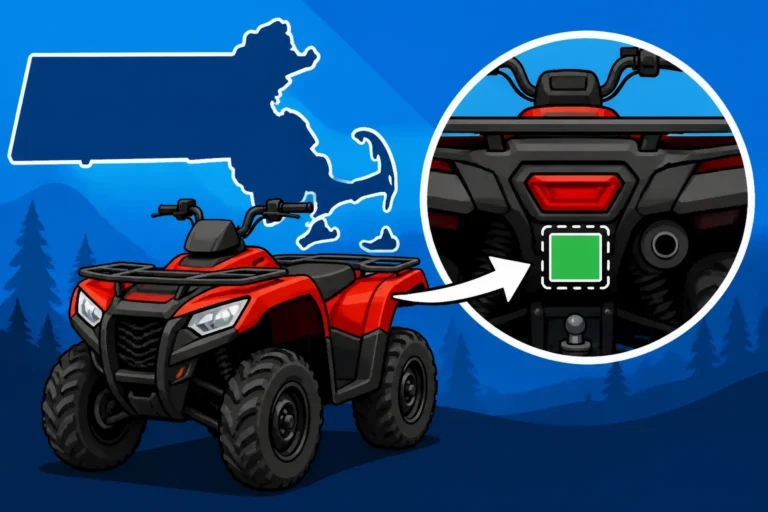
Once the Environmental Police process your application and all documents are found to be in order, they will issue your official Massachusetts OHV registration. What you'll receive is typically a set of decals (stickers) and a registration card. The decals are essential for visible identification of your registered machine. These typically display your registration number and the expiration date. You'll need to affix these decals to your ATV or UTV according to specific state guidelines, which usually involve placement on both sides of the machine in a clearly visible location. For example, [Massachusetts Issues Decals and a Card] and [Massachusetts Decal Placement Rules] provide details on this.
Equally important is the registration card. This small card contains all the pertinent information about your machine and your registration details. Massachusetts law requires that you carry this card with you whenever you are operating your ATV or UTV. Think of it like your vehicle's registration in your car – it needs to be accessible in case an Environmental Police officer asks to see it. It's a critical piece of identification and proof that your machine is legally registered. Many riders keep it in a waterproof bag, a fanny pack, or a secure pocket to ensure it doesn't get lost or damaged on the trail. Always remember that [Massachusetts Registration Cards Carried on Board] is a strict requirement for legal operation.
| Document Type | For a Gifted OHV (with ST-6E) | For a Purchased OHV (without ST-6E) |
|---|---|---|
| Registration Application | Required | Required |
| Form ST-6E (Affidavit) | Required (to claim tax exemption) | Not Required (unless another exemption applies) |
| Proof of Ownership | MCO (new) or Bill of Sale (used, marked "gift") | MCO (new) or Bill of Sale (used) |
| Sales/Use Tax Payment | Not Required (if exemption is approved) | Required (6.25% of purchase price) |
| Registration Fee Payment | Required | Required |
| Previous Registration Card | Helpful, but not always mandatory | Helpful, but not always mandatory |
| VIN | Always required on application | Always required on application |
Disclaimer
This article is for general informational purposes only and does not constitute professional advice. Laws, prices and regulations vary by location and change over time. Consult a qualified professional for guidance on your specific situation.