Local Clubs That Clear Blowdowns After a Storm
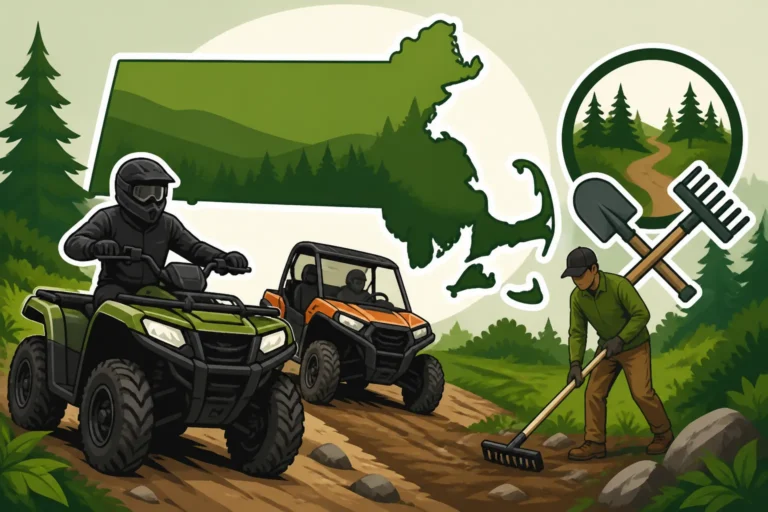
A storm can turn a familiar Massachusetts ATV route into a dead end, with a tree across the trail, branches hiding the tread, or soft ground that’s easy to damage. Local clubs may help clear blowdowns, but riders need to know who is authorized to work, how to report hazards, and when a trail is actually open again. This guide explains how to respond safely and support responsible trail maintenance.
Who clears blowdowns on Massachusetts riding trails
Clubs, volunteers, and land managers have different roles
Trail maintenance often involves several groups, and it helps to understand who does what before reaching for a saw. A local club may organize volunteers, share reports from riders, or help with approved maintenance. A public land manager, such as the Department of Conservation and Recreation, is responsible for managing its land and determining what work can take place there. The exact arrangement can vary by property and trail.
That distinction matters after a storm. Seeing a tree across a route does not automatically mean riders are allowed to remove it. Cutting a tree, moving heavy limbs, or using equipment on public land may require permission, coordination, and appropriate training. Even a well-meaning volunteer can create a safety problem or damage a trail if the work is done without approval.
In the Berkshires, trail organizations and land managers may coordinate on maintenance, but riders should check who is responsible for the specific trail before assuming a particular club can clear it. [Massachusetts Clubs That Maintain Trails] and [How the Berkshire Trails Council Works With Rangers] offer useful background on how local trail work can be organized.
What a club can do after a storm
A club’s most useful first step may be gathering reliable information rather than immediately cutting or hauling anything. Members might report a blockage, check whether an authorized crew is available, or help communicate conditions to riders. When maintenance work is approved, volunteers may assist with tasks appropriate to their training and the land manager’s directions.
A blowdown can be more complicated than it looks from the seat of a machine. A fallen tree may be under tension, hung up in another tree, or lying across an unstable slope. Cutting it without understanding how it will move can cause serious injury. Large trees can also require equipment and experienced operators that a casual group of riders does not have.
The work may be limited to clearing a passage, or the route may need to remain closed until a qualified crew can assess it. Local clubs that maintain routes do not necessarily have permission to work on every trail in the area. [Who Actually Maintains the Three Berkshire OHV Trails] is a helpful related read for understanding why the answer can depend on the forest and the specific route.
Why riders should not assume a trail is open
A cleared obstacle is not the same thing as an officially reopened trail. A storm can leave behind washouts, hanging limbs, soft shoulders, exposed roots, or damaged drainage features that are difficult to spot while riding. A trail can also be closed for repair even after the visible tree has been removed.
This is especially important in spring and after periods of heavy rain. Riding around an obstruction can widen a trail, damage vegetation, or create a new unauthorized route. A small detour can quickly become a larger erosion problem when other riders follow it.
Before loading up, check the land manager’s trail notices and contact the relevant forest office if the status is unclear. For a Berkshire trip, [Massachusetts Trail Closures After a Storm] and [Calling Beartown State Forest Before You Tow] can help you plan around changing conditions rather than discovering a closure at the trailhead.
What to do when you find a fallen tree
Stop before trying to ride around it
If you encounter a blowdown, stop at a safe distance and assess the situation. Avoid parking where another rider coming around a bend could collide with you. If you are riding with others, let the group know there is an obstacle ahead and keep everyone out of the immediate work area.
Look for obvious hazards without approaching the tree unnecessarily. A trunk may be blocking the route, but branches can extend farther than they appear. Watch for suspended limbs, unstable trees nearby, steep ground, soft edges, and places where riders have already started making a detour. Do not put yourself beneath a leaning tree or attempt to pull a branch that may spring back.
If the route cannot be passed safely, turn around where it is safe to do so. Do not try to push through, lift a heavy trunk with a machine, or create a bypass through the woods. If there is another legal route, use it only if you are sure it is open to your type of vehicle. A map can help you understand the general trail layout, but it cannot confirm that a route is open or authorized today.
Report the location clearly
A useful report gives the land manager or club enough information to find the obstacle without guesswork. Note the forest, trail name or nearby junction, the direction you were traveling, and any recognizable landmarks. Explain whether the tree fully blocks the route or whether other hazards are present. If you can take a photo from a safe position, it may help show the size and location of the problem.
A mapping app such as onX Offroad can help you identify your approximate location and record the route you traveled, especially when trail junctions look similar. Treat that information as a navigation aid, not proof that a trail is open for riding. Verify access with the land manager, and do not rely on a phone screen alone if coverage is poor or the device battery is low.
Use the forest office’s preferred contact method when one is available. If you are unsure who manages the land, ask the appropriate office or club contact rather than posting a vague message that says only “tree down somewhere near the trail.” [Questions Worth Asking a Berkshire Forest Office] can help you prepare a concise, useful report.
Know when an emergency is different from a maintenance report
A blocked trail is usually a maintenance issue, not an emergency. But if someone is injured, trapped, or in immediate danger, contact emergency services and provide the clearest location information you can. Don’t put yourself at risk trying to move a tree or reach someone by crossing unstable ground.
If a rider has been hurt in a crash, follow the applicable reporting requirements and get help. A downed tree may contribute to an incident, but the response should focus first on people’s safety. Keep other riders away from the hazard and avoid moving an injured person unless there is an immediate threat that makes movement necessary.
For a non-emergency obstruction, give the report to the responsible land manager or authorized trail group and let them decide how to handle the work. [Massachusetts Trail Planning and Closures] provides related context on why access and maintenance decisions can change, particularly when conditions are unsafe.
How to help a local trail crew responsibly
Join an organized volunteer effort
If you want to do more than report a hazard, ask local clubs about organized trail work days. A volunteer event can provide direction on where work is permitted, what tools are appropriate, and how to protect the trail while clearing debris. It also gives newer volunteers a chance to learn from people familiar with the land and maintenance practices.
Some work days may involve tasks other than cutting trees: picking up litter, clearing small debris, checking signs, or helping with drainage work. These jobs still matter. Keeping water flowing off the trail can reduce erosion and make it less likely that a storm turns a small problem into a major repair.
Ask what the work involves before showing up with equipment. Find out whether the event is authorized, what protective gear is expected, whether volunteers need to bring tools, and who will supervise the work. [Massachusetts Trail Volunteer Days] is a relevant place to start when looking for ways to support trail maintenance.
Let trained people handle hazardous trees
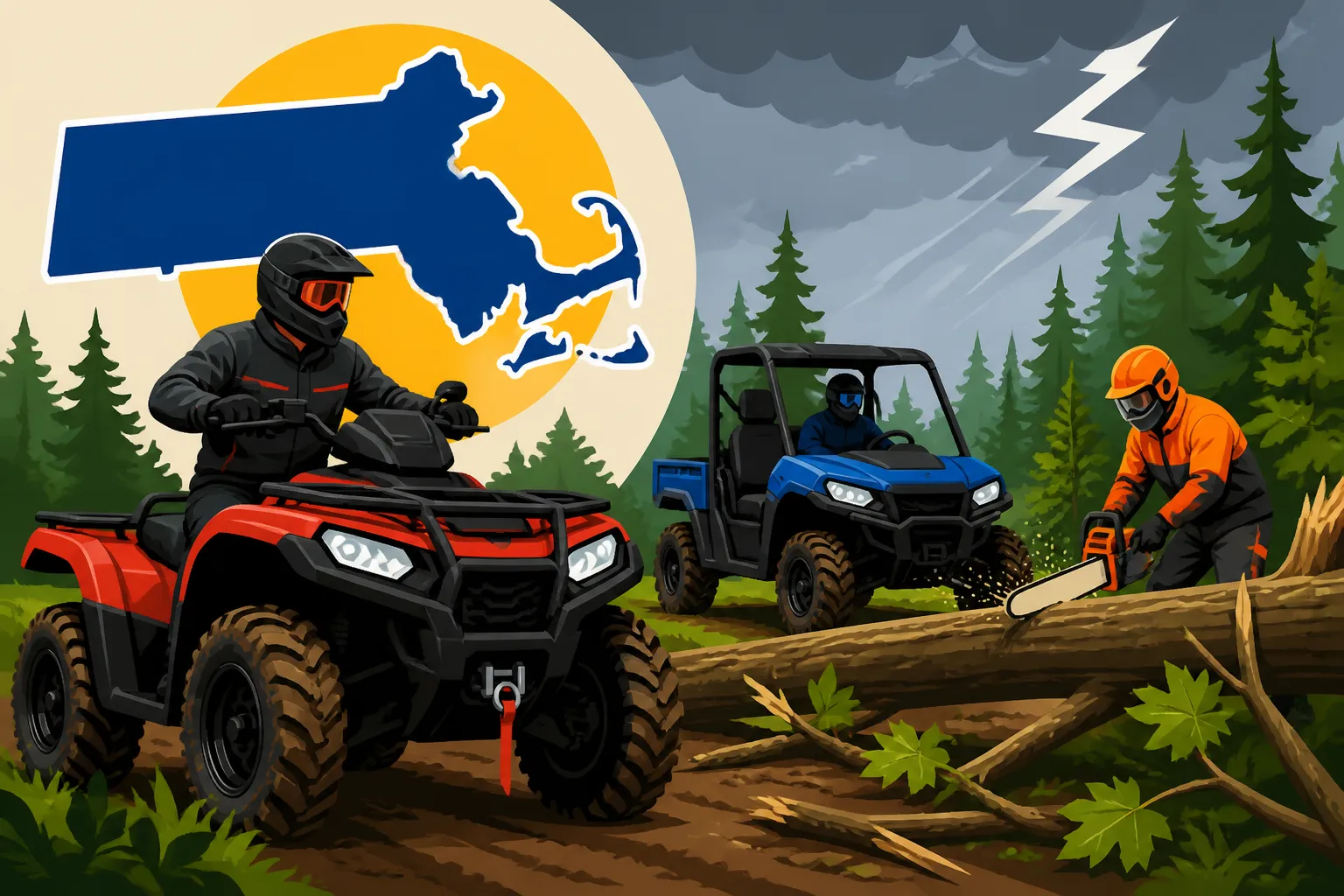
Do not bring a chainsaw to a trail and begin cutting on your own. A storm-damaged tree can be under pressure, split unpredictably, or shift when a branch is removed. Safe chainsaw work requires training, suitable protective equipment, and a clear plan for managing the tree’s movement. Large or unstable trees may need professional operators and specialized equipment.
Even if you have experience cutting trees on private property, trail work can involve different risks. The ground may be steep or wet, other riders may approach unexpectedly, and a tree can be tangled with surrounding vegetation. The land manager may also have rules about where equipment can be used and how debris must be handled.
When in doubt, report the hazard and leave it alone. That may feel frustrating when you are eager to get the route open, but waiting for an authorized crew is safer than creating another emergency or damaging the trail.
Protect the trail while the blockage is being handled
Do not widen the route to get around a tree. A new track can damage plants and soil and may lead other riders away from the designated route. If conditions are too muddy or unstable to pass, turning back is usually the least harmful choice.
Riders can also help crews by following closures, keeping machines out of work areas, and giving volunteers room to do their jobs. If you meet a maintenance crew, slow down, follow their directions, and wait until they signal that it is safe to continue. Avoid riding close to tools, machinery, or suspended branches.
These habits are part of good trail etiquette, not just storm etiquette. [Massachusetts Trail Etiquette Locals Expect] covers the kind of considerate behavior that helps reduce conflict and damage on shared routes.
Planning a ride after wind or heavy rain
Check conditions before you haul
A long drive with a trailer makes a surprise closure especially aggravating. Before leaving home, check the relevant forest or trail updates, and call the land manager if the information is incomplete. Ask whether the route is open, whether a recent storm caused closures, and whether the trail is suitable for your vehicle.
Beartown, October Mountain, and Pittsfield State Forest are among the Berkshire areas riders may consider, but conditions and access can differ from one property to another. Don’t assume that because one forest is open, another nearby forest has the same status. Trail systems can also include routes with different access rules or vehicle restrictions.
An app such as onX Offroad can support trip planning by helping you review your route and note junctions, but it should be one part of a broader plan. Save or carry information you can use if cell service drops, tell someone where you expect to ride, and have a turnaround plan if a route is blocked. [Massachusetts Trail Conditions Before You Tow] is another useful topic to review before setting out.
Match the response to what you find
| What you encounter | Safer response | Avoid |
|---|---|---|
| Small branches on an otherwise open route | Stop and assess; move only what is clearly safe and permitted | Reaching under unstable limbs |
| A tree fully blocking the trail | Turn back and report its location | Cutting it without authorization |
| Riders have made a bypass | Stay on the designated route and report the damage | Following the new track through vegetation |
| Mud, washout, or unstable trail edges | Turn around if passage could cause damage or injury | Spinning tires or widening the trail |
| A crew is working nearby | Slow down and follow crew directions | Riding through the work area |
| A person is injured or in immediate danger | Contact emergency services and share a clear location | Attempting risky tree work before getting help |
The most responsible choice is not always the most convenient one. If the route is unsafe, turning around protects you, other riders, volunteers, and the trail itself. A few minutes spent checking conditions can prevent a wasted trip or a preventable accident.
Keep good notes for your next ride
When you report a blockage, record what you saw and when you saw it. Conditions can change quickly, and an older report may no longer describe the route accurately. If a land manager or club asks for more information, a clear location and recent observation are more useful than speculation about what caused the damage or when it will be cleared.
Keep in mind that a rider’s report is not an official trail-status update. Before riding the same route later, check again with the land manager or authorized source. A tree may have been removed while the trail remains closed for repairs, or a separate hazard may have appeared farther along the route.
Showing patience after a storm can be hard, particularly when riding time is limited. But reporting accurately, respecting closures, and leaving hazardous work to authorized crews are practical ways to help Massachusetts trails reopen safely and remain rideable for everyone.
Disclaimer
This article is for general informational purposes only and does not constitute professional advice. Laws, prices and regulations vary by location and change over time. Consult a qualified professional for guidance on your specific situation.