Massachusetts Trail Volunteer Days
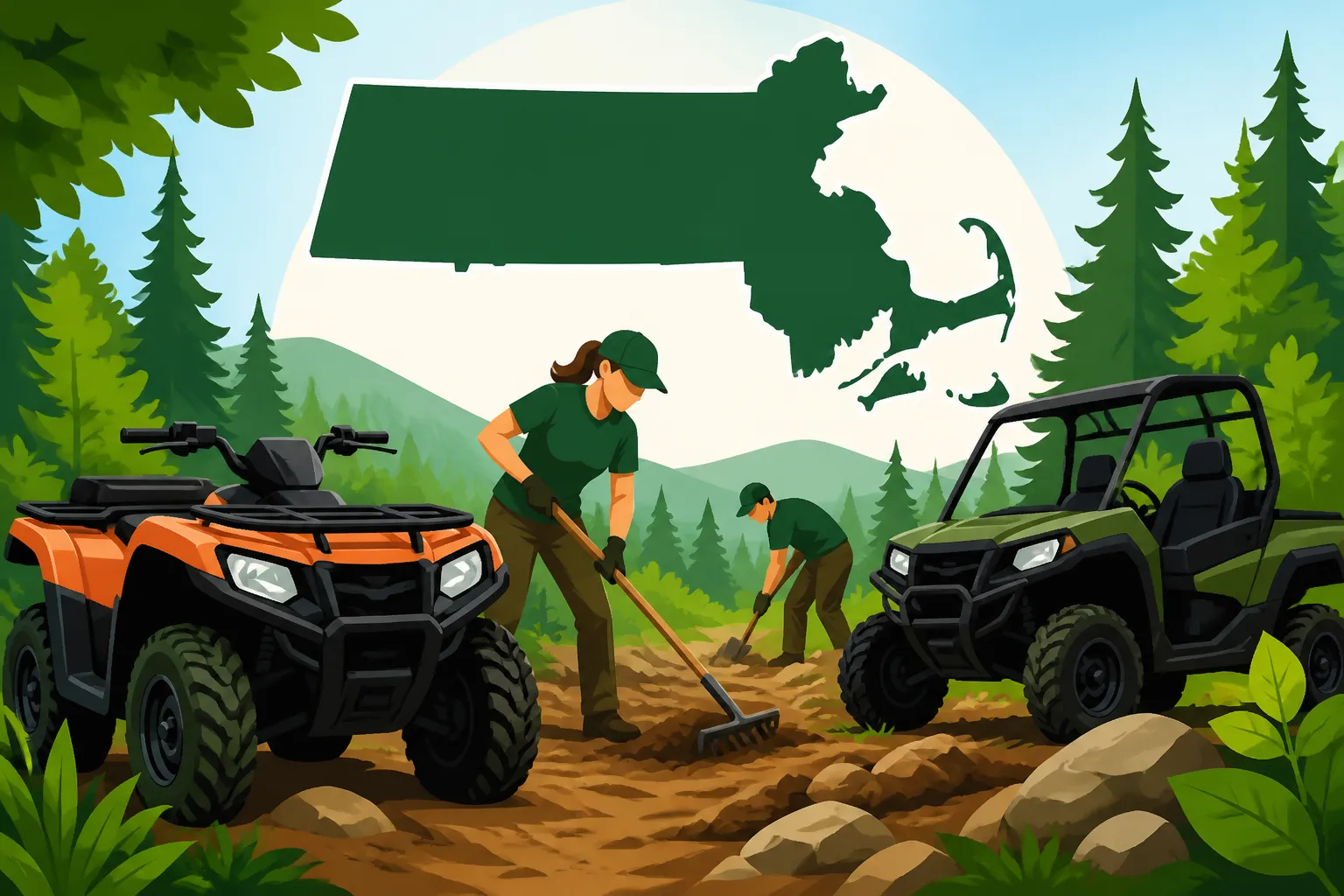
A volunteer trail day can be a satisfying way to help keep Massachusetts riding areas usable, but showing up with a saw or machine without approval can create safety and land-management problems. This guide explains how to find legitimate ATV and UTV trail work, what to ask before you go, how to prepare, and how to make sure your effort supports authorized access.
Where to look for Massachusetts trail volunteer days
Start with the trail manager and local riding groups
Volunteer opportunities are often organized through the people already responsible for maintaining a riding area: land managers, recognized trail groups, and clubs that coordinate with those managers. In the Berkshires, groups such as the Berkshire Trails Council have worked with rangers on trail-related efforts. A useful starting point is [Massachusetts Berkshire Trails Council Work] and [How the Berkshire Trails Council Works With Rangers]. These topics can help you understand how local coordination works before you volunteer.
You can also ask local clubs whether they have an approved workday planned. Some groups help clear blowdowns, report damage, or assist with other maintenance under an agreed plan. [Massachusetts Clubs That Maintain Trails] and [Local Clubs That Clear Blowdowns After a Storm] are useful starting points for understanding the role clubs can play.
If a club shares a volunteer announcement, read the details carefully. Check who is organizing the work, which trail or property it covers, where participants should meet, and whether you need to register in advance. A post in a social media group can be a helpful lead, but it is not automatically permission to work on public or private land. Confirm the event with the organizer or relevant land manager.
Ask whether the work is authorized
Trail maintenance is not simply a matter of fixing whatever looks damaged. A shortcut that seems helpful to a rider—such as widening a muddy section, cutting a new route around a puddle, or moving a fallen tree—may conflict with the land manager’s plan. Work done without approval can disturb sensitive areas, create erosion, or make a trail harder to maintain.
Before volunteering, ask who approved the work and who will supervise it. If the organizer cannot identify the land manager, property owner, or authorized group responsible for the site, pause before participating. You can also ask whether the planned work is limited to designated routes. The background in [Massachusetts Unauthorized Trail Inventories] can help explain why identifying authorized trail mileage matters.
A volunteer day should have a clear scope. “Help maintain the trail” is vague; “remove small branches from the marked route under the crew leader’s direction” is more useful. The organizer should explain what volunteers may do, what tools are allowed, and which tasks are reserved for trained staff or experienced crew leaders.
Check the specific riding area before making the drive
Trail access and conditions can vary by property, season, and recent weather. A volunteer event might go ahead even when recreational riding is restricted, or the work site may be somewhere different from the usual trailhead. Confirm the meeting location and access instructions with the organizer instead of assuming that a familiar parking area will be open.
If your volunteer day is near a Berkshire riding area, check the relevant forest or land manager’s guidance and ask whether the group has any parking or access instructions. [Massachusetts Trail Conditions Before You Tow] is useful for thinking through the practical checks to make before traveling. For route planning, onX Offroad can help you review your intended approach and keep track of where you plan to go, but a mapping app should not replace official directions, posted signs, or the organizer’s instructions.
What to ask before you sign up
Confirm the task, crew leader, and tools
A well-run workday should tell you what the crew will do and who is responsible for directing it. Ask whether the work involves hand tools, moving branches, picking up litter, documenting damage, or another task. Find out whether tools are supplied or whether volunteers should bring specific equipment. Do not bring powered equipment unless the organizer explicitly says it is allowed and explains who may operate it.
It is also reasonable to ask how large the group will be and whether volunteers need particular experience. Some tasks are suitable for first-time volunteers; others may involve hazards or equipment that require training. If you are bringing a teenager, ask about age requirements and supervision. Do not assume a child can participate simply because the work is outdoors.
Useful questions include:
- Who is organizing and supervising the work?
- Has the property manager or owner approved this specific task?
- Where should volunteers meet, and where may they park?
- What should I bring, and what should I leave at home?
- Is the workday open to beginners, and are there age limits?
- What happens if weather or trail conditions change?
- Is the crew expected to ride machines, or is this a foot-based workday?
A clear answer helps you arrive prepared and reduces the chance that volunteers duplicate work, enter a closed area, or use equipment in a way the land manager has not approved.
Understand safety expectations before arriving
Trail work can involve uneven ground, hidden rocks, insects, changing weather, and sharp or heavy debris. Even a task that sounds simple can become risky when several people are working near one another. Ask whether the organizer will give a safety briefing and whether volunteers should bring gloves, eye protection, sturdy footwear, water, or other personal gear.
If machines are part of the workday, clarify exactly how they will be used. A recreational ATV or UTV is not automatically appropriate for hauling materials or working on a trail. The organizer should explain the approved route, operator requirements, and any limits on passengers or loads. Never use a vehicle to pull, push, or carry something unless the crew leader has authorized the method and the task can be done safely.
Stay within the crew’s assigned area. If you notice a washout, damaged sign, blocked route, or possible hazard elsewhere, report it to the leader rather than leaving the group to investigate on your own. A location note or photo can help the manager assess the issue, but do not step into unsafe terrain or move a hazard to make it look better.
Know the difference between volunteering and riding
A trail volunteer day is not necessarily a group ride. The work may take place on a trail that is closed to general riding, or the event may be limited to walking access. Ask whether recreational riding is permitted before and after the work. Keep your volunteer activity separate from any ride plans unless the organizer specifically includes riding as part of the event.
Riders also need to respect ordinary access rules during volunteer work. Registration, posted closures, landowner permission, and any applicable age or safety requirements still matter. [Massachusetts Trail Etiquette Locals Expect] offers helpful context for behaving considerately around other trail users. If an event includes riding on public land, check [Massachusetts Safety Certificates Under 18] for the rules that apply to younger riders.
How to prepare for a volunteer workday
Pack for the work, not just for a ride
A volunteer day can involve standing around while the crew receives instructions, walking over uneven ground, or working in a spot with limited facilities. Pack enough water and food for the expected duration, plus clothing that suits the forecast and the terrain. Long sleeves and sturdy pants can help protect against brush and insects; closed-toe footwear with good traction is generally more practical than riding boots meant only for machine controls.
Bring only the tools the organizer has requested. A personal chainsaw, powered trimmer, or other cutting equipment may be prohibited, even if you use it regularly at home. For safety and land-management reasons, the crew leader may need to control which tools are used and how. If you have a tool you think could help, ask first rather than bringing it and putting the organizer on the spot.
Before leaving home, save the organizer’s contact details and confirm the meeting point. Cell service can be unreliable in hilly or wooded areas, so do not assume you can call for directions once you are near the site. onX Offroad may be useful for reviewing your approach or marking a planned route, but follow the official meeting instructions and signs if they differ from what an app displays.
Plan for changing weather and trail conditions
Rain, wind, and saturated ground can change what a crew can safely accomplish. Wet soil is especially vulnerable to damage from foot traffic and vehicle traffic, so an organizer may modify or cancel a workday when conditions are poor. Check for updates before you travel, and avoid trying to reach the site by an unapproved route if the usual access is blocked.
A simple planning table can help you decide what to confirm:
| Before the event | What to confirm | Why it matters |
|---|---|---|
| Registration | Whether you need to sign up in advance | The crew may have a capacity or check-in process |
| Location | Exact meeting point and parking instructions | A trailhead may not be the work site |
| Task | Assigned work and authorized area | Prevents unapproved repairs or route changes |
| Gear | Requested clothing, tools, and supplies | Keeps you prepared without bringing prohibited equipment |
| Weather | Event status and any changes | Conditions may affect safety and ground impact |
| Riding | Whether recreational riding is allowed | Volunteering does not automatically grant riding access |
If you are unsure about a route or property boundary, ask the organizer before setting out. A digital map can be a useful planning aid, and onX Offroad can help you keep notes about your intended approach, but it cannot establish permission to enter a property or override a closure notice.
Make your contribution useful after the event
Good stewardship does not end when the tools are packed away. Follow the crew leader’s instructions for cleanup, return borrowed tools, and make sure no supplies or debris are left behind. If you spot a separate problem during the day, report it clearly: describe the location, what you observed, and whether it creates an immediate safety concern. Avoid posting sensitive access details publicly if the organizer asks volunteers to keep them within the group.
You can also ask whether the group needs help with future workdays, trail observations, or administrative tasks. Not every useful contribution requires physical trail work. Some groups benefit from people who can help communicate event details, organize supplies, take notes, or assist with volunteer check-in.
For future rides, keep volunteer work and recreational access distinct. A trail improved by a volunteer crew may still have seasonal restrictions, designated-use rules, or closures. Check current guidance from the responsible manager before towing out. The broader overview in [Massachusetts Trail Planning and Closures] can help you think through why access can change even after maintenance work is completed.
How to volunteer responsibly over time
Build a relationship with the people managing the trails
A one-day effort can be valuable, but steady communication helps make volunteer work more effective. If you enjoyed the experience, ask the organizer how to hear about future opportunities and what kinds of help are actually needed. A group may need volunteers for scheduled work, but it may also need people to report conditions through an established channel rather than attempting repairs themselves.
Be dependable about commitments. If you sign up and later cannot attend, let the organizer know as early as possible. If you are bringing a guest, confirm that the event allows additional participants. Small details like these help the crew plan tools, safety briefings, and task assignments.
As you become familiar with the area, avoid assuming that experience gives you authority to change a trail. Even a well-intended detour can become an unauthorized route. The safest habit is to document the concern and pass it to the person responsible for the property.
Keep the focus on sustainable, shared access
Massachusetts riding areas are shared spaces, and trail work may support more than one kind of user. A volunteer crew may need to consider drainage, erosion, habitat, signs, and the needs of hikers or other visitors alongside motorized access. Ask how the task fits into the manager’s plan rather than judging success only by whether a route feels easier to ride.
If a workday involves a damaged or confusing section, let the crew decide how to address it. A new path around mud can widen the disturbed area; clearing vegetation too aggressively can affect sightlines or sensitive ground; and moving a sign can make directions less clear. Authorized maintenance is guided by the people who know the property’s rules and long-term priorities.
The most useful volunteer is not necessarily the person with the biggest machine or the most trail miles. It is the person who shows up prepared, listens to the crew leader, follows the approved scope, and leaves the area in the condition the manager intended. That approach helps preserve trust between riders, clubs, landowners, and public agencies—and gives future volunteer days a better chance of continuing.
Disclaimer
This article is for general informational purposes only and does not constitute professional advice. Laws, prices and regulations vary by location and change over time. Consult a qualified professional for guidance on your specific situation.