Massachusetts Riding in Late Season
Late-season ATV and UTV rides in Massachusetts can be beautiful, but falling leaves, shorter days, cold rain, and seasonal closures make planning more important than it is in midsummer. This guide covers how to choose a ride, check access, prepare your machine, and stay safe on the state’s designated trails as the season winds down.
Plan around Massachusetts late-season trail access
Confirm the riding season and closures before you leave
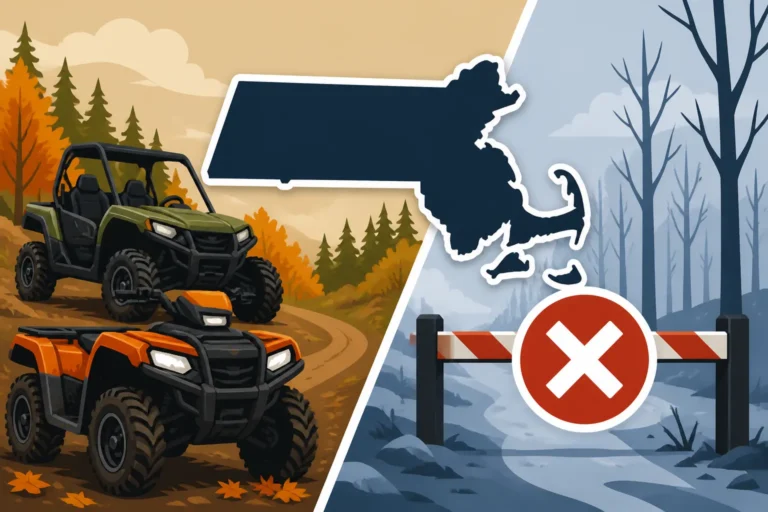
A sunny forecast does not necessarily mean a trail is open. Massachusetts riding access can depend on the land manager, the designated route, seasonal rules, and temporary conditions such as storm damage. The state forest OHV season is generally described as running from May through November, but that broad window is not a promise that every trail is open on every late-season day. Check the current rules and notices for the specific forest before loading your machine.
The Berkshires are a natural focus for many riders. Beartown State Forest, October Mountain State Forest, and Pittsfield State Forest are among the places associated with Massachusetts OHV riding. They are not interchangeable, though. Route layouts, trail conditions, access points, parking arrangements, and permitted machine types can differ. Confirm the current details for your destination rather than assuming that a trail you rode earlier in the year is still available.
Late fall is also a poor time to rely on an old social media post or a friend’s memory of a route. A road or path that looks rideable may not be an authorized OHV trail. Stay on routes designated for your machine, and respect gates, signs, and closures. For a broader seasonal overview, see [Massachusetts DCR Riding Season] and [Massachusetts Trail Planning and Closures].
Choose a destination with a practical backup plan
A late-season ride can change quickly. A trailhead may be full, a route may be closed after a storm, or a cold rain may make conditions unpleasant before the group has gone far. Before you tow, identify the exact access point, where you can legally park, and what you will do if your preferred route is unavailable.
If you are considering the western part of the state, compare the forest options and their current access information before committing to a long drive. [Massachusetts ATV Trails: Three Berkshire Forests] is a useful starting point for understanding the main Berkshire riding areas. For details about a specific destination, review [Beartown State Forest Riding in Massachusetts], [October Mountain State Forest Riding in Massachusetts], or [Pittsfield State Forest Riding in Massachusetts].
A mapping app such as onX Offroad can help you organize a route and keep your planned stops together, but do not treat a map layer as permission to ride. Confirm that the route is open and legally designated through the relevant land manager. If you use a digital map, save the information you will need before heading into areas with weak service. A paper map and a written note of the trailhead location are sensible backups, especially when cold weather or wet conditions make a phone harder to use.
Prepare for cold weather, leaf cover, and shorter daylight
Dress for the temperature you may encounter, not the one at the parking lot
Late-season weather in the Berkshires can feel different at a forest trailhead than it does in town. A mild afternoon forecast may still mean a chilly start, damp gloves, or a cold ride back after the sun drops behind the hills. Dress in layers you can adjust without sacrificing protective gear. A wind-resistant outer layer, warm gloves that still allow good control operation, and dry socks can make a noticeable difference over several hours.
Bring more than one pair of gloves if your storage setup allows it. A wet or muddy pair can become uncomfortable fast, and cold hands make it harder to handle controls confidently. Pack rain protection even when the forecast looks promising. A compact extra layer is easier to carry than to wish for when a ride takes longer than planned.
Late-season essentials depend on the day and the length of your outing, but a practical packing list might include:
- Helmet and the other protective equipment required for your ride.
- Warm, weather-appropriate layers and rain protection.
- Water and food that will not freeze or become difficult to use in cold conditions.
- A charged phone, backup power, and a map you can consult without cell service.
- Basic tools and recovery items suited to your machine and the route.
- A first-aid kit and a light source for an unexpected delay.
This is not about packing for every imaginable emergency. It is about avoiding the common late-season problem of being several miles from the trailer with cold hands, fading light, and no useful backup plan.
Treat leaf cover and wet ground as changing trail conditions
A thick layer of leaves can hide rocks, roots, ruts, and changes in the trail surface. A familiar section may look smoother than it is, especially when leaves have collected in low spots or along the edge of a turn. Reduce speed where you cannot see the underlying surface clearly, leave extra room between machines, and avoid assuming that the rider ahead has spotted every obstacle.
Wet leaves and muddy ground can also reduce traction. A route that felt straightforward in dry weather may require slower, more deliberate riding after rain. If you encounter standing water, deep mud, or an area where tires are visibly cutting into the trail, do not keep powering through just to stay on schedule. Spinning tires can worsen the surface and make the route harder for everyone who follows. Turn around if conditions are deteriorating or if you are unsure whether the route is passable without causing damage.
After heavy rain or a storm, check for updated trail information before traveling. [Massachusetts Trail Closures After a Storm] offers a useful reminder that conditions can change even when a route was recently open. Keep the pace appropriate for what you can see, not for what you remember from a previous ride.
Make a late-season ride safer and more comfortable
Plan for shorter daylight and limited cell service
In late fall, daylight disappears sooner than many riders expect. Set a turnaround time before leaving the trailhead, and plan to be back with a cushion rather than aiming to finish at dusk. If the group is larger or includes less-experienced riders, allow more time for stops, mechanical issues, and route decisions.
Tell someone who is not riding where you are going and when you expect to return. Keep the plan specific: name the forest, trailhead, and general route area rather than saying only that you are “going riding in the Berkshires.” If your plans change, share the update when you have service. For a closer look at what to expect in low-coverage areas, see [Cell Dead Zones in the Berkshire Hills].
Do not count on your phone’s flashlight as your only lighting plan. Carry a separate light, and check that your machine’s lighting works before leaving home. Follow the applicable lighting rules and use lights when conditions call for them. If a machine develops an electrical problem or the group is delayed, having a backup light can help you manage the situation while you make a safe plan to return.
Keep the group organized and ride within the least-experienced rider’s comfort zone
Late-season rides often bring together people with different experience levels. One rider may know the trail well, while another is still getting comfortable with loose leaves, slick ground, or a larger machine. Agree on a pace before setting off, identify a regrouping point, and make sure everyone knows the route plan.
On a group ride, avoid spreading out so far that the last rider is out of sight or out of contact. Stop in a safe place when the group needs to regroup, rather than leaving someone to catch up at speed. If a route becomes more technical than expected, turn around together or choose a safer alternative. A shorter ride is better than pressuring someone into terrain they are not ready to handle.
Respect other forest users, too. Slow down when visibility is limited, give hikers room, and avoid throwing debris or dust toward campsites and trail users. Late-season quiet can make machine noise carry farther than riders expect. Trail etiquette is part of keeping access welcoming for everyone; [Massachusetts Trail Etiquette Locals Expect] covers the habits that help reduce conflicts.
Use this late-season checklist before towing
The quickest way to avoid a frustrating trip is to do a few checks before the machine is in the trailer. Use this table as a final planning pass, then verify any location-specific rules with the appropriate forest office or land manager.
| Check | What to confirm | Why it matters late in the season |
|---|---|---|
| Trail access | The route is currently open and designated for your machine | Seasonal rules and closures can change access |
| Destination | Trailhead, parking, and permitted machine types | Forests can have different access arrangements |
| Weather | Temperature, rain, wind, and expected conditions on the ride | Cold, wet conditions can make a short outing uncomfortable |
| Daylight | Start time, turnaround time, and return cushion | A delay is harder to manage after dark |
| Machine | Fuel, tires, brakes, controls, and lights | A small issue is more difficult to deal with in cold weather |
| Group plan | Route, pace, regrouping points, and emergency contact | Helps prevent separation and rushed decisions |
| Navigation | Saved map information and a backup map | Cell service may be unreliable in forested areas |
| Equipment | Warm layers, rain gear, water, food, tools, and first aid | Supports comfort and basic self-reliance on the trail |
A basic machine check should include tires, brakes, throttle response, steering, and lights. Look for damage or loose parts, and make sure you have enough fuel for the planned ride plus a reasonable reserve. If your machine has been stored or used infrequently, do not wait until the trailhead to discover a battery or starting problem.
Registration and required documents matter in late season just as much as they do in summer. Confirm that your machine is properly registered for the riding you plan to do, and carry the required registration card on the machine. If you are bringing a youth rider, check the age, supervision, and safety-certificate requirements that apply to that rider and location. Helpful references include [The Registration Card You Must Carry in Massachusetts], [Massachusetts Safety Certificates Under 18], and [Massachusetts Rules for a Visiting New Hampshire Rider].
For navigation, onX Offroad may be useful for keeping your planned route and ride notes organized. Still, use it as a planning aid, not as a substitute for checking current access rules. Before leaving, make sure the group knows the destination, the fallback plan, and the time you intend to return.
Late-season riding can be rewarding precisely because the forests feel quieter and the summer rush has passed. The tradeoff is that conditions become less forgiving: leaves hide obstacles, daylight is short, and a wet trail can change quickly. Check access before you tow, prepare for cold and delays, and be willing to shorten or cancel a ride when conditions are not right. That small bit of flexibility can save a long drive and help protect the trails you want to ride again.
Disclaimer
This article is for general informational purposes only and does not constitute professional advice. Laws, prices and regulations vary by location and change over time. Consult a qualified professional for guidance on your specific situation.