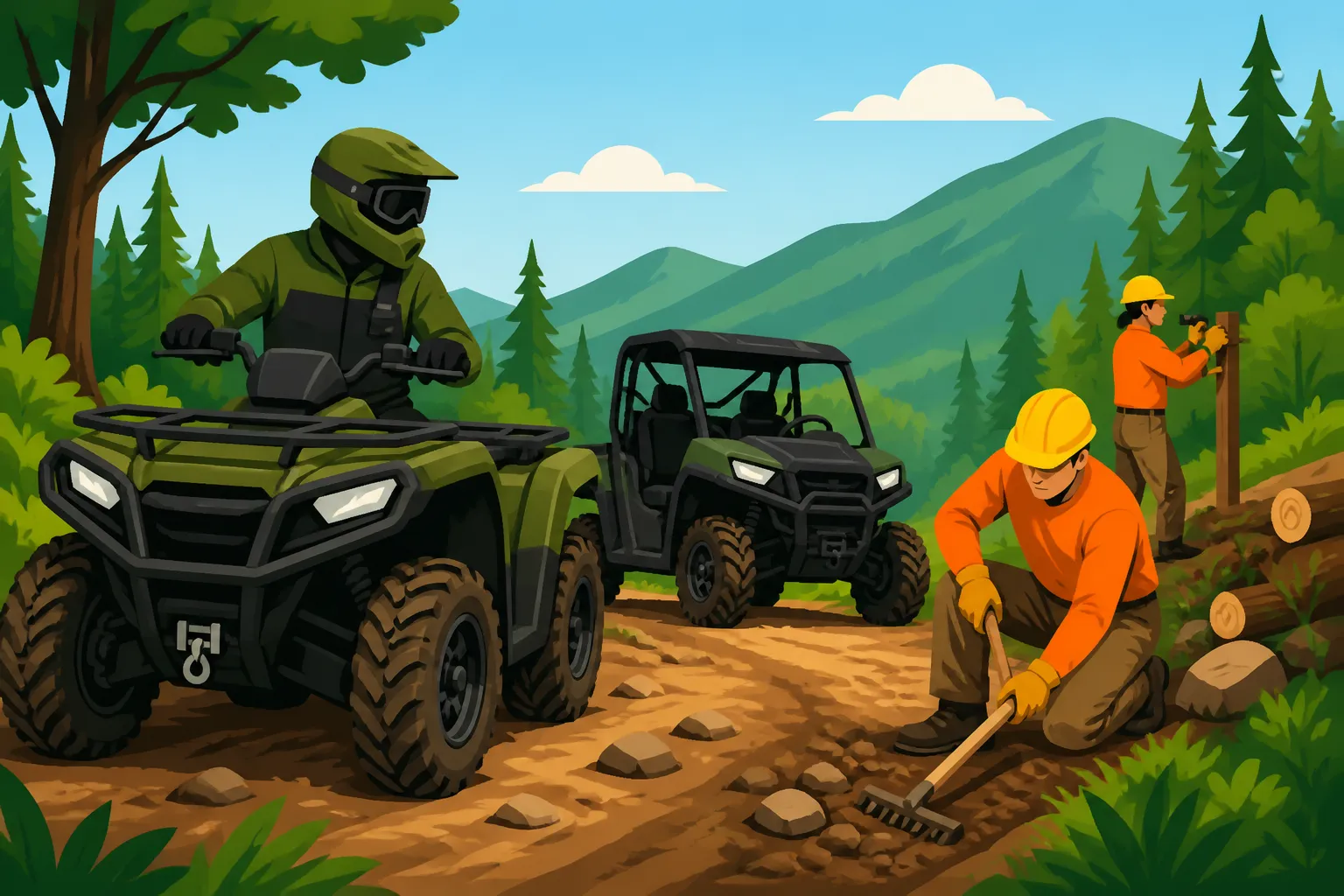
Massachusetts Berkshire Trails Council Work
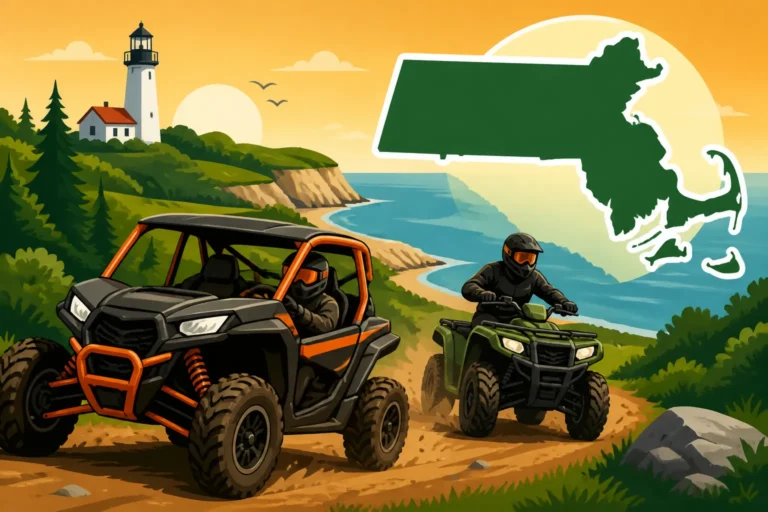
Berkshire riders can arrive at a familiar trailhead only to find a blowdown, washout, or confusing closure sign has changed the day’s plan. The Berkshire Trails Council’s work helps keep conversations about trail conditions, maintenance, and responsible riding moving between volunteers, riders, and land managers. Here’s what that work can involve—and how riders can support it without mistaking volunteer effort for permission to ride.
What the Berkshire Trails Council Does for Trail Riding
Bringing riders and land managers into the same conversation
Trail access depends on more than whether a route appears on a map. A trail may cross sensitive habitat, be damaged by heavy rain, or need maintenance before it can safely carry motorized traffic. Groups such as the Berkshire Trails Council can help bring riders’ observations and local knowledge to the attention of the people responsible for managing public land.
That connection matters because riders often notice issues first. A fallen tree might block a trail, a drainage ditch may be filling with sediment, or a newly exposed section of ground may be showing signs of erosion. Reporting those conditions through an appropriate channel gives land managers a clearer picture than simply riding around the obstacle and creating a wider path.
The Council’s role should not be confused with the authority of the Massachusetts Department of Conservation and Recreation, or DCR. DCR manages state forests and determines which routes are open, what uses are allowed, and whether a section needs to close. Volunteer coordination and rider feedback can support that work, but they do not replace official decisions. For a closer look at this relationship, see [How the Berkshire Trails Council Works With Rangers].
Supporting stewardship on the Berkshire OHV network
The Berkshire riding areas people commonly ask about include Beartown State Forest, October Mountain State Forest, and Pittsfield State Forest. Each has its own setting, access points, terrain, and management needs. A maintenance concern at one forest does not automatically mean another forest has the same conditions or rules. Riders planning a trip can compare the areas in [Massachusetts ATV Trails: Three Berkshire Forests].
Trail stewardship can include many practical tasks: noting where water is cutting across a route, identifying a damaged sign, helping remove an obstruction when authorized, or encouraging riders to stay on established trails. The goal is not to make every trail smooth or obstacle-free. It is to keep permitted riding areas in usable condition while limiting damage to surrounding land.
For example, after a storm, riders may find a branch across a trail and be tempted to detour through the woods. That shortcut can widen the disturbed area, damage vegetation, and make the next storm’s erosion worse. A better response is to stop where it is safe, avoid creating a new route, and report the blockage to the relevant forest office or trail contact. Local groups can help communicate patterns and needs, while the land manager determines what work is appropriate.
The Practical Work Behind a Rideable Trail
Finding problems before they become bigger repairs
A trail can look fine during a dry week and become a problem after a strong storm. Water may run down a slope instead of draining across it, leaving a rut that deepens each time tires pass through. A small drainage issue, if left alone, can gradually damage a larger section of trail and send sediment toward nearby wetlands or streams.
Rider observations can be useful when they are specific. Instead of reporting “the trail is bad,” note the forest, trail segment or nearby landmark, what the issue looks like, and whether it appears to block passage or create a safety concern. A brief description of a washout near a junction is easier to act on than a general complaint about conditions across an entire forest.
Photos can help explain what a report means, but they are not a reason to leave the marked route or approach a hazardous area. If a tree is under tension, a washout has an unstable edge, or water is moving quickly, leave it alone. Trail work can involve equipment and safety risks; it should be handled by people who have permission and the right tools. For more about how local groups may help after storms, see [Local Clubs That Clear Blowdowns After a Storm].
Clearing, drainage, signs, and careful repairs
Maintenance is not simply a matter of moving whatever is in the way. A fallen limb may be safe to remove, while a large tree, unstable slope, or damaged structure may need an experienced crew. Likewise, changing a trail’s drainage can affect where water flows next. The most responsible choice is to work only within an authorized plan rather than making an improvised repair.
Signage is another part of trail care. A visible sign can help riders understand where a route turns, where motorized use ends, or where a closure begins. When a sign is missing or hard to read, riders may unintentionally stray onto a route that is not open to their machine. Noticing and reporting a missing sign can therefore help prevent both confusion and damage.
The same care applies to trail surfaces. A rider may think a muddy patch is a nuisance to power through, but repeated wheel spin can enlarge the damage. If a route is wet enough that tires are digging in, slowing down, avoiding aggressive throttle, or choosing another open route can reduce the harm. Check [Massachusetts Trail Closures After a Storm] before a long tow, and remember that a closure notice takes precedence over an old ride report or an app map.
How Riders Can Help Without Creating More Damage
Report conditions clearly and responsibly
Useful reports are factual, calm, and easy to locate. Include the forest name, the closest trail marker or junction if one is visible, the date you observed the issue, and a short description. If you have a photo taken safely from the trail, it may help clarify whether the problem is a downed limb, a washed-out edge, or a missing sign.
Avoid treating social media posts or group chats as official closure notices. They can be helpful for sharing observations, but they may lack context or become outdated. If a rider says a route is “open,” that does not necessarily mean the land manager has confirmed it is open for your type of machine. Verify the applicable conditions with the official source before setting out.
A mapping app such as onX Offroad can help riders orient themselves and understand their position relative to roads or mapped routes. But app data should be treated as a navigation aid, not proof that a trail is currently open or authorized for ATV or UTV use. Save maps for offline use when appropriate, but check official information separately and follow signs on the ground. A map line cannot overrule a gate, closure notice, or land-management rule.
Volunteer in a way that matches the task
If you want to help with trail work, start by finding out whether an organized workday or approved volunteer opportunity is available. Ask what tasks are planned, where volunteers should meet, what tools or protective equipment are needed, and whether participants should bring their own equipment. A well-intentioned volunteer who shows up with a chainsaw and starts cutting may create a safety hazard or interfere with planned work.
Some work is suited to volunteers with basic training, such as picking up litter or helping with a supervised cleanup. Other tasks—such as cutting large trees, repairing structures, or altering drainage—may require specific authorization, experience, or equipment. It is reasonable to ask which work is approved before participating. For ways to learn about organized opportunities, see [Massachusetts Trail Volunteer Days].
Even if you are not available for a workday, everyday riding choices contribute to trail conditions. Stay on marked routes, avoid widening muddy sections, do not move signs, and give maintenance crews room to work. Respecting the trail is not a substitute for repair, but it can keep a minor problem from becoming a major one. The expectations in [Massachusetts Trail Etiquette Locals Expect] are useful for anyone sharing a forest with other riders and visitors.
Planning a Ride Around Maintenance and Trail Conditions
Check the forest, not just the route
The three Berkshire state forests often discussed by OHV riders are distinct places, so planning should be specific to the destination. Before loading the machine, check which forest you intend to visit, whether motorized riding is allowed there, what routes are designated, and whether a seasonal or temporary closure affects access. Information about one forest does not establish conditions at another.
A rider heading toward Beartown should consult [Beartown State Forest Riding in Massachusetts] for area-specific planning. October Mountain and Pittsfield have their own details as well; see [October Mountain State Forest Riding in Massachusetts] and [Pittsfield State Forest Riding in Massachusetts]. These pages can help organize a trip, but riders should still confirm current rules and conditions through the responsible land manager before departure.
Build flexibility into the day. If one trail segment is closed or badly damaged, do not assume you can take an unofficial connector or cross private land to reach another route. A legal, open alternative may require changing the plan entirely. That can be frustrating after a long drive, especially with a trailer in tow, but turning around is better than risking a citation, damaging property, or making trail access harder for everyone.
| Before you ride | Why it matters | A responsible next step |
|---|---|---|
| Confirm the forest and allowed riding area | Rules and access differ by location | Check the relevant official land-management information |
| Look for closures or storm impacts | Conditions can change after rain, wind, or maintenance | Follow current notices and signs at the trailhead |
| Use a map as a navigation aid | Map layers may not show every current restriction | Do not treat an app route as proof of legal access |
| Bring a flexible plan | A closed segment may not have a legal detour | Choose another permitted route or end the ride |
| Report a hazard clearly | Specific details are easier to assess | Share the forest, location, date, and issue |
Respect closures and give maintenance work time
A closure is not an invitation to find a way around a gate. It may protect riders from an unsafe surface, give crews room to work, or prevent ongoing damage while land managers assess a problem. Riding around a barrier can also create a new track that other riders may follow, multiplying the impact.
If a work crew is present, slow down and follow any directions. Do not assume workers have seen or heard you, especially around equipment or on a narrow trail. Wait where they direct you, keep a safe distance, and do not ride through a work area unless it has clearly been reopened.
Trail planning is a continuing process, not a one-time map exercise. Conditions, priorities, and access arrangements can change. The Council’s value is partly in helping riders stay engaged with that process—sharing observations, supporting responsible maintenance, and communicating the importance of legal riding areas. For a wider view of how access decisions and closures fit together, see [Massachusetts Trail Planning and Closures] and [Who Actually Maintains the Three Berkshire OHV Trails].
What Council Support Can and Cannot Do
Volunteer advocacy is not permission to ride
A trail group may help riders communicate concerns, understand stewardship needs, or participate in authorized maintenance. That work can strengthen the relationship between riders and land managers, but it does not create riding rights on its own. Only routes open under the applicable rules and management decisions should be used.
This distinction is especially important when an old track appears on a phone map or when someone says that a route has been ridden for years. A visible path may be closed, unauthorized, or intended for another use. When in doubt, stop and check rather than relying on what a previous visitor did.
Similarly, a volunteer’s presence does not mean that every task or area is open for public use. A crew may be working under a specific agreement or direction. Riders should not interpret trail maintenance as permission to travel beyond signs, barriers, or posted boundaries.
Keeping access healthy over the long term
Responsible riding and trail maintenance reinforce each other. If riders keep to designated routes and report problems rather than improvising repairs or detours, land managers and volunteer groups can focus attention on known, legitimate riding areas. If riders ignore closures or damage trails, it becomes harder to maintain trust and protect future access.
The Berkshire Trails Council’s work is most useful when it helps turn individual observations into constructive participation. That could mean helping a rider find the proper reporting channel, bringing a recurring concern to the right conversation, or encouraging people to respect a closure even when it disrupts a planned outing. The small choices riders make at trailheads and on the trail contribute to whether shared access remains workable.
If you would like to support the effort, start with the basics: learn the local rules, check conditions before towing, report hazards accurately, and ask about approved volunteer opportunities. Use onX Offroad or another mapping tool for orientation if it helps, but verify access with official information and obey posted signs. That combination—good preparation, careful riding, and respectful communication—is more useful to trail stewardship than an unofficial shortcut ever will be.
Disclaimer
This article is for general informational purposes only and does not constitute professional advice. Laws, prices and regulations vary by location and change over time. Consult a qualified professional for guidance on your specific situation.