Why a New Quad Needs a Certificate of Origin
Buying a brand-new ATV or UTV in Massachusetts is an incredibly exciting prospect. You've likely spent hours researching models, envisioning rides through Beartown State Forest, and perhaps even picked out your helmet. But before you can hit those trails, you’re faced with the bureaucratic hurdle of registration, and a common point of confusion for many new owners revolves around a document called the Manufacturer's Certificate of Origin, or MCO. This guide will walk you through exactly why this document is indispensable for registering your new machine in the Bay State, and what pitfalls to avoid.
The Manufacturer's Certificate of Origin Explained
Let's cut right to it: the Manufacturer's Certificate of Origin, often abbreviated as MCO or sometimes MSO (Manufacturer's Statement of Origin), is essentially the birth certificate of your new off-highway vehicle (OHV). It's a crucial piece of paper that certifies the machine's initial ownership from the manufacturer, establishing its identity, specifications, and the fact that it's never been registered before. Think of it like the title to a car, but for a brand-new vehicle that hasn't yet been titled or registered by an owner.
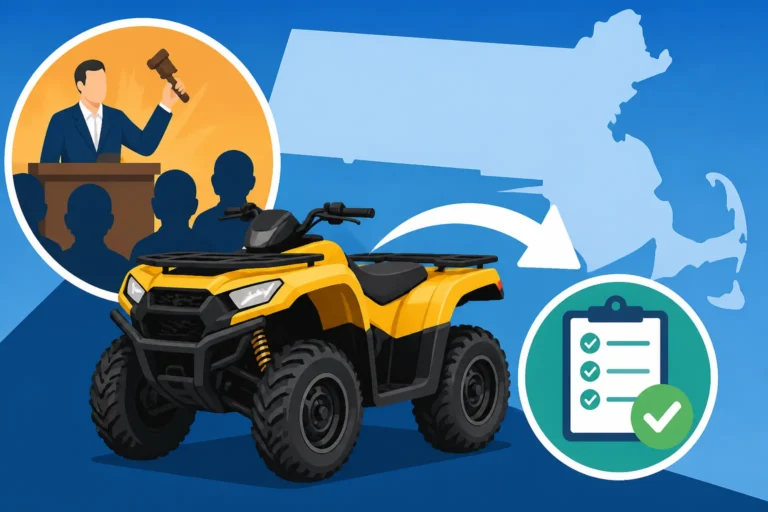
This document is issued by the manufacturer to the dealer when the ATV or UTV is first sold into their inventory. It contains vital information that the Massachusetts Environmental Police (who handle OHV registrations, not the RMV) will need to process your registration. This includes the vehicle identification number (VIN), the make, model, year, engine size, and the gross weight. It also clearly identifies the dealer who first received the machine from the factory. Without this piece of paper, the state has no official record of your machine's origin, making it impossible to register as a "new" vehicle. It's the first link in the chain of ownership, and without it, you simply cannot proceed with registration in Massachusetts. [Why a New Quad Needs a Certificate of Origin] is not just a suggestion, it's a hard requirement.
What Information the MCO Contains
When you get your hands on an MCO, you'll notice it's a pretty formal document. It’s not just a casual sales slip. Every MCO will feature key details about your new ATV or UTV. Expect to see the full Vehicle Identification Number (VIN) prominently displayed – this is critical, as it uniquely identifies your machine. You’ll also find the manufacturer's name, the make and model of the quad or side-by-side, and often the year of manufacture. The engine size, whether it's 90cc or 700cc, will typically be listed, alongside the type of fuel it uses.
Beyond the vehicle specifics, the MCO will detail the first transfer of ownership from the manufacturer to the dealership. It acts as official proof that the dealer legitimately acquired the machine from the factory. This transfer information is important because it establishes a clear lineage for your vehicle. For the Massachusetts Environmental Police, this document is how they confirm the machine is truly "new" and has never been registered in any other state or jurisdiction. It's the official record that your quad is fresh off the assembly line and ready for its first owner, you!
MCO vs. Bill of Sale
It’s easy to get an MCO confused with a bill of sale, especially if you’re new to buying powersports vehicles. While both are critical documents in the purchase process, they serve very different purposes. A bill of sale is a receipt for your transaction, proving that you purchased the ATV or UTV from the dealership. It details the purchase price, the date of sale, and the names of both the buyer and seller. You can easily create a comprehensive bill of sale using online resources like LawDepot if you need to formalize a private sale down the line.
However, the bill of sale doesn’t replace the MCO for a new machine. The MCO proves the vehicle's origin from the factory, while the bill of sale proves your purchase of it from the dealer. For a brand-new quad, you’ll actually need both when you go to register. The MCO is the foundational document that allows the state to create a registration record for that specific VIN for the very first time. The bill of sale, on the other hand, is essential for proving sales tax payment and for establishing your financial transaction. [Massachusetts Requires a Bill of Sale for a Used One] is crucial, but for a new machine, the MCO comes first.
The Registration Process and the MCO's Role
In Massachusetts, registering an ATV or UTV isn't handled by the Registry of Motor Vehicles (RMV) like cars and motorcycles. Instead, the Massachusetts Environmental Police are the agency responsible for off-highway vehicle registration. This is a point of frequent misunderstanding for many new riders, and it’s important to get it right. They are the ones who will review your paperwork and issue your registration decal and card. Your MCO is absolutely central to this process for any new machine.
When you bring your new quad to the Environmental Police for registration, they will be looking for that MCO as the primary document to verify the vehicle's identity and status as a "new" machine. Without it, they simply cannot initiate the first registration for that specific VIN. It establishes the chain of ownership from the manufacturer to the dealer, and then to you, the first private owner. It’s the definitive proof that the machine is eligible for its inaugural registration in the state. Getting this step right is paramount if you want to legally ride on designated trails in Massachusetts. [Registering an ATV With the Environmental Police] is a necessary step, and the MCO is your ticket in.
Why Massachusetts Demands an MCO for New Quads
Massachusetts has a keen interest in tracking off-highway vehicles, not just for safety and law enforcement, but also for environmental protection and trail funding. The MCO plays a crucial role in maintaining these records. By requiring an MCO, the state ensures that every new OHV entering circulation has a clear and verifiable origin. This helps prevent the registration of stolen vehicles or those that may not meet safety standards. It creates a clean, undeniable record from the moment the vehicle leaves the factory.
Furthermore, the MCO is part of the process that ties your new purchase into the state's tax system. When you register your machine, you'll also be dealing with sales tax. The MCO, in conjunction with your bill of sale, helps establish the value for these tax purposes. It's all about accountability and ensuring that every off-highway vehicle in Massachusetts is properly accounted for from day one. You'll need to consider [Massachusetts Sales Tax Forms at Registration] as part of your overall paperwork packet.
What Happens Without an MCO for a New Purchase
If you've just bought a brand-new ATV or UTV from a Massachusetts dealer, and they haven't provided you with an MCO, stop everything and go back to the dealer immediately. You absolutely cannot register a new machine in Massachusetts without this document. Attempting to do so would be like trying to get a driver's license without a birth certificate – it's simply not possible because the foundational identity document is missing. The Environmental Police will turn you away, and you'll be unable to legally operate your OHV on public lands or trails.
A reputable dealer will always provide the MCO at the time of purchase. If they don't, it could be a red flag. Perhaps the machine isn't truly "new" as advertised, or there's an issue with their documentation. Always verify that you receive this critical paper when you take delivery of your new quad. Without it, your dream of riding the scenic trails of October Mountain State Forest will remain just that – a dream. It's far better to resolve this issue upfront than to face delays and frustration when you're ready to register. Always double-check [Massachusetts Registration Paperwork Checklist] before you head to the Environmental Police office.
Navigating the Process if Your MCO is Missing or Damaged
While it's rare for a brand-new ATV or UTV to be sold without its MCO, sometimes things happen. Maybe the paperwork was misplaced, or perhaps it was damaged during transit. Whatever the reason, if you find yourself without this vital document after purchasing a new machine, don't panic, but do act quickly. Your first and most important step is to contact the dealership where you purchased the vehicle. They are the ones who received the MCO from the manufacturer, and they should be able to provide you with a duplicate or assist you in obtaining one.
Dealers typically keep meticulous records, and the MCO is a standard part of their sales process. They should have a copy or be able to request a replacement from the manufacturer. Be prepared to provide them with your bill of sale and the VIN of your machine, as this will help them locate the correct documentation. It might take a little time to get a duplicate MCO, so factor that into your plans for registration. This is one of those situations where patience and persistence will serve you well, as getting that original document is key to a smooth registration process.
Contacting the Dealership for a Duplicate MCO
The moment you realize your MCO is missing, make the dealership your first call. It's their responsibility to provide you with all necessary documentation for a new vehicle purchase. Explain the situation clearly, providing them with your purchase date, the make, model, and VIN of your ATV or UTV. Most reputable dealers will have a process in place for handling such requests. They might have a digital copy on file, or they may need to contact the manufacturer directly to request a certified duplicate.
Be patient, as this process isn't always instant, but be persistent in following up. Keep a record of who you spoke with, when, and what they promised. It’s also wise to send a follow-up email confirming your conversation. This creates a paper trail, which can be helpful if there are any further delays. Remember, you've paid for a new machine, and with that comes the expectation of receiving all the necessary legal documents to register it. Ensure you have your [Massachusetts Requires a VIN on the Application] ready when you communicate with them.
What if the Dealership is Unresponsive?
While most dealerships are helpful, you might encounter a situation where they are unresponsive or unwilling to assist. This is, thankfully, uncommon, but it does happen. If you find yourself in this frustrating position, you have a few avenues to explore. First, elevate your concern within the dealership itself – ask to speak with a sales manager or even the general manager. A higher level of management might be more motivated to resolve the issue.
If that doesn't yield results, consider contacting the manufacturer of your ATV or UTV directly. They can often verify the MCO's issuance to the dealer and might even be able to provide a duplicate directly to you, or at least put pressure on the dealer to act. As a last resort, if you feel you’re being stonewalled, you might need to seek legal advice. Resources like LawDepot, while primarily for document creation, can give you a better understanding of sales agreements and what legal steps you might take to ensure you receive the documentation you are entitled to as a buyer. Remember, obtaining this document is essential for a legal registration in Massachusetts.
New vs. Used Machines: Different Paperwork Requirements
It’s really important to understand that the paperwork requirements for registering an ATV or UTV in Massachusetts differ significantly depending on whether the machine is new or used. This is where the MCO becomes less relevant for some scenarios, and other documents take its place. This distinction is crucial to avoid submitting the wrong paperwork and getting turned away by the Environmental Police.
For a new machine, as we've thoroughly discussed, the Manufacturer's Certificate of Origin is the absolute bedrock. It’s the initial proof of existence and factory-issued ownership. However, once a machine has been registered, that MCO has served its primary purpose. For subsequent sales, when the machine is considered "used," you won’t be dealing with an MCO anymore. Instead, you'll be looking for a different set of documents that establish the chain of ownership.
What Paperwork for a Used Quad
When you buy a used ATV or UTV in Massachusetts, the MCO is no longer the primary document. Instead, the Environmental Police will want to see proof of previous registration and a clear bill of sale from the person or entity you bought it from. The most important document will be the previously issued Massachusetts OHV registration card. This card serves as proof that the machine was legally registered in the state, and it often functions like a de facto title for these types of vehicles since Massachusetts does not issue separate titles for ATVs and UTVs. [Why the Environmental Police Issue a Card, Not a Title] is a common question, and it highlights this difference.
Along with the prior registration card, you'll need a comprehensive bill of sale. This document formalizes the transfer of ownership from the previous owner to you. It should clearly state the buyer's and seller's names and addresses, the date of sale, the purchase price, and a full description of the ATV or UTV, including its VIN. Both parties should sign and date the bill of sale. You can find templates online through services like LawDepot, or simply write one up clearly. This bill of sale, along with the previous registration, is what proves you're the new rightful owner of a used machine and allows you to transfer the registration into your name. [Massachusetts Registration After a Private Sale] depends heavily on these documents.
Table: New vs. Used ATV/UTV Registration Document Checklist
To make it easier to understand, here's a quick comparison of the key documents you'll need depending on whether your machine is new or used in Massachusetts:
| Document Type | New ATV/UTV Purchase | Used ATV/UTV Purchase (from private seller) |
|---|---|---|
| Manufacturer's Certificate of Origin (MCO) | Required | Not required (MCO is surrendered upon first registration) |
| Bill of Sale | Required (from dealership) | Required (from previous owner) |
| Previous Massachusetts OHV Registration Card | Not applicable | Required (if previously registered in MA) |
| Massachusetts Sales Tax Form (ST-6) | Required (to pay sales tax or claim exemption) | Required (to pay use tax or claim exemption) |
| Photo ID | Required | Required |
| Application for Registration | Required (filled out for first-time registration) | Required (filled out for transfer of ownership) |
This table makes it clear that while some documents, like the bill of sale and photo ID, are universally needed, the MCO is strictly for new machines. Always double-check what you need before making the trip to the Environmental Police.
Why the Environmental Police Won't Accept an MCO for a Used Machine
Once a new ATV or UTV is registered for the first time in Massachusetts, the MCO is effectively "retired." When you register a brand-new machine, the Environmental Police record the information from the MCO, and the document is then often stamped, filed, or even physically surrendered as part of the initial registration process. From that point forward, the state's official record of ownership is tied to the registration card they issue.
So, if you try to register a used machine with an MCO, the Environmental Police will know something is amiss. They'll expect to see a previous Massachusetts registration card (or, in the case of an out-of-state transfer, the equivalent documents from that state). Presenting an MCO for a machine that has clearly been ridden and is no longer "new" would raise red flags, as it implies the machine has never been registered before. This is why understanding the distinct paperwork for new versus used is so important for a smooth and successful registration experience in the Bay State. [Massachusetts Registration Terms by Residency] will also outline specific nuances for different buyers.
Final Thoughts on Your New Quad's MCO
Getting a new ATV or UTV is a big deal, and ensuring you have all the proper paperwork in order is the first step toward enjoying countless hours on Massachusetts's beautiful trails. The Manufacturer's Certificate of Origin might seem like just another piece of paper, but for a new machine in the Bay State, it's the foundation of its legal existence. Without it, you simply cannot register your quad with the Environmental Police, which means no legal riding for you.
Always confirm that your dealership provides the MCO at the point of sale. Keep it safe, along with your bill of sale and other important documents, until you're ready to register. Understanding why this document is so vital will save you a lot of headaches and ensure a smooth path from dealership to trail. Happy riding, and remember to always adhere to Massachusetts's OHV laws! [How to Register an ATV in Massachusetts] is your next step after you've secured your MCO.
Disclaimer
This article is for general informational purposes only and does not constitute professional advice. Laws, prices and regulations vary by location and change over time. Consult a qualified professional for guidance on your specific situation.