Does Massachusetts Require Insurance on a Registered ATV?
It’s a common question, and one that often causes a little bit of confusion for new and even experienced ATV and UTV riders here in Massachusetts: "Do I really need insurance for my off-road machine?" Many folks assume that if a vehicle is registered, it automatically needs an insurance policy, just like a car. This guide will cut through the misinformation and give you the clear, realistic answers you need about ATV and UTV insurance requirements in the Bay State.
The Straight Answer: Massachusetts and ATV Insurance
Let's get right to it, because nobody likes to be left guessing when it comes to rules and regulations. When you’re thinking about registering your ATV or UTV with the Massachusetts Environmental Police, you might find yourself poring over forms and checklists, wondering if you missed a section about insurance. The truth is often simpler than we expect, yet sometimes more complex in its implications.
The Myth of Mandatory Coverage
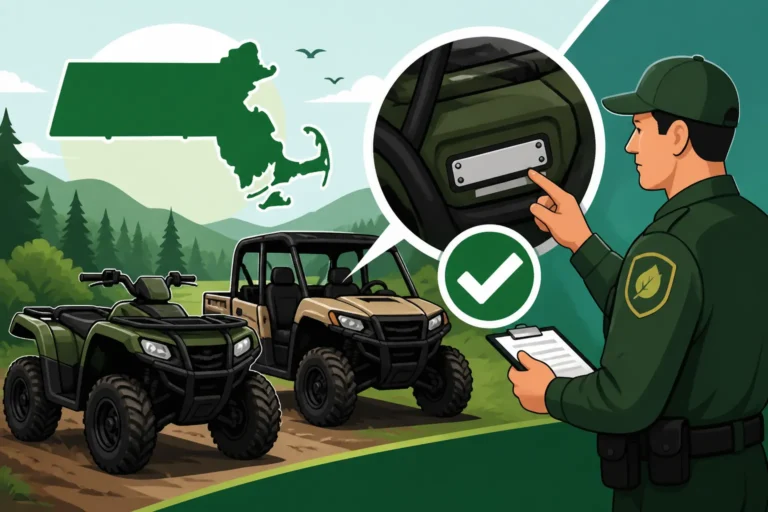
Unlike cars, trucks, and even motorcycles that operate on public roads, Massachusetts does not mandate liability insurance for off-highway vehicles (OHVs) like ATVs and UTVs. That’s right, there’s no state law that requires you to carry a specific insurance policy to legally ride your registered machine on designated trails within the Commonwealth. This can be a huge relief for some riders, easing the initial financial burden of getting out on the trails. You won't find a box to check for proof of insurance when you're going through the registration process, nor will an Environmental Police Officer ask to see an insurance card during a routine trailside check. The focus for registration is primarily on ownership, taxes, and ensuring your machine meets basic safety and identification standards. [Massachusetts Requires a Bill of Sale for a Used One] and [Massachusetts Requires an MCO for a New Machine] are prime examples of the ownership documentation that is required.
This absence of a mandate doesn't mean you can just forget about all financial risk, of course. It simply means the state isn't forcing you to buy a policy. Many riders breathe a sigh of relief at this, thinking it’s one less thing to worry about. However, for others, it raises even more questions about personal responsibility and what happens if something goes wrong.
How Massachusetts Stands Out
Massachusetts's approach to OHV insurance is somewhat unique, especially when compared to its requirements for other vehicle types. For cars, our state operates under a no-fault system that absolutely requires specific levels of bodily injury, property damage, and uninsured motorist coverage. For ATVs and UTVs, the landscape is entirely different. The state has focused its regulatory efforts more on safety certifications for young riders, equipment standards, and where you can actually ride, rather than on financial responsibility through mandatory insurance.
This difference often catches people off guard. They move from insuring their car, where it's a non-negotiable part of ownership, to an ATV, where it's not even mentioned. This distinction underscores a philosophical approach: the state isn't placing the same emphasis on off-road machines as public-road vehicles in terms of financial backing for accidents. It leaves the decision, and therefore the financial risk, squarely on the shoulders of the individual rider. It's a significant point of comparison that shapes how we, as responsible riders, should think about our own protection and the protection of others.
Why the Lack of Mandate Can Be Misleading for Riders
While it might sound liberating to not have to buy another insurance policy, the absence of a mandate can often create a false sense of security. Just because the state doesn't require it doesn't mean you're immune to the very real financial consequences that can arise from an accident involving your ATV or UTV. In fact, many riders learn this the hard way after an unforeseen incident.
The Real-World Risks You Still Face
Let's be realistic: riding an ATV or UTV, especially on challenging terrain like the trails in October Mountain State Forest or Beartown State Forest, carries inherent risks. Collisions happen. You might hit a tree, roll your machine, or even collide with another rider or someone else's property. If you're riding on private land, you might inadvertently damage a stone wall or a fence. In any of these scenarios, even if you're the most careful rider out there, significant costs can quickly accrue.
Without insurance, you are personally responsible for these costs. This isn't just about repairing your own machine; it extends to medical bills for injuries you sustain, property damage you cause to others' machines or land, and potentially even legal fees if someone decides to sue you. Imagine hitting a parked vehicle while briefly crossing a public way, or causing damage to a landowner's property. Suddenly, that "no mandate" relief turns into a massive financial headache. While the state doesn't require a specific card, having some form of protection can be invaluable. [Who Pays When a Rider Hits a Stone Wall] explores just one such scenario. For informal agreements with landowners, sometimes people use liability waivers, which can be drafted using services like LawDepot, to set clear expectations, though these don't replace insurance.
The Cost of a "Small" Accident
It’s easy to think, "Oh, I'm a safe rider, nothing big will happen." But even minor incidents can quickly become expensive. A broken arm, a damaged fender on another rider's UTV, or a scratched vehicle in a parking lot can cost thousands of dollars. We're not just talking about the cost of a new headlight assembly for your machine, but potentially emergency room visits, physical therapy, and lost wages if you can't work.
Consider this: if you accidentally swerve and damage a fence on someone's property while riding near their boundary, without property damage liability coverage, you're footing the bill for that fence repair out of your own pocket. And if that person decides to pursue legal action for perceived negligence, your personal assets could be on the line. This is where [Massachusetts Accident Reporting Rules] become crucial, as documentation of an incident can be important regardless of insurance status. While Massachusetts doesn't require you to carry insurance, understanding these potential financial impacts is a critical part of being a responsible OHV owner.
Optional Coverage: What's Smart to Consider for Your Peace of Mind
Given that Massachusetts doesn't require insurance for ATVs and UTVs, the decision rests entirely with you. However, thinking strategically about optional coverage can be one of the smartest moves you make as a rider. It's not just about protecting your machine; it's about protecting your financial future and peace of mind. Many experienced riders in the Bay State choose to invest in coverage even when not legally required. [Insuring a Machine Nobody Requires You to Insure] is a topic many find themselves researching.
Liability: Protecting Your Assets
Perhaps the most crucial type of optional coverage to consider is liability insurance. This is the bedrock of protection if you're deemed at fault in an accident that causes injury to another person or damage to their property. Think of it this way: if you accidentally hit another rider on a trail, or damage a farmer's crop while navigating a boundary line, your liability insurance would step in to cover the costs. This includes medical expenses for the injured party, repairs for their damaged property, and potentially even legal defense costs if they sue you.
Without liability coverage, all these expenses would come directly from your savings, your wages, or even your home equity. For instance, if you're riding with friends and an unfortunate mishap causes your machine to veer into one of theirs, resulting in significant repairs, having a good liability policy means you're not facing a massive bill from your friend, which could strain your relationship and your bank account. This is about safeguarding your personal assets from claims made against you due to an accident you caused.
Collision and Comprehensive: Protecting Your Machine
While liability protects others and your assets, collision and comprehensive coverage are all about protecting your own ATV or UTV. Let's face it, these machines are an investment, and whether you're riding a brand-new side-by-side or a well-loved quad, you want to protect that investment.
- Collision coverage helps pay for damage to your own machine if it collides with another vehicle, an object (like a tree or a rock on a Berkshire trail), or even if it rolls over. If you take a tumble and dent a fender or smash a headlight, collision coverage can help absorb the repair costs, after your chosen deductible. This is particularly relevant if you're financing your machine, as many lenders will actually require you to carry this type of coverage, even if the state doesn't.
- Comprehensive coverage protects against a wider range of incidents that are not collision-related. This includes things like theft, vandalism, fire, certain natural disasters (think a fallen tree branch during a storm), and even damage from striking an animal. Imagine your UTV being stolen from your garage in the off-season; [Massachusetts Theft Coverage in a Garage] would be your saving grace. These coverages are truly about providing [Massachusetts Comprehensive Coverage for a Quad], ensuring that your machine is covered for almost anything that isn't a simple collision.
Uninsured/Underinsured Motorist: Protecting Yourself
This type of coverage might seem counterintuitive for ATVs, given that insurance isn't mandated. However, it’s a smart addition for your own protection. Uninsured/underinsured motorist (UM/UIM) coverage helps pay for your medical expenses and, in some cases, damage to your machine if you're hit by another ATV or UTV rider who either doesn't have insurance or whose insurance isn't sufficient to cover your damages.
Since Massachusetts doesn't require OHV insurance, the chances of encountering a rider without any coverage are higher. If you're seriously injured in a collision with an uninsured rider, your UM/UIM policy could cover your medical bills, pain and suffering, and even lost wages, which could otherwise be a huge personal burden. While it's an optional add-on, it acts as a personal safety net, ensuring that you're not left to shoulder all the financial consequences when another rider is at fault and can't pay. It's another layer of protection that many Bay State riders choose for complete peace of mind, especially considering [Massachusetts Optional Insurance Costs] are often quite reasonable for basic policies.
Making an Informed Choice: Deciding on ATV Insurance in Massachusetts
Ultimately, the decision to insure your registered ATV or UTV in Massachusetts is a personal one. It requires a thoughtful assessment of your own risk tolerance, financial situation, and how and where you plan to ride. There's no single right answer for everyone, but there is a path to making the best choice for you.
Assessing Your Personal Risk
Start by honestly evaluating your riding habits and the environment you ride in. Do you primarily ride on private land that you own, where the risks are somewhat controlled? Or do you frequently explore public trails in state forests, where you'll encounter other riders, hikers, and unpredictable conditions? The more you ride, the more varied your riding environments, and the more often you ride with others, the higher your potential exposure to risk.
Consider the value of your machine. Is it an older, less expensive model where repairs might not break the bank? Or is it a brand-new, high-performance UTV that would be incredibly costly to replace or repair? Also, think about your financial ability to absorb unexpected costs. Could you easily cover a $10,000 medical bill or a $5,000 repair out of pocket without it causing significant financial hardship? Your answers to these questions will heavily influence whether a policy, even one with specific [Massachusetts Insurance Deductible Choices], makes sense for your budget.
Shopping for the Right Policy
If you decide that optional ATV/UTV insurance is right for you, the next step is to shop around. Don't just go with the first quote you receive. Many insurance companies offer specialized policies for off-road vehicles. It’s worth contacting several different providers to compare coverage options, limits, and premiums.
Here's a quick comparison of what different types of optional coverage might protect:
| Coverage Type | What It Primarily Protects | What It Covers (Examples) |
|---|---|---|
| Liability | Other people and their property; your personal assets | Medical bills for injured parties, repairs to other vehicles/property, legal fees |
| Collision | Your own ATV/UTV | Damage from hitting a tree, another vehicle, rolling over |
| Comprehensive | Your own ATV/UTV | Theft, vandalism, fire, weather damage, hitting an animal |
| Uninsured/Underinsured Motorist | You and your passengers | Medical bills if hit by an uninsured or underinsured rider, lost wages |
| Medical Payments | You and your passengers (regardless of fault) | Small medical expenses for you or your passengers after an accident |
When you're comparing policies, pay close attention to the details: what are the coverage limits? What is your deductible? Are there any exclusions for certain types of riding (e.g., racing)? Asking a local insurance agent who understands the Massachusetts riding scene can be incredibly helpful. They might offer advice on policies that offer specific benefits, such as those that cover custom parts or accessories, or those that have strong provisions for [Massachusetts Insurance After a Claim].
What if You Choose Not to Insure?
If, after careful consideration, you decide against purchasing optional ATV/UTV insurance, that's your prerogative, as it's not mandated by Massachusetts law. However, it's crucial to understand and accept the full financial responsibility that comes with this choice. This means being prepared to pay for any and all damages and injuries out of your own pocket.
This could involve thousands, even tens of thousands, of dollars for repairs, medical treatments, or legal settlements. It's a risk that some are willing to take, especially if their machine is older, they ride infrequently, or they have substantial savings to cover potential mishaps. For those engaging in private sales, remember that while you're not dealing with insurance proofs, ensuring clear transfer of ownership with a robust bill of sale (which you might find templates for on services like LawDepot) can help prevent future disputes related to the machine. Just remember that opting out of insurance means you are truly on your own if an accident occurs, which is a stark contrast to the financial safety net provided by even basic coverage.
Disclaimer
This article is for general informational purposes only and does not constitute professional advice. Laws, prices and regulations vary by location and change over time. Consult a qualified professional for guidance on your specific situation.