Two-Year OHV Sticker for Massachusetts Residents Explained
Navigating the world of off-highway vehicle (OHV) registration in Massachusetts can feel a bit like trying to solve a puzzle with half the pieces missing, especially when you’re a resident just trying to get out on the trails. Many folks find themselves wondering exactly what's involved with getting that distinctive two-year sticker and what it truly means for their ATV or side-by-side. This comprehensive guide is here to demystify the process, explain the specifics of the resident two-year OHV sticker, and ensure you're fully prepared to hit the trails legally and confidently.
Understanding the Massachusetts Resident Two-Year OHV Sticker
When you decide to purchase an ATV or UTV and plan to ride it in Massachusetts, one of the first things you'll encounter is the requirement for registration. For residents of the Bay State, this means acquiring a special two-year OHV sticker, issued by the Massachusetts Environmental Police. It's not just a sticker; it's your official pass to legally operate your machine on designated public trails and specific private lands, as long as you have written permission. This sticker visually confirms that your vehicle has met the state's registration requirements, contributing to the safety and maintenance of the OHV trail system.
What the Two-Year Term Means for You
The two-year term for Massachusetts residents offers a significant convenience compared to the annual registration some other states might offer or what non-residents receive here. Instead of having to remember to renew every single year, you get a full 24 months of valid registration. This longer term means less paperwork, fewer trips to the registration office (or fewer clicks online), and more uninterrupted riding time. It’s designed to streamline the process for those who call Massachusetts home and are invested in riding its trails regularly.
For example, if you register your machine in the spring, you know you’re covered for two full riding seasons, plus the winter months in between. This extended period can be a real relief, especially for those of us who tend to get caught up in the excitement of a new season and might forget about administrative tasks until the last minute. It also reflects the state's recognition that residents are long-term contributors to the OHV program and its trail fund.
The Financial Commitment for Residents
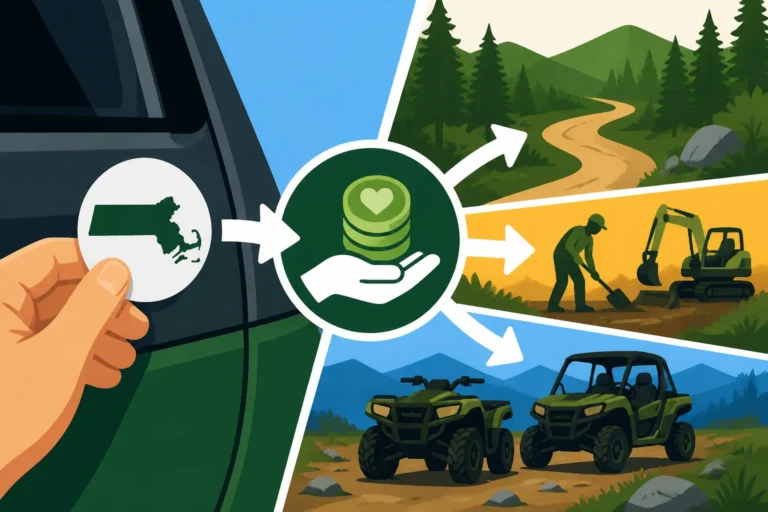
While the exact fees can fluctuate over time, the two-year sticker for Massachusetts residents involves a set charge that covers the entire 24-month period. This fee is specifically designed to support the state's OHV program, with a significant portion going directly into the Massachusetts OHV Trail Fund. This fund is crucial for maintaining existing trails, developing new riding opportunities, and ensuring that the land we all enjoy riding on is preserved and managed responsibly. You're not just paying for a sticker; you're investing in the future of OHV riding in Massachusetts. You can learn more about how these fees work by checking out [Massachusetts Charges $44 for Residents].
It’s important to budget for this fee as part of your overall OHV ownership cost. While it might seem like a single lump sum, remember it’s covering two years of access and support for the riding community. This financial contribution helps fund things like trail signage, erosion control, and enforcement efforts by the Environmental Police, all of which contribute to a safer and more enjoyable riding experience for everyone.
Who Qualifies for the Massachusetts Resident Two-Year Sticker
The designation of "resident" is key to qualifying for the two-year OHV sticker in Massachusetts. The state has specific criteria to determine residency, primarily focused on where you officially live and register other vehicles. If your primary residence is within Massachusetts and you meet the necessary documentation requirements, you're eligible for this extended registration term. This distinction is important because non-residents receive a different registration term and associated fee. For a deeper dive into the terms, see [Massachusetts Registration Terms by Residency].
Defining "Massachusetts Resident" for OHV Purposes
Generally, if you hold a Massachusetts driver's license or state ID card, register your car in Massachusetts, and primarily reside within the state, you'll be considered a resident for OHV registration purposes. This isn't just a casual declaration; the Environmental Police will look for official proof of residency during the application process. This ensures that the benefits of the two-year sticker, and the trail funding it supports, are primarily for those who reside in and contribute to the Commonwealth.
Think about it from the state's perspective: they want to ensure the program is funded by those who primarily use and benefit from the local trail system. So, if your home base is in Springfield, Worcester, or out here in the Berkshires, you’re on the right track. This also helps prevent people from other states from trying to get a resident sticker to potentially avoid different fees or regulations in their home state, ensuring fairness across the board.
Contrasting with Non-Resident Registration
For those who don't permanently reside in Massachusetts but wish to ride their OHVs here, there's a separate non-resident registration process. Non-residents typically receive a one-year sticker, and the fee structure might differ. This allows visitors to enjoy our beautiful trails while still contributing to their upkeep, just on a different term. It’s a way for Massachusetts to welcome riders from neighboring states like New Hampshire, Vermont, and New York, ensuring everyone is registered and contributing.
A common scenario might involve someone from Connecticut who has a summer home in the Berkshires. Even if they spend several months here, if their primary residence and vehicle registrations are in Connecticut, they'd apply for a non-resident sticker. It's a clear cut distinction based on legal residency, not just temporary presence. Understanding this difference from the outset saves a lot of confusion and ensures you apply for the correct type of registration. [Non-Resident ATV Registration Costs $33 for One Year] offers more details on visitor registration.
The Application Process for Residents
Getting your two-year OHV sticker as a Massachusetts resident involves a few straightforward steps, primarily handled through the Massachusetts Environmental Police. Whether you're registering a brand-new machine or a used one, you'll need to gather specific documentation and complete the application accurately. The process is designed to ensure proper ownership verification and tax compliance before you're granted that coveted sticker.
Required Documentation for Registration
To register your ATV or UTV, you’ll need to provide proof of ownership. For a new machine, this means presenting the Manufacturer's Certificate of Origin (MCO). If you’re buying a used machine from a private seller, you'll need a clear and complete bill of sale. Regardless of whether it’s new or used, the vehicle identification number (VIN) is paramount and must be clearly visible and accurate on all documents. You'll also need proof of Massachusetts residency, such as your driver's license. For a comprehensive list, consult [Massachusetts Registration Paperwork Checklist].
- For New Machines: The Manufacturer's Certificate of Origin (MCO) is your key document. It proves that the machine is brand new and officially belongs to you from the dealer.
- For Used Machines: A detailed bill of sale is essential. This document should include the seller's name and address, your name and address, the sale date, the purchase price, and a full description of the ATV or UTV, including its VIN. If you're wondering how to create a legally sound bill of sale for a private transaction, resources like LawDepot can provide helpful templates to ensure all necessary information is included.
- Proof of Residency: Your Massachusetts driver's license or state ID is typically sufficient.
It's a good idea to have all your ducks in a row before you start the application. Missing a single piece of documentation can lead to delays, forcing you to make multiple trips or calls. Imagine arriving at the registration office, excited to get your new quad registered, only to find you forgot a crucial paper. Trust me, it’s a frustrating experience we’d all prefer to avoid!
Sales Tax Compliance and Registration
A critical part of the registration process in Massachusetts is ensuring that the state sales tax has been paid or that you're claiming a valid exemption. Massachusetts has a 6.25% sales tax on most purchases, and off-highway vehicles are no exception. If you purchased your machine from a dealer in Massachusetts, they typically collect the sales tax at the time of sale and remit it to the state for you. However, if you bought a used machine from a private seller, you are responsible for paying the use tax directly to the Massachusetts Department of Revenue. This must happen before you can complete your OHV registration. You can find more details here: [Massachusetts Sales Tax Forms at Registration].
You'll usually file Form ST-6 (Sales Tax Payment) or Form ST-6E (Sales Tax Exemption) if applicable (for example, if the vehicle was a gift or a trade-in). The Environmental Police will require proof that this step has been completed or addressed. Failing to pay the sales tax or claim an exemption properly will halt your registration. It's not just a minor detail; it's a fundamental part of legally owning and operating an OHV in the Commonwealth. If you're gifting a machine, you still need to prove the tax exemption, which might require formal documentation. Again, platforms like LawDepot can assist in drafting gift affidavits or other transfer documents that can help streamline this part of the process.
What Your Resident OHV Sticker Covers and Requires
Once you have your two-year sticker, it's not just a free pass to ride anywhere. The sticker signifies that your machine is legally registered to the state and has contributed to the trail fund, but it comes with responsibilities and specific requirements for how and where you can ride. Knowing these rules is crucial to avoid fines and ensure you're a responsible rider.
Placement of Your Decals and Carrying Your Card
Your two-year OHV sticker isn't just one piece; it typically includes numbered decals that need to be prominently displayed on both sides of your ATV or UTV, usually on the forward half of the machine, like the hood or fenders. There's also an expiration decal that goes in a specific spot, usually on the left side, clearly showing when your registration period ends. The numbers on your decal must meet specific height requirements, usually three inches high, to ensure they are easily visible for identification by Environmental Police officers. Neglecting proper placement or having obscured decals can lead to issues during a trail check. For explicit instructions, see [Massachusetts Decal Placement Rules].
In addition to the physical decals, you must carry your registration card on your person or on the machine whenever you are riding. This card serves as immediate proof of registration and ownership, much like how you'd carry your driver's license when operating a car. It's not enough to have it at home; it needs to be accessible in case an officer stops you. This is a common point of confusion for new riders, but it's a simple rule to follow that can prevent a lot of headaches. Imagine being pulled over on a trail after an amazing ride, only to realize your card is back in your truck or at home. You can find more information here: [Massachusetts Registration Cards Carried on Board].
Trail Access and Limitations
With your resident two-year sticker, you gain legal access to designated OHV trails in Massachusetts state forests, such as Beartown State Forest, October Mountain State Forest, and Pittsfield State Forest in the Berkshires. These trails are specifically managed and maintained for OHV use. However, your sticker does not grant you permission to ride on private land without explicit, written consent from the landowner. It also does not permit you to ride on public roads, highways, or unauthorized trails. The Environmental Police are vigilant about illegal riding, and operating your machine where it's not permitted can result in significant fines and even seizure of your vehicle.
The sticker essentially says, "This machine is recognized by the state for legal off-highway use," but it doesn't define where that use can occur. It's up to you, the rider, to know the local regulations and trail designations. Always check trail maps and local ordinances before you head out. Riding on undesignated trails not only risks a fine but also damages fragile ecosystems and can lead to trail closures for everyone. Remember, respecting the land and the rules ensures we all have places to ride for years to come.
Maintaining and Renewing Your Two-Year Sticker
While the two-year sticker offers extended convenience, it doesn't last forever. As the expiration date approaches, you'll need to renew your registration to continue riding legally. Keeping track of this date and understanding the renewal process ensures a seamless transition and continuous access to Massachusetts trails.
The Renewal Process
Approximately a month or two before your two-year sticker is set to expire, the Massachusetts Environmental Police typically sends out a renewal notice to the address on file. This notice will include instructions on how to renew, which can often be done online through the Massachusetts Online Registration System. You’ll generally need your current registration number, proof of residency (if anything has changed), and payment for the renewal fee. It's important to keep your contact information updated with the Environmental Police to ensure you receive these notices.
If you don't receive a renewal notice, don't panic! It's ultimately your responsibility to track your expiration date. You can still initiate the renewal process yourself, often through the same online portal. Renewing before the expiration date is key to avoiding any lapse in registration. Waiting until the last minute, or worse, riding with an expired sticker, can put you in a tough spot if you encounter law enforcement on the trails.
What Happens When Your Sticker is Lost or Damaged
Accidents happen. Decals can peel, cards can get lost on a bumpy trail, or even worse, your machine might get damaged, affecting the decal. If your registration card is lost or destroyed, you can apply for a duplicate. Similarly, if your decals become unreadable or fall off, you’ll need to apply for replacements. There’s usually a small fee associated with these duplicate or replacement items. The Environmental Police want to ensure that every registered machine has clear and legible identification, so it’s important to address these issues promptly. Learn about the costs associated with this process at [Massachusetts Duplicate Sticker at $5.50].
Think of it this way: if an Environmental Police officer can't clearly identify your machine's registration numbers, they have no way of knowing if it's legally on the trail. This could lead to a stop, a delay, and potentially a citation, even if your registration is otherwise valid. It's a small administrative task that saves a lot of potential hassle out on the trails. So, if you notice your decal is peeling, tape it down temporarily and order a replacement as soon as you can.
Common Resident Registration Questions and Pitfalls
Even with a clear understanding of the process, specific situations can raise questions or lead to common mistakes. Knowing these ahead of time can help you avoid delays and ensure your registration journey is as smooth as possible.
Registering After a Private Sale or as a Gift
When you buy a used ATV or UTV from a private seller, the registration process requires a valid bill of sale to prove transfer of ownership. As mentioned, this document is crucial for both registration and sales tax purposes. Ensure the bill of sale includes all necessary details, including the VIN, purchase price, and contact information for both buyer and seller. If you receive an OHV as a gift, you'll need to present Form ST-6E (Sales Tax Exemption) along with an affidavit of gift or a clearly marked bill of sale stating it was a gift. This proves you didn't pay sales tax because no money changed hands. For a structured and legally sound bill of sale, or a formal gift affidavit, using a platform like LawDepot can provide peace of mind that all the required fields are properly addressed.
One common pitfall here is an incomplete or vague bill of sale. If the Environmental Police can't verify the transaction details, they might delay your registration until you can provide more information. It's always better to have too much detail than not enough. If the seller has moved, or is difficult to contact after the sale, it can be a real headache to get the necessary clarifications. So, be thorough at the time of purchase! [Massachusetts Registration After a Private Sale] delves deeper into this scenario.
What if You Move Out of State?
If you move out of Massachusetts after registering your OHV with a two-year resident sticker, your residency status changes, which can impact your registration. While your current sticker might remain valid until its expiration date, future renewals would likely fall under the non-resident category. It’s a good practice to inform the Massachusetts Environmental Police of any change in address, especially if you're leaving the state. This helps ensure you receive any necessary communications and clarifies your status for future registrations.
For example, if you moved to Rhode Island six months into your two-year Massachusetts resident registration, you could likely continue to ride in Massachusetts until that sticker expires. However, when it comes time to renew, you would need to apply as a non-resident. This distinction is based on your current legal residence, not where you happened to live when you first registered the machine. The goal is always to match your registration type to your current residency status for full compliance.
| Aspect | Massachusetts Resident Two-Year Sticker | Massachusetts Non-Resident One-Year Sticker |
|---|---|---|
| Eligibility | Primary residence in Massachusetts | Primary residence outside Massachusetts |
| Term Length | Two years | One year |
| Approximate Cost Shape | Higher single fee for two years | Lower single fee for one year |
| Renewal Frequency | Every two years | Every year |
| Required Proof | MA Driver's License/ID, Proof of MA Address | Out-of-state Driver's License/ID, Proof of home state address |
| Primary Benefit | Less frequent paperwork, long-term access | Temporary access for visitors |
Registering a Business or Inherited Machine
For businesses that use ATVs or UTVs, perhaps for landscaping, construction, or resort services, the registration process follows similar resident guidelines, but the ownership documents will be in the business name rather than an individual's. You'll need business registration documents, and the company's address must be in Massachusetts. Similarly, if you inherit an OHV, you’ll need legal documentation like a will, death certificate, or court order to prove legal transfer of ownership before you can register it in your name. In complex cases involving wills or trusts, getting guidance on the correct legal forms from resources like LawDepot can be invaluable to ensure a smooth transfer.
These specific scenarios highlight why accurate and complete documentation is so important. The Environmental Police need to clearly see the chain of ownership to prevent fraud and ensure proper registration. If you're dealing with an inherited machine, collecting all the necessary paperwork from the estate can take some time, so it's best to start that process as early as possible.
Disclaimer
This article is for general informational purposes only and does not constitute professional advice. Laws, prices and regulations vary by location and change over time. Consult a qualified professional for guidance on your specific situation.