Massachusetts Registration Terms by Residency
Navigating the world of ATV and UTV registration in Massachusetts can feel a bit like trying to read a map printed in invisible ink, especially when your residency status comes into play. Many riders, both those who call the Bay State home and those just visiting, find themselves scratching their heads, wondering if they need the same sticker, pay the same price, or follow the same rules. This comprehensive guide is here to clear up all that confusion, helping you understand exactly what's required for your off-highway vehicle (OHV) based on where you reside.
Understanding Massachusetts Residency for OHV Registration
When it comes to registering your ATV or UTV in Massachusetts, the first hurdle you often encounter is figuring out if you're considered a "resident" or a "non-resident" in the eyes of the Environmental Police. This isn't just a minor detail; it directly impacts how long your registration is valid, how much you pay, and even some of the specific paperwork you'll need to submit. It's crucial to get this right from the start to avoid any hiccups on the trail.
What Constitutes a "Resident" in Massachusetts?
For the purposes of OHV registration, Massachusetts generally considers you a resident if your primary dwelling is within the state and you intend to make it your permanent home. This isn't just about owning property; it's about where you lay your head most nights and where you conduct your daily life. If you have a Massachusetts driver's license, your vehicles are registered here, and your mail consistently goes to a Massachusetts address, you're almost certainly a resident.
The state looks for clear indicators of your permanent abode. This could mean a long-term lease, a property deed, or utility bills in your name at a Massachusetts address. If you're wondering, "Am I really a Massachusetts resident for this?" think about where you file your income taxes or where your kids go to school. These are the kinds of ties that solidify your resident status for OHV registration, allowing you to take advantage of the longer term options available.
It’s important to remember that simply having a vacation home in Massachusetts doesn't automatically make you a resident for all purposes if your primary residence is elsewhere. The Environmental Police are looking for genuine, continuous residency within the state when you apply for that sticker.
Who Qualifies as a "Non-Resident" for OHV Purposes?
On the flip side, a non-resident is typically someone who lives out-of-state but wishes to ride their ATV or UTV on Massachusetts trails. This includes everyone from day-trippers coming in from neighboring states like New Hampshire or Vermont for a weekend ride, to seasonal campers who spend a few months in a Berkshire campground but maintain their permanent address elsewhere. Even if you own a cabin in Western Massachusetts, if your legal primary residence is outside the Bay State, you'll be considered a non-resident for OHV registration.
Massachusetts does not offer reciprocity with other states for OHV registrations. This means that even if your ATV is perfectly legal and registered in Connecticut or New York, you'll still need to obtain a Massachusetts non-resident sticker to ride it here. This can sometimes catch visitors off guard, especially those used to less stringent rules in other areas. It's a key distinction that ensures everyone using the state's limited trail network contributes to its maintenance and management.
Understanding this distinction early on can save you a lot of hassle. If you're planning a trip to ride the trails at October Mountain State Forest or Beartown State Forest, and you don't live in Massachusetts, budgeting for and obtaining a non-resident sticker is a must before you even load your machine onto the trailer.
Why Residency Matters for Your ATV/UTV Sticker
The reason Massachusetts cares so much about your residency status boils down to a few critical factors: the length of your registration term, the associated fees, and how funds are allocated for trail maintenance. Residents benefit from a longer registration period, reducing the frequency with which they need to renew. Non-residents, while welcome to enjoy our trails, are typically issued a shorter-term registration.
This differentiation also directly impacts the cost. As you'll see, there's a different fee structure for residents versus non-residents, reflecting the state's approach to funding its OHV program. By clearly defining residency, the system ensures that those who primarily use and benefit from the state's infrastructure on an ongoing basis contribute appropriately, while still making it accessible for visitors. It’s all about creating a fair and sustainable system for all riders.
Furthermore, specific local regulations or access rules in certain areas might implicitly consider residency, even if the state registration itself is universal. While the statewide registration covers most public land access, understanding your status helps clarify any lingering doubts about where and how you can ride.
Massachusetts Resident OHV Registration: The Two-Year Sticker
If you're a proud Massachusetts resident with an ATV or UTV, you're in luck! The state offers a convenient two-year registration term for your off-highway vehicle. This longer period is designed to simplify the process for consistent users of the state's trail systems, cutting down on administrative tasks and allowing you more time to enjoy the trails without worrying about an imminent expiration date.
The Benefits of a Longer Registration Term
The most obvious benefit of the Massachusetts two-year OHV registration is the sheer convenience. Instead of having to remember to renew your sticker every single year, you get an extra year of peace of mind. This means less paperwork, fewer trips to the Environmental Police office (or less time spent on the [Massachusetts Online Registration System]), and more uninterrupted riding seasons. For busy individuals, or those who simply prefer to keep administrative tasks to a minimum, this extended term is a real blessing.
Imagine not having to worry about your sticker expiring right in the middle of prime fall foliage riding season in the Berkshires, or missing the early spring opening because you forgot to renew. The two-year term aligns well with the typical lifespan of an OHV and the riding habits of many residents, providing a stable registration period that acknowledges their ongoing commitment to the sport in Massachusetts. It's a system designed to make life easier for those who call the Bay State home.
This longer term also subtly reinforces your status as a dedicated contributor to the state's OHV infrastructure. You're not just a transient visitor; you're part of the riding community here, and the state acknowledges that with a more enduring registration. For more details on this, check out [Two-Year OHV Sticker for Massachusetts Residents Explained].
Eligibility for the Resident Two-Year Term
To qualify for the resident two-year term, you need to clearly establish your Massachusetts residency. This typically means having a valid Massachusetts driver's license or state ID card. Beyond that, the Environmental Police will look for evidence that your primary dwelling is within the Commonwealth. This could involve showing a utility bill (like an electric or gas bill) in your name at a Massachusetts address, or a property tax bill for your home.
When you apply, whether it's for a new machine or a renewal, be prepared to provide documentation that proves your claim. Your OHV must also be garaged or primarily kept at your Massachusetts address. They want to ensure that those receiving the resident benefit are truly based here. Gathering these documents beforehand will significantly smooth out your registration process. For guidance on the full process, the article [How to Register an ATV in Massachusetts] offers a helpful step-by-step.
Sometimes, new residents might have a transitional period where their identification or proof of address is still catching up. In these cases, it’s best to contact the Environmental Police directly to discuss what forms of proof they can accept to establish your residency for that two-year sticker.
What the Two-Year Sticker Covers
Once you've successfully registered your ATV or UTV as a Massachusetts resident and received your two-year sticker, you're good to go for riding on designated public lands throughout the state. This sticker makes your machine legal for use on trails managed by the Department of Conservation and Recreation (DCR), such as those found in October Mountain, Pittsfield, and Beartown State Forests. It signifies that you've met the state's requirements for registration and that your machine can legally access these recreational areas.
The sticker itself, along with your registration card (which you must carry with you while riding, as highlighted in [Why Your Registration Card Must Ride With the Machine]), is your proof of compliance. It also indicates that you’ve contributed to the OHV Trail Fund, which helps maintain and develop these very trails. This registration is a foundational requirement for responsible OHV use in Massachusetts, covering legal operation on appropriate trails, not just private land.
Remember, while the registration makes your machine legal, it doesn't exempt you from other laws like those regarding age restrictions, helmet use ([Massachusetts ATV Helmet Law]), or where you can actually ride. Always be mindful of posted signs and DCR regulations for specific trail systems.
Non-Resident OHV Registration: Shorter Terms for Visitors
Massachusetts welcomes out-of-state riders to its scenic trails, but with a different registration term tailored for those who don't call the Bay State home. Non-residents will receive a one-year sticker, reflecting a more temporary status while still ensuring all riders contribute to the upkeep of the state's riding areas. This system balances accessibility for visitors with the practicalities of managing an OHV program.
The One-Year Sticker for Visiting Riders
If you're visiting Massachusetts with your ATV or UTV, you'll be issued a one-year registration sticker. This sticker provides you with legal access to the state's designated OHV trails for a full twelve months from the date of registration. While it’s a shorter term than what residents receive, it offers plenty of flexibility for multiple visits throughout the year or for an extended seasonal stay.
The process for obtaining a non-resident sticker is designed to be straightforward, allowing visitors to quickly get their machines legal for Massachusetts trails. You’ll apply through the Environmental Police, much like residents do, and the sticker will clearly denote its non-resident status and expiration date. This ensures that every machine on Massachusetts trails is properly identified and accounted for, regardless of its owner's home state. For more on this, check out [Massachusetts Non-Resident OHV Registration].
Many visiting riders appreciate the ease of getting this sticker, as it allows them to explore the unique landscapes of Massachusetts, from the forested hills of the Berkshires to the sandy tracks of specific private parks, without the complexity of a longer-term commitment they might not need.
Who Needs a Non-Resident Sticker?
Essentially, anyone who does not meet the Massachusetts residency requirements but wishes to operate an ATV or UTV on public or authorized private land within the state needs a non-resident sticker. This includes a wide array of riders:
- Day-trippers: Those who live in nearby states like Rhode Island, Connecticut, or New York and come to Massachusetts for a single day or weekend of riding.
- Seasonal visitors: Individuals who might rent a cabin in the Berkshires for the summer or fall and bring their machines along.
- Out-of-state homeowners: Even if you own a second home in Massachusetts, if your primary residence is elsewhere, you'll still register as a non-resident for your OHVs.
As mentioned earlier, Massachusetts does not honor OHV registrations from other states. Your New Hampshire, Vermont, or New York sticker is not valid here. You must obtain a Massachusetts non-resident sticker to legally ride on our trails. This is a common point of confusion, so it bears repeating: no reciprocity. If you are an out-of-state rider, plan on purchasing a Massachusetts sticker before your first ride.
Limitations and Considerations for Non-Residents
While the one-year non-resident sticker opens up Massachusetts trails to visitors, there are a few considerations to keep in mind. Primarily, the shorter term means you'll need to re-register annually if you plan to visit regularly. This isn't a limitation in access, but rather an administrative difference.
The placement of decals and carrying of your registration card are the same for non-residents as for residents. You'll still need to ensure your decals are correctly placed on your machine and that you have your registration card with you at all times while riding. An Environmental Police officer conducting a spot check will expect to see valid Massachusetts registration, regardless of where you call home. [Massachusetts Decal Placement Rules] covers what you need to know about displaying your sticker.
Furthermore, non-residents should be extra diligent in understanding Massachusetts' specific OHV laws, especially those concerning age restrictions ([Massachusetts ATV Age Requirements]), helmet use ([Massachusetts ATV Helmet Law]), and private land access. While the registration grants access to legal trails, it doesn't override these other critical safety and conduct regulations. Familiarize yourself with Chapter 90B of Massachusetts law to ensure a safe and lawful riding experience.
How Residency Impacts Your Registration Fees
One of the most direct ways your residency status affects your OHV registration is through the fees you'll pay. Massachusetts has distinct pricing tiers for residents and non-residents, with the difference reflecting both the term length and the state's approach to funding its recreational programs. Understanding these costs upfront helps you budget for your riding adventures in the Bay State.
Resident Fees: Understanding the Cost
For Massachusetts residents, registering an ATV or UTV comes with a specific fee that covers a two-year period. This fee is set at a rate that allows the state to maintain its OHV program, including trail development, maintenance, and enforcement. When you pay this fee, you're not just buying a sticker; you're contributing directly to the network of trails and the infrastructure that supports responsible off-highway vehicle recreation within the state.
The current fee for residents is designed to provide value for the extended term. This means that while it might seem like a lump sum, it effectively covers two full years of legal riding. This contribution is vital for the continued existence and improvement of designated riding areas. For the precise amount and what it covers, see [Massachusetts Charges $44 for Residents] and [What the $44 Two-Year OHV Sticker Covers]. It's a key part of the cost of ownership year one.
It’s worth noting that these fees are generally stable, but like any state fees, they can be adjusted over time. Always check the official Massachusetts Environmental Police website or contact them directly for the most current figures before submitting your application.
Non-Resident Fees: What Visitors Pay
Non-residents, as temporary users of Massachusetts' OHV trails, pay a different fee, which covers a one-year registration period. This fee is often slightly less than the resident fee, reflecting the shorter term, but still ensures that visitors contribute to the state's OHV program during their time here. It's an equitable system that asks all users to pitch in for the resources they enjoy.
This fee is specifically for those who do not maintain a primary residence in Massachusetts and ensures that the state can continue to fund the management of its trails, regardless of where a rider hails from. Think of it as your passport to explore the beautiful and challenging trails that Massachusetts has to offer for a full season. For the exact cost, refer to [Massachusetts Charges $33 for Visitors] and [Why a Non-Resident OHV Sticker Costs $33].
Just like with resident fees, it's always smart for non-residents to verify the current fee directly with the Environmental Police, especially if planning a trip far in advance, to avoid any surprises.
Where Your Fees Go: Supporting Massachusetts Trails
No matter if you're a resident or a non-resident, a significant portion of your OHV registration fee goes directly into the Massachusetts OHV Trail Fund. This fund is absolutely crucial for the health and expansion of the state’s off-highway vehicle recreation opportunities. It's how new riding lands are acquired, existing trails are maintained, and educational programs are funded.
Specifically, a quarter of the fee collected from each registration (whether resident or non-resident) is allocated to the DCR's OHV program. This money supports ranger patrols, trail grooming, signage, and even the planning of new riding areas. So, when you pay your registration fee, you're directly investing in the future of OHV riding in Massachusetts. It’s a tangible way that riders contribute to the very sport they love. [Where 25 Percent of Your OHV Registration Fee Goes] delves deeper into this allocation.
This funding model ensures that the trails you enjoy are properly managed and that there are resources available to address issues like trail erosion, fallen trees, or unauthorized riding areas. It's a collective effort, and every sticker purchased plays a role in keeping Massachusetts trails open and enjoyable for everyone.
| Feature | Massachusetts Resident | Non-Resident |
|---|---|---|
| Registration Term | Two Years | One Year |
| Fee (Approx.) | Check current rate | Check current rate |
| Primary Proof | MA Driver's License | Out-of-State Driver's License |
| Proof of Residency | MA Utility Bill, Deed | Out-of-State Address |
| Required Documents | MCO or Bill of Sale, VIN | MCO or Bill of Sale, VIN |
| Contribution | OHV Trail Fund | OHV Trail Fund |
| Reciprocity | Not applicable | None (MA sticker required) |
| Renewal Frequency | Biannually | Annually |
Common Scenarios: Moving to Massachusetts or Visiting Frequently
Life happens, and sometimes your residency status can change, or your riding habits might evolve. Massachusetts understands that riders might relocate to the Bay State or become frequent visitors. The registration system is designed to accommodate these common scenarios, though understanding the correct steps to take is crucial to remain compliant.
Registering as a New Massachusetts Resident
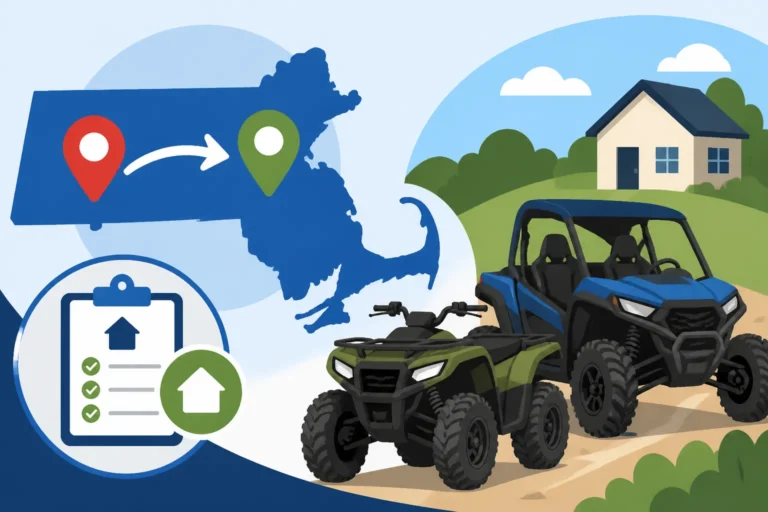
If you've recently made the exciting move to Massachusetts and brought your ATV or UTV with you, you'll need to transition your OHV registration to reflect your new residency. This means applying for a Massachusetts resident sticker, even if your machine was previously registered in another state. The process is similar to a new registration for a machine purchased in Massachusetts, but with the added step of establishing your new Bay State residency.
You'll need to provide proof of ownership, such as a manufacturer's certificate of origin (MCO) if it's new, or a bill of sale if it's used. Additionally, you’ll present evidence of your Massachusetts address. While your previous state's registration is not valid here, it's still good practice to have any old registration documents handy, as they can sometimes help with the ownership verification process.
Don't wait too long to update your registration. The state expects new residents to adhere to Massachusetts laws once they establish residency. For comprehensive guidance on how to navigate this transition, refer to [Massachusetts Registration for a New Resident]. Getting this done promptly means you can hit the trails without any lingering worries about your machine's legal status.
Visiting Massachusetts with an Out-of-State Machine
Many riders from surrounding areas enjoy making day trips or weekend excursions to Massachusetts to experience our trails. If you're visiting with an out-of-state machine, you absolutely need to obtain a Massachusetts non-resident OHV sticker. This applies whether you're coming for a single ride in Pittsfield State Forest or planning multiple visits throughout the year. As highlighted before, Massachusetts has no reciprocity with other states regarding OHV registration.
The process for obtaining this sticker is generally quick and can often be done online through the [Massachusetts Online Registration System] or by phone. It's highly recommended to secure your sticker before you even load your machine onto your trailer and head to a Massachusetts trailhead. Environmental Police officers conduct routine checks, and riding an unregistered out-of-state machine will lead to penalties.
Consider how often you anticipate visiting. If you plan to ride Massachusetts trails frequently over a twelve-month period, the one-year non-resident sticker offers continuous coverage, making subsequent visits simpler. If it's truly a one-off trip, that same sticker still covers you for a full year from issue.
Maintaining Residency in Another State While Riding in MA
Some individuals might own property in Massachusetts (like a vacation home or camp) but maintain their primary legal residence in another state. In these situations, for OHV registration purposes, you are considered a non-resident. It's crucial not to confuse property ownership with legal residency, as the Environmental Police focus on where your primary home is.
This means that even if you spend significant time at your Massachusetts property, you'll still apply for and receive a non-resident, one-year OHV sticker for your machines. Attempting to register as a resident without legitimate proof of primary Massachusetts residency could lead to issues. It's always best to be transparent about your actual residency status to avoid any complications down the line.
Ensuring your documentation clearly reflects your primary residence, even if you have strong ties to Massachusetts through a second home, is key. If you're ever in doubt, the best course of action is to reach out to the Massachusetts Environmental Police directly for clarification on your specific situation.
Paperwork and Proof: What You'll Need for Your Residency Status
Regardless of whether you're a Massachusetts resident or a visitor, the registration process for your ATV or UTV requires specific paperwork. However, the exact documents you'll need to demonstrate your residency status will vary. Having all your ducks in a row before you begin the application will make the entire process much smoother.
Proving Massachusetts Residency
When applying for your two-year resident OHV sticker, the state needs clear proof that you indeed reside in Massachusetts. The most common and easily accepted form of proof is a valid Massachusetts driver's license or state identification card. This immediately establishes your identity and a verified Massachusetts address.
However, if your driver's license address is new, or if there's any ambiguity, you might be asked for supplementary documents. These can include:
- Utility bills: Recent bills for electricity, gas, or water showing your name and Massachusetts address.
- Property tax bills or lease agreements: Documents that clearly link you to a Massachusetts property as an owner or long-term tenant.
- Voter registration card: A state-issued document confirming your voter registration in Massachusetts.
- Massachusetts income tax returns: Proof of filing as a Massachusetts resident.
Having a few of these documents ready can expedite the process, especially if you're a new resident. Remember, the goal is to leave no doubt that your primary, permanent home is in the Commonwealth.
Documentation for Non-Residents
For non-residents, proving your "non-residency" is much simpler. You typically just need to provide your out-of-state driver's license or state ID card, along with your permanent mailing address outside of Massachusetts. The state understands that you are not a resident and is simply looking for valid identification and contact information.
You won't be asked for utility bills from another state or lease agreements there, as the focus is primarily on your vehicle's ownership and ensuring you have a valid ID. The application form will have a specific section for non-residents to provide their home state address. Just be sure that the information you provide is current and matches your identification. [What a Bill of Sale Must Show to Register] is a good resource for the vehicle-specific documents needed.
When completing the application, ensure all fields are accurately filled out, especially your out-of-state mailing address, so your registration card and any communications can reach you. Using a reliable template for a bill of sale, perhaps from a service like LawDepot, can ensure all necessary details are included if you've recently purchased your machine.
Essential Vehicle Documents for All Registrants
Regardless of your residency, certain documents are mandatory for all OHV registrations in Massachusetts. These prove you legally own the ATV or UTV you're attempting to register:
- Manufacturer's Certificate of Origin (MCO): For brand new machines, this document proves the vehicle's origin and that it hasn't been titled or registered before. It's often required, as explained in [Massachusetts Requires an MCO for a New Machine].
- Bill of Sale: For used machines, a comprehensive bill of sale showing the seller's and buyer's information, the purchase price, and a clear description of the OHV (including its VIN) is essential. A well-drafted bill of sale, which you can often create using templates found on platforms like LawDepot, is crucial. If you're registering a machine after a private sale, make sure this document is complete. [Massachusetts Requires a Bill of Sale for a Used One] offers more details.
- Vehicle Identification Number (VIN): The VIN must be clearly visible and accessible on your machine, and it must be accurately transcribed onto your application. This is the unique identifier for your ATV or UTV, and it's essential for tracking and verifying the vehicle. [Massachusetts Requires a VIN on the Application] covers this in detail.
Without these foundational vehicle documents, your registration application will not be processed, regardless of your residency status. Always double-check that you have these ready before you begin your application.
Special Cases and Exemptions Related to Residency
While the resident/non-resident distinction covers most scenarios, there are a few special cases that can sometimes cause confusion. Understanding how Massachusetts addresses these unique situations ensures that everyone, including those with unique circumstances, can properly register their OHVs.
Military Personnel and Their Families
Active-duty military personnel stationed in Massachusetts, or those whose home of record is Massachusetts but are stationed elsewhere, often have specific considerations regarding residency. Generally, if your home of record is Massachusetts, even if you're temporarily deployed or stationed in another state, you might still qualify for resident registration. However, if you are active-duty military stationed in Massachusetts but your home of record is another state, you would typically register as a non-resident.
It's a nuanced area, and the best approach for military personnel and their families is to directly contact the Massachusetts Environmental Police. They can provide the most accurate and up-to-date information on how your military status impacts your OHV registration, considering your specific circumstances like duty station, home of record, and length of stay in Massachusetts. Always be prepared to provide official military identification and orders.
The state aims to be supportive of service members, but the legal definitions of residency for various purposes can sometimes differ. A quick call or email can save a lot of headaches later on.
Students Attending College in Massachusetts
College students attending a school in Massachusetts but whose permanent home is in another state often wonder if they count as residents for OHV registration. In most cases, if your primary legal residence (where your parents live, where you return for extended breaks, and where you're registered to vote) is outside Massachusetts, you would be considered a non-resident for OHV purposes.
Even if you live in a dorm or apartment in Massachusetts for nine months out of the year, the state typically views this as a temporary stay rather than establishing permanent residency, especially if your legal domicile remains elsewhere. Therefore, a non-resident sticker would usually be required.
However, if a student has truly moved to Massachusetts, established a primary residence here independent of parental support, has a Massachusetts driver's license, and intends to stay permanently after graduation, they might qualify as a resident. This would require substantial proof of the intent to reside permanently. Again, when in doubt, reaching out to the Environmental Police for specific guidance is the smartest move.
Business-Owned Machines
When an ATV or UTV is owned by a business, the residency for registration purposes typically defaults to the business's primary address. If the business is registered and operates primarily out of Massachusetts, the machine would be registered as a resident OHV, subject to the two-year term and resident fees. This applies whether the machine is used for farm work ([Massachusetts Registration for a Farm Machine]), rental fleets ([Massachusetts Registration for a Rental Fleet]), or other commercial purposes within the state.
If the business is primarily located out-of-state but operates a machine in Massachusetts (for example, a landscaping company from Connecticut doing seasonal work here), then the machine would likely require a non-resident registration. The determining factor is the primary location of the business entity as recognized by the Commonwealth.
Proof of business registration and documentation linking the machine to the business (e.g., a corporate bill of sale or an MCO listing the business as the owner) would be required. This ensures that commercial operations also contribute to the OHV fund and adhere to state regulations. Using a legal agreement template from a service like LawDepot can help ensure all business ownership details are accurately captured for registration.
Renewing Your OHV Registration Based on Residency
Once you've navigated the initial registration, keeping your ATV or UTV legally registered in Massachusetts requires understanding the renewal process, which, you guessed it, also differs slightly based on your residency status. Knowing when and how to renew is key to uninterrupted riding.
Resident Renewal Process
For Massachusetts residents, the renewal process for your two-year OHV sticker is relatively straightforward. When your sticker is nearing its expiration, the Environmental Police typically send out a renewal notice to the mailing address on file. However, it's always your responsibility to renew, even if you don't receive a notice.
You can usually renew your registration through several convenient methods:
- Online: The [Massachusetts Online Registration System] is often the quickest and easiest way to renew your sticker. You'll need your current registration number and payment information.
- By Phone: Some renewals can be completed over the phone.
- By Mail: You can also mail in your renewal application and payment.
It's highly recommended to renew your sticker well in advance of the expiration date, especially if you plan to ride when the DCR riding season opens in May. This ensures you receive your new decals in time and avoid any lapse in legal registration. [Massachusetts ATV Registration Renewal] offers a detailed guide to this process.
Non-Resident Renewal Process
Non-residents must renew their one-year OHV stickers annually. The process is similar to residents, but with the understanding that you'll be reapplying each year. Like residents, you'll likely receive a renewal notice, but relying solely on this is not advisable. Mark your calendar for your expiration date!
The renewal can typically be done online, by phone, or by mail. Since there's no reciprocity, this annual renewal is essential for any continued riding in Massachusetts. If you ride occasionally, it might seem like a yearly hassle, but it's the state's way of ensuring consistent funding for trail maintenance and proper oversight of all machines on its land.
Staying informed about your expiration date is critical. If your non-resident sticker expires, you are effectively riding an unregistered machine in Massachusetts, which can lead to fines and other penalties. Plan your renewals around your anticipated riding season.
What Happens If Your Residency Changes
If you've registered your OHV as a non-resident and then move to Massachusetts and establish permanent residency, you'll need to update your registration. You won't automatically switch to a two-year resident sticker; you'll typically need to go through a process to update your residency status with the Environmental Police and then apply for a new resident registration. This might involve paying a new resident fee and getting a new set of decals that reflect your resident status and longer term.
Conversely, if you move out of Massachusetts after having a resident sticker, that sticker remains valid until its expiration date. However, once it expires, you would then need to register as a non-resident if you wish to continue riding your machine in Massachusetts. It’s important to communicate any major changes in your permanent address to the Environmental Police, as this can impact future renewals and ensure you receive important notices.
These changes ensure the system accurately reflects your current status and that you are paying the correct fees and receiving the appropriate registration term. It’s all about maintaining fairness and accuracy in the state’s OHV program.
Disclaimer
This article is for general informational purposes only and does not constitute professional advice. Laws, prices and regulations vary by location and change over time. Consult a qualified professional for guidance on your specific situation.